
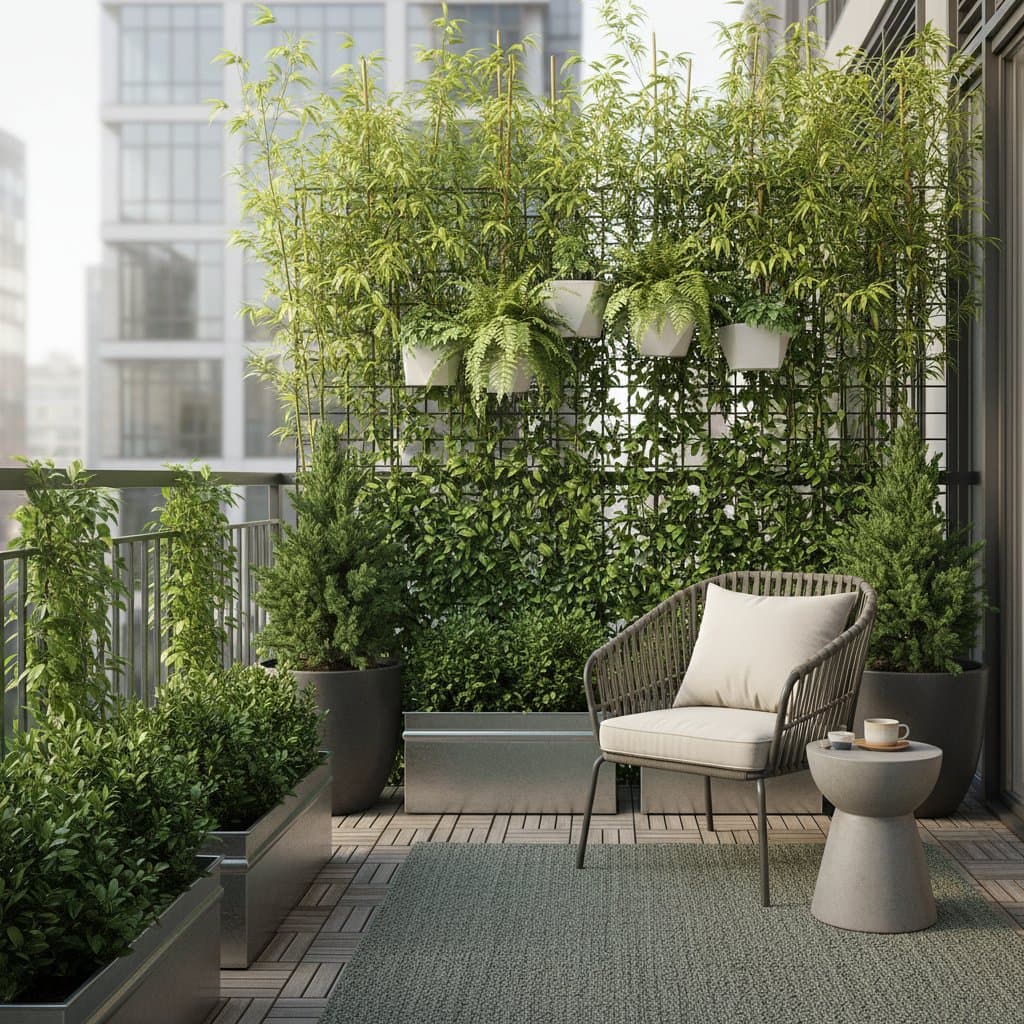
Plants That Silence City Noise in Small Spaces
Urban environments pulse with constant activity. Traffic roars, sirens wail, and conversations echo through streets, often infiltrating homes via balconies and patios. While the city's rhythm persists, strategic planting offers a remedy. Dense foliage absorbs sound waves, scatters noise, and fosters visual calm, transforming compact outdoor areas into refuges.
Effective noise reduction relies on plant characteristics such as leaf thickness, density, and height variation. Layered arrangements maximize acoustic benefits without overwhelming small spaces. This approach not only dampens sound but also elevates the balcony's appeal, blending functionality with natural beauty.
Recommended Plants for Noise Absorption
Select species suited to urban conditions, including partial shade and variable weather. Prioritize evergreens for year-round coverage and perennials for sustained density. Here are proven options for small balconies:
- Bamboo (e.g., Fargesia varieties): These clumping types grow to 6-10 feet, creating tall screens with rustling leaves that diffuse high-frequency sounds. Plant in large pots to control spread; they thrive in moist, well-drained soil.
- Ferns (e.g., Boston or maidenhair): Broad, feathery fronds excel at absorbing mid-range noises like voices. Ideal for shaded corners, they prefer humid environments; mist regularly to mimic forest conditions.
- Vines (e.g., English ivy or climbing jasmine): Train along trellises to cover railings vertically, blocking sound from below. Ivy's thick leaves provide excellent insulation; jasmine adds fragrance while maintaining coverage.
- Evergreens (e.g., dwarf boxwood or holly): Compact shrubs offer persistent foliage for consistent noise buffering. Boxwood reaches 3-4 feet, fitting neatly in corners; ensure good air circulation to prevent pests.
Combine these for layered effects: position bamboo at the back, ferns mid-level, and vines on edges. Start with three to five plants per 6-by-3-foot space to achieve noticeable reduction, often up to 5-10 decibels.
Tools and Materials
Assemble essentials for efficient setup and longevity:
- Planters or containers: Opt for 8-12 inch deep pots for shrubs like bamboo, and 6-8 inch ones for ferns and vines. Terracotta or plastic with drainage holes works best.
- Potting soil: Select a blend with perlite and compost to retain moisture while allowing airflow, promoting root health in confined areas.
- Mulch: Apply 2 inches of organic bark or gravel to suppress sound reflection, conserve water, and deter weeds.
- Trellises or lattice panels: Use lightweight, rust-resistant metal or wood frames, 4-6 feet tall, for vine support.
- Drip trays or saucers: Place under pots to catch excess water, safeguarding balcony surfaces from stains.
- Basic tools: Include gardening gloves, sharp pruning shears, a hand trowel, and a narrow-spout watering can for precise application.
For wall or railing integration, prepare stainless steel hooks or flexible plant ties. These secure structures against urban winds without damaging surfaces.
Steps to Create a Quiet Green Zone
Follow this sequence for a structured build:
-
Measure your space. Assess dimensions, noting sun exposure and wind patterns. A 6-by-3-foot balcony accommodates 4-6 pots comfortably.
-
Plan zones. Assign tallest elements, such as bamboo, to the rear or railing side. Place medium plants like ferns forward, and trailing vines along borders for comprehensive coverage.
-
Prepare containers. Fill pots to two-thirds capacity with pre-moistened soil. Reserve space for roots and future growth.
-
Anchor vertical structures. Secure trellises with screws or brackets into balcony frames. Test stability by applying gentle pressure to simulate gusts.
-
Group by density. Cluster pots within 6-12 inches of each other. This minimizes sound pathways, enhancing the barrier's integrity.
-
Plant and settle. Insert plants at the same depth as their nursery pots. Water thoroughly until moisture penetrates 2 inches into the soil, then firm gently to eliminate voids.
-
Test sound levels. Spend 10 minutes observing pre- and post-planting acoustics from a seated position. Relocate elements if noise persists from specific angles.
-
Add texture variety. Incorporate broad-leaved ferns for absorption alongside fine-textured vines for diffusion. This mix strengthens overall performance against diverse urban sounds.
Troubleshooting
Address common issues promptly to sustain effectiveness:
Problem: Persistent high noise levels.
Fix: Boost density by adding 1-2 larger pots or extending vine coverage. Even minor 6-inch gaps allow sound leakage; seal them with additional clustering.
Problem: Rapid soil drying.
Fix: Switch to self-watering pots or top with 0.5-inch pebble layers. These retain humidity in sun-exposed spots.
Problem: Yellowing or leaf drop.
Fix: Verify drainage to avoid root rot, which diminishes foliage volume. Repot in fresh soil if water pools, and apply balanced fertilizer sparingly.
Maintenance
Routine care preserves the acoustic and aesthetic qualities:
- Prune monthly to shape growth and ensure airflow, targeting dead or overcrowded branches.
- Fertilize every two months using slow-release granules formulated for container plants, focusing on nitrogen for lush leaves.
- Clean surfaces bi-seasonally behind foliage to eliminate dust and pests that could compromise health.
- Rotate pots weekly for uniform light distribution, preventing leggy growth on one side.
Maintain thick canopies, as thin areas halve noise reduction. Monitor for urban stressors like pollution, and replace underperformers swiftly.
Seasonal Reminders
Adapt to local weather fluctuations in elevated spaces:
In summer, irrigate at dawn to counter heat buildup and evaporation. Mulch deeply to shield roots.
During winter, cut back watering to when soil dries on top, and insulate pots with bubble wrap if temperatures drop below freezing.
Winds at balcony height demand safeguards: install low acrylic shields on exposed sides. Trim evergreens to avoid overshadowing delicate ferns.
For indoor relocation in cold spells, wash foliage to clear pollutants, and position near south-facing windows for continued vitality.
Sustaining Your Urban Sanctuary
With these plants and practices, small balconies become effective noise sanctuaries. Regular attention yields lasting peace, allowing city dwellers to reclaim quiet moments. Begin selecting your plants today to experience the difference in sound and serenity.