
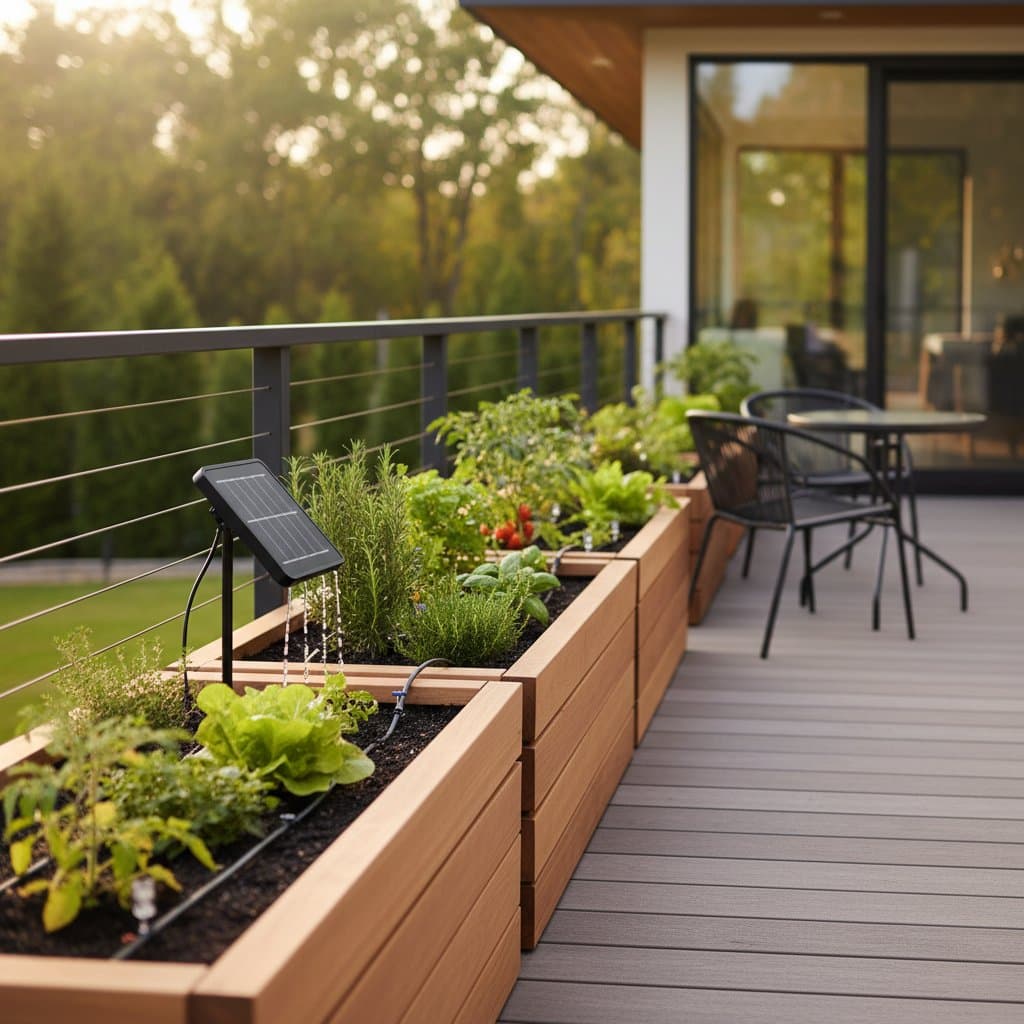
Zero-Waste Solar Drip Systems: Transform Your Deck Garden
Urban dwellers often face challenges in maintaining deck gardens amid busy schedules and limited space. Plants in elevated containers dry out quickly due to exposure and wind, leading to frequent watering that consumes time and resources. A zero-waste solar drip system addresses these issues by harnessing sunlight to deliver precise irrigation, ensuring plants receive consistent moisture without excess waste.
This setup promotes sustainable gardening practices, reducing water usage by up to 80 percent through targeted delivery that minimizes evaporation and runoff. Homeowners achieve healthier plants with minimal intervention, fostering a lush outdoor space that enhances relaxation and aesthetic appeal. The following sections detail the system's components, installation process, and ongoing care to equip readers with practical knowledge for implementation.
How the System Works
A zero-waste solar drip system operates through a compact solar-powered pump that draws water from a reservoir and distributes it via narrow tubing to individual plants. Sunlight energizes the pump, activating it only during daylight hours when plants require the most hydration. This synchronization aligns irrigation with natural cycles, preventing overwatering and supporting root development.
Water emerges from adjustable emitters at a slow rate, allowing it to seep directly into the soil rather than scattering on leaves or surfaces. Such precision cuts evaporation losses significantly, as studies in horticulture confirm drip methods conserve water far better than traditional sprinkling. Additionally, integrating a rainwater collection barrel renders the system entirely off-grid, eliminating reliance on municipal supplies and reducing environmental impact.
Users gain fine-tuned control by customizing flow rates for different plant types, such as succulents needing less moisture than herbs. Over time, this leads to vibrant growth, fewer instances of wilting, and a noticeable decrease in gardening labor. The system's simplicity makes it ideal for beginners seeking eco-friendly solutions without complex setups.
Essential Tools and Materials
Assembling a reliable solar micro-drip system requires selecting durable, compatible components suited to deck environments. Begin with a solar pump kit capable of handling 50 gallons per hour, ensuring it includes a 5-watt panel for consistent performance in partial shade. Pair this with a 5-gallon opaque reservoir to store water while inhibiting algae proliferation.
For distribution, procure 1/4-inch tubing in sufficient length to reach all planters, along with 10 to 20 adjustable drip emitters rated at 0.5 to 2 gallons per hour. These emitters feature pressure-compensating designs to maintain even flow across varying elevations on a deck. Secure the setup using plastic stakes or weighted clips to withstand breezes, and include an inline filter to trap debris that could obstruct lines.
Basic tools complete the kit: sharp scissors for cutting tubing cleanly, a Phillips-head screwdriver for pump assembly, and zip ties for organizing cables. Opt for UV-resistant materials to endure outdoor exposure, extending the system's lifespan beyond two seasons. Total investment remains modest, yielding long-term savings through reduced water bills and plant replacements.
Installation Steps
Step 1: Site the Solar Panel
Select a location on the deck railing or nearby structure where the panel receives unobstructed sunlight for at least six hours daily. Orient it southward in the Northern Hemisphere to maximize energy capture, and secure it firmly to prevent tipping in wind. Route all cables along protected edges, using conduit if necessary, to shield them from moisture and foot traffic.
Step 2: Prepare the Water Reservoir
Position the reservoir in a shaded corner of the deck to keep water cool and reduce evaporation before distribution. Elevate it slightly on bricks if gravity feed aids flow, but ensure easy access for refilling. Cover the container with a lid or mesh screen to deter insects and debris while allowing ventilation.
Step 3: Install the Pump and Connect Tubing
Submerge the pump intake in the reservoir, securing it to the bottom with suction cups to avoid floating. Attach the main tubing line from the pump outlet, punching holes with an awl for branch lines to individual pots. Prime the system by filling tubing with water manually, then activate the pump under sunlight to verify operation and eliminate air pockets.
Step 4: Position Drip Emitters
Puncture each planter's soil near the plant base and insert emitters at a depth of one inch to target roots directly. Assign one emitter to small pots and two to larger ones, twisting the adjustment cap to set initial flow at half capacity. Space emitters evenly for multi-plant containers to promote uniform hydration without pooling.
Step 5: Test and Adjust the System
Expose the panel to full sun and observe water delivery for 30 minutes, noting any dry spots or overflows. Measure output by placing shallow dishes under emitters and timing the fill rate, aiming for soil that remains damp to the touch without saturation. Fine-tune by shortening tubing runs or adding pressure regulators if flow varies across the deck.
Safety Considerations
Electrical components demand vigilant protection to prevent hazards in wet outdoor settings. Enclose all connections in waterproof housings and inspect them after rain for corrosion. Avoid placing the solar panel where it could be stepped on or obstructed by furniture, and never immerse it in water during cleaning.
When handling tools, wear gloves to protect against sharp edges on tubing, and supervise children or pets near the setup to avoid tampering. Ground the system if extending cables beyond 10 feet, consulting local codes for compliance in urban installations.
Common Troubleshooting Issues
Weak flow often stems from a clogged filter; disassemble and rinse it under running water, replacing if mesh tears. Kinks in tubing restrict pressure, so straighten lines and use elbows at bends for smoother paths. If plants exhibit drooping despite operation, verify emitter placement reaches root zones and incrementally raise flow rates while monitoring soil moisture.
Pump failure typically results from a soiled panel; wipe it gently with a microfiber cloth and reposition for optimal angle. In low-light conditions, supplement with a battery backup for reliability, but recharge fully to maintain zero-waste principles. Persistent leaks indicate loose fittings; tighten with pliers or apply silicone sealant sparingly.
Ongoing Maintenance Practices
Seasonal flushing prevents mineral deposits from hard water: disconnect tubing, run vinegar solution through lines for 10 minutes, then rinse thoroughly. Monthly filter cleaning involves removing and soaking in mild soap, ensuring clear water passage before reinstalling. Inspect emitters for clogs by blowing through them, replacing any that fail to regulate flow.
In winter, drain all water to avert freezing damage: elevate the reservoir, open valves, and store components in a dry garage. Reassemble in spring after testing each part individually. These routines, taking under 15 minutes per session, sustain efficiency and extend equipment life to five years or more.
Cost and Time Investment
Initial outlay for a basic kit ranges from 60 to 100 dollars, covering premium components for durability. Larger decks may require scaling up to 150 dollars, but payback occurs within one season via water savings. Installation demands one to two hours, spread over a weekend for unhurried progress.
Annual maintenance costs under 10 dollars for replacements, with time commitment limited to quarterly checks. This efficiency appeals to time-strapped urban gardeners, delivering high returns on minimal input.
Implementing Your Deck Garden Upgrade
Assess your space by mapping planter locations and sunlight patterns to select an appropriately sized pump. Launch with a pilot on two or three containers, observing performance over seven days via a simple moisture meter. Refine based on results, then scale to the full deck for comprehensive coverage.
Monitor long-term benefits, such as reduced wilting and enhanced biodiversity, to appreciate the system's value. This approach not only conserves resources but also cultivates a resilient outdoor haven tailored to city life.