
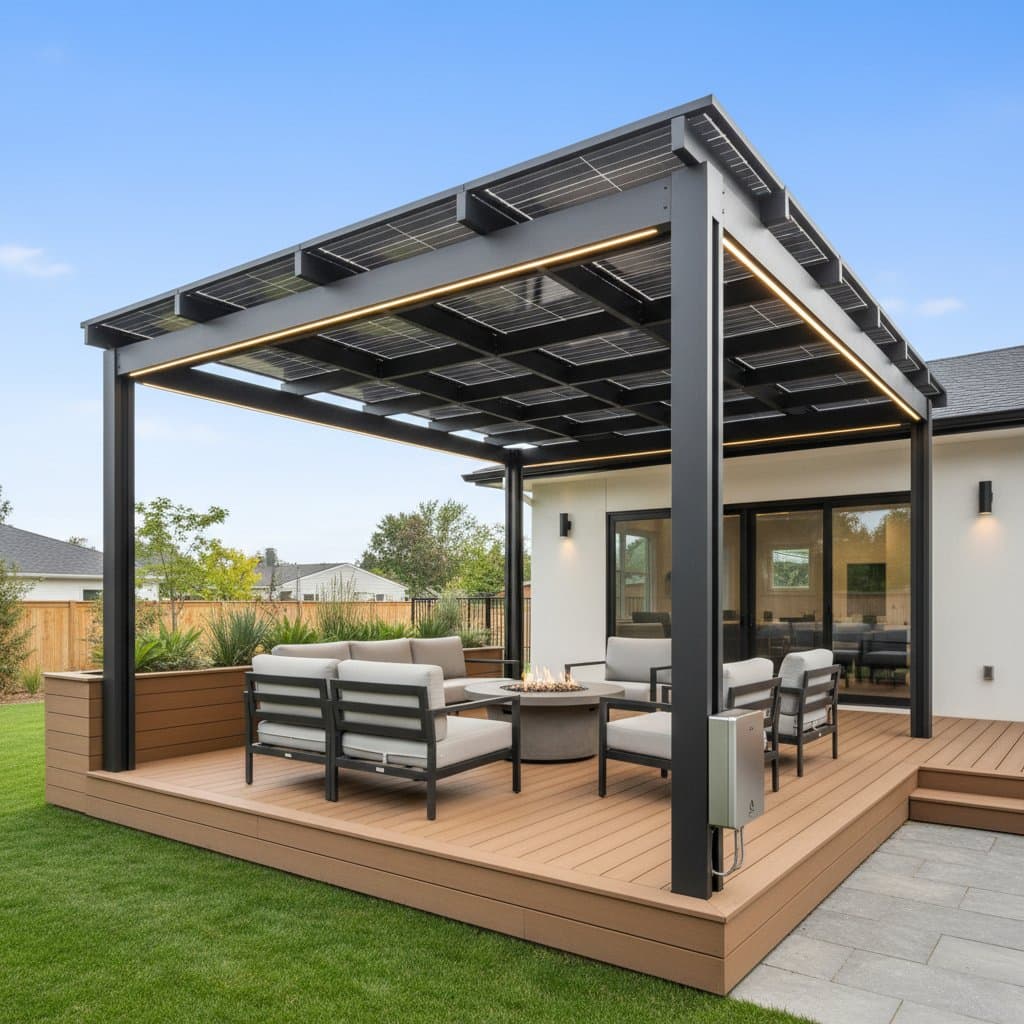
Shade Meets Solar: Energize Your 2026 Deck
A deck serves multiple purposes in modern outdoor living. It offers relaxation, entertainment, and now the potential for energy production. A solar pergola integrates photovoltaic technology into a traditional shade structure, converting sunlight into usable electricity while protecting against harsh rays. This setup reduces glare, enhances comfort, and lowers electricity expenses through clean, on-site power generation.
The following sections detail the process to plan, construct, and maintain a solar pergola tailored to your deck and daily routines.
Overview
A solar pergola consists of an open-frame shade structure equipped with photovoltaic panels. These panels absorb sunlight and transform it into electrical energy. The design provides partial coverage for outdoor activities, powering elements such as lighting, fans, or compact devices. This extension allows prolonged use of the space, even in intense summer heat.
The primary objective involves creating a seamless deck addition that blends aesthetically, ensures user comfort, and contributes to household energy efficiency. Even without a complete rooftop installation, a pergola featuring six to ten panels can energize essential outdoor systems and decrease reliance on utility power.
Tools and Materials
Constructing or upgrading to a solar pergola requires standard carpentry equipment alongside specialized electrical items. Assemble the following essentials prior to starting:
- Measuring tape, extending at least 25 feet or 7.6 meters
- Level and framing square
- Cordless drill equipped with bits for wood and metal
- Post anchors and lag screws
- Pressure-treated lumber or aluminum framing members
- Solar panels dimensioned to fit the area, typically 3 by 5 feet each
- Mounting brackets and rail systems for panels
- Charge controller and inverter
- Weatherproof wiring and junction boxes
- Grounding rod and disconnect switch
Prioritize safety by donning insulated gloves, protective eyewear, and a hard hat throughout the installation process.
Steps
1. Evaluate Sun and Shade Patterns
Position yourself on the deck during morning, midday, and afternoon to observe sunlight progression. Identify zones receiving a minimum of five hours of direct exposure for the pergola location. Steer clear of obstructions like tall trees or adjacent structures that produce extended shadows. South- or southwest-facing decks provide optimal conditions for maximum solar exposure.
2. Determine Pergola Dimensions
Assess the available deck area. Maintain a minimum 3-foot buffer around the perimeter to accommodate movement and ventilation. Standard solar pergolas span 100 to 150 square feet, suitable for seating a small table and chairs. Set the height at approximately 8 feet to promote ease of use; increase post thickness for any taller configurations to ensure structural integrity.
3. Design the Framework
Draft a basic outline featuring four or six vertical posts, a top header beam, and horizontal rafters. The rafters accommodate the solar panel mounting rails. Position rafters at 16-inch intervals to balance load distribution. Verify that the deck's underlying framework supports an added load of at least 5 pounds per square foot; strengthen joists or footings as necessary.
4. Secure Posts and Beams
Outline post positions on the deck surface, then bore pilot holes for the anchors. Install posts firmly and confirm vertical alignment using a level. Fasten header beams with lag screws. Employ metal brackets to reinforce joints securely. Select corrosion-resistant hardware to withstand exposure to moisture and weather variations.
5. Install Solar Panels
Affix the rail systems to the rafters following manufacturer specifications. Maintain a 1-inch gap beneath panels to facilitate airflow and prevent overheating. Fasten panels using secure locking clips. Wire the panels in series or parallel configurations based on required output. Encase all electrical connections within protective, weather-resistant conduits.
6. Integrate Electrical Systems
Route cables from the panels to the charge controller and inverter. Position these components in a sheltered spot, such as beneath the deck or within an adjacent enclosed cabinet. The inverter transforms direct current from the panels into alternating current compatible with standard household appliances. Incorporate a disconnect switch for safe system isolation during upkeep.
7. Test and Complete the Installation
Activate the system to measure voltage production. Monitor for consistent current delivery. After confirmation, organize wiring neatly and apply labels to all circuits. Enhance aesthetics with trim details, lattice panels, or supportive climbing vegetation. Integrate features like string lighting or a ceiling fan, drawing power directly from the solar setup.
Safety Considerations
Disconnect the home's primary power supply before integrating any new circuits. Employ insulated tools for all wiring tasks. Refrain from installation during rain or high winds. Embed post anchors in concrete footings extending at least 12 inches below grade. Engage a certified electrician for the conclusive electrical connections.
Troubleshooting Common Issues
Reduced Power Output: Wipe panel surfaces to remove debris. Accumulated dust or pollen may diminish efficiency by as much as 20 percent.
Inconsistent Shading Effects: Partial shading on a single panel can impair overall array performance. Install microinverters on individual panels to optimize energy flow independently.
Inverter Overheating: Enhance ventilation around the unit or reposition it to a cooler, shaded environment.
Structural Instability: Examine beam joints seasonally. Retighten fasteners if vibrations or sounds indicate loosening.
Budget and Timeline
A compact solar pergola typically ranges from $2,500 to $6,000 in total expense, influenced by material selections and energy capacity. Factors such as lumber grade, panel efficiency, and permitting fees account for variations. Retrofitting an existing deck frame reduces costs by approximately 20 percent through direct panel attachment to current posts. Skilled individuals can complete the framework over two weekends, with electrical work requiring a few additional hours from a professional.
Invest in durable electrical components to avoid premature failures. Substandard charge controllers or undersized inverters compromise longevity. Opt for robust mounting hardware, stainless-steel fasteners, and watertight connectors to resist environmental degradation and sustain reliable operation over time.
Maintenance Practices
Clean panel surfaces quarterly using a soft brush and gentle detergent solution. Follow with a hose rinse and drying using a microfiber cloth. Conduct annual inspections of wiring for signs of deterioration or pest interference. Refresh wood stain on beams every two to three years to guard against water damage.
In winter months, remove snow accumulations gently with a plastic-bladed tool. Avoid metal implements that risk scratching the panels. After severe weather events, verify bracket security and ensure proper drainage away from the inverter enclosure.
Seasonal Maintenance Schedule
-
Spring: Thoroughly clean panels, renew wood sealants, and assess inverter airflow.
-
Summer: Prune overhanging branches to preserve sunlight access. Track temperature levels beneath the panels.
-
Fall: Clear leaf debris from panel spaces. Evaluate system performance ahead of reduced daylight.
-
Winter: Monitor for ice formation on structural elements and check for damage from temperature fluctuations.
Regular attention ensures ongoing safety and optimal efficiency throughout the seasons.
Optimizing the Shaded Space
Maximize utility beneath the pergola by organizing storage solutions. Place waterproof containers for cushions, portable batteries, or gardening implements. Install a compact cabinet to house extension cords and charging devices. The integrated solar supply enables convenient operation of LED lights, a small refrigerator, or device stations without extending indoor wiring.
Incorporate a modest battery storage unit in a ventilated enclosure adjacent to the inverter. This configuration delivers two to three hours of emergency illumination during power interruptions. Position batteries elevated from the ground and shielded from direct solar exposure.
Professional Assistance Guidelines
Consult a licensed electrician for integrations involving the home's main electrical panel or net metering setups for excess energy return. Request verification of ground fault interruption, appropriate wire sizing, and surge safeguards. Seek a qualified carpenter for deck reinforcements or when building codes demand certified structural plans.
Essential Strategies for Optimal Results
Select panels with high-efficiency ratings suited to partial shade conditions common in backyard settings. Integrate smart monitoring apps to track energy production and identify issues remotely. Combine the pergola with drought-resistant vines for natural cooling and visual enhancement. These enhancements extend usability, boost sustainability, and deliver long-term value to your outdoor environment.