
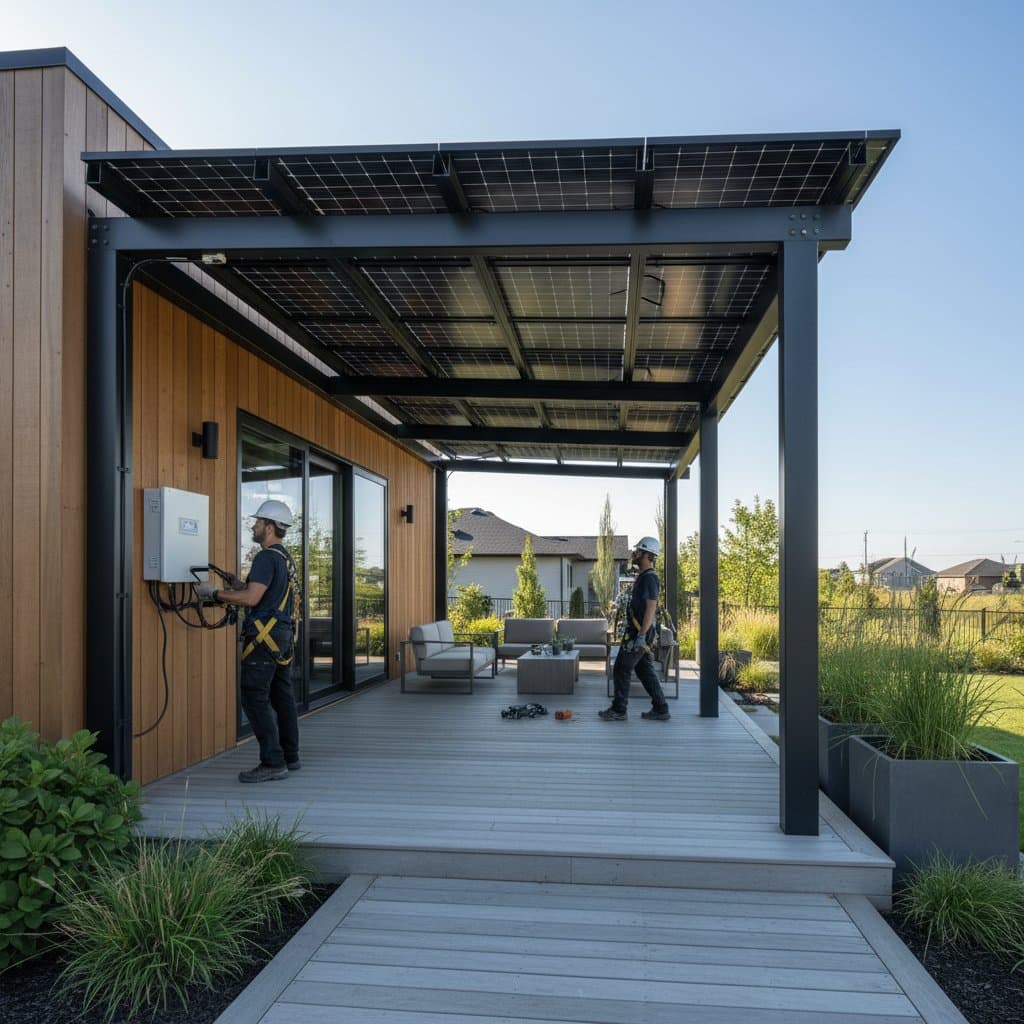
6. Connect the Electrical System
Route electrical conduit from the solar panels to the inverter location. Position the inverter close to your home's main electrical panel or within a durable, weather-resistant enclosure beneath the deck to minimize wiring length and exposure. Integrate the system into your breaker panel via a dedicated disconnect switch, which allows for safe isolation during maintenance. Engage a licensed electrician for this phase unless you possess relevant certifications, as improper connections pose risks of electrical hazards or code violations.
Consider the system's scale when planning connections. For a typical residential setup, ensure the conduit size accommodates the wire gauge required for efficient current flow, typically 10 to 12 AWG for outputs up to 4 kilowatts. Verify local building codes for grounding requirements, which often mandate a separate ground wire to protect against surges.
7. Test and Seal
After completing all connections, conduct thorough testing of the system's performance. Activate the inverter and monitor the output using a multimeter to confirm voltage and current align with manufacturer specifications. Small-scale solar pergolas commonly produce between 2 and 4 kilowatts, sufficient to operate outdoor features like LED lighting, ceiling fans, or even offset a fraction of household appliances such as a refrigerator or home office equipment.
Secure the installation against environmental elements by sealing every roof penetration point with high-quality silicone caulk. Install metal drip edges along the roofline to channel rainwater away from joints and prevent moisture infiltration. Perform a final visual inspection for any gaps, and run a simulated rain test if possible to identify potential leaks early.
Troubleshooting Common Issues
Solar pergolas, like any outdoor electrical system, may encounter occasional problems. Addressing them promptly maintains efficiency and longevity. Below are solutions for frequent concerns.
Low Power Output:
Debris accumulation often reduces panel efficiency. Examine the surfaces for dirt, pollen, bird droppings, or fallen leaves, then clean using lukewarm water and a soft-bristled brush to avoid scratching the protective coating. Next, scrutinize all electrical connections for signs of corrosion, such as greenish buildup on terminals, or looseness caused by vibration. Tighten any loose fittings and apply dielectric grease to prevent future oxidation.
Inverter Fault Indicator Activated:
Begin by powering down the inverter completely, waiting 30 seconds, then restarting it to clear temporary glitches. If the fault light persists in red, consult the user manual for error codes, which might indicate overheating or grid incompatibility. Contact a certified technician for advanced diagnostics, potentially involving a firmware update or component replacement to restore full functionality.
Water Leaks at Joints:
Leaks typically stem from degraded seals or shifting materials due to temperature fluctuations. Identify affected areas by applying soapy water to joints and looking for bubbles during a hose test. Scrape away old sealant, ensure the surface is thoroughly dry, and apply a fresh layer of UV-resistant silicone, smoothing it with a tool for a watertight bond.
Sagging or Unstable Rafters:
Structural shifts can occur from uneven loading or material fatigue. Inspect bolts and fasteners for tightness, then reinforce joints with galvanized steel brackets rated for outdoor use. If a rafter shows warping or rot, remove and replace it with pressure-treated lumber of the same dimensions to distribute weight evenly and avoid progressive damage.
Essential Maintenance Practices
Solar pergolas require minimal routine care to sustain optimal performance and structural integrity. Focus on preventive measures to combat weather exposure and ensure reliable energy production over time.
Monthly Inspections:
Clear the area by sweeping away leaves, twigs, and other debris that could block panels or create fire hazards. Examine wiring harnesses and junctions for damage from rodents, insects, or abrasion, repairing any frayed insulation immediately to prevent short circuits.
Seasonal Upkeep:
Clean panels thoroughly with a solution of water and mild, non-abrasive soap, rinsing from top to bottom to avoid streaking. Assess all bolts and hardware for rust formation, applying a penetrating oil or rust-inhibiting spray as needed to maintain secure fastenings. Inspect posts and beams for minor cracks, resealing them with exterior-grade caulk to protect against moisture penetration.
Annual Professional Review:
Schedule an electrician to measure system voltage and overall output, comparing results against initial benchmarks to detect degradation. Verify the tightness of all mounting brackets and anchors, adjusting as necessary to counteract settling. Apply a fresh coat of UV-protectant stain or paint to wooden elements, selecting products designed for outdoor durability to shield against sun-induced fading and cracking.
Consistent maintenance not only maximizes energy yield but also extends the pergola's lifespan, often beyond 20 years with proper attention.
Situations Requiring Professional Expertise
Certain tasks demand specialized skills to ensure safety and compliance. Always involve qualified professionals for:
- Integrating the inverter with your home's primary electrical panel, including load calculations to avoid overloads.
- Routing conduit through exterior walls, foundations, or insulated spaces, adhering to fire and moisture barriers.
- Modifying circuit breakers or installing subpanels to handle increased solar input without risking system instability.
Additionally, consult a structural engineer for pergolas attached to aging decks or those supporting substantial panel arrays on enclosed roofs. They will evaluate load-bearing capacity through calculations and inspections, recommending reinforcements like additional footings to mitigate risks of collapse or uneven settling.
Implementing Your Solar Pergola Plan
-
Assess and Design: Measure your deck precisely and create a detailed sketch, noting sun exposure patterns by observing shadow lines hourly during peak seasons. Factor in wind loads and snow accumulation based on your region's climate data.
-
Secure Estimates: Obtain proposals from a minimum of two reputable installers or material suppliers. Inquire specifically about solar panel efficiency ratings, typically 15 to 22 percent for modern models, and warranty durations, which often cover 25 years for power output guarantees.
-
Optimize Space Usage: Incorporate built-in storage solutions, such as under-bench cabinets or wall-mounted hooks, to keep the area organized and versatile for gatherings or relaxation.
A thoughtfully constructed solar pergola harnesses abundant sunlight to offset electricity costs, fostering a shaded, inviting outdoor haven. This investment yields enduring benefits for comfort, savings, and environmental stewardship, making your deck a productive extension of your home.