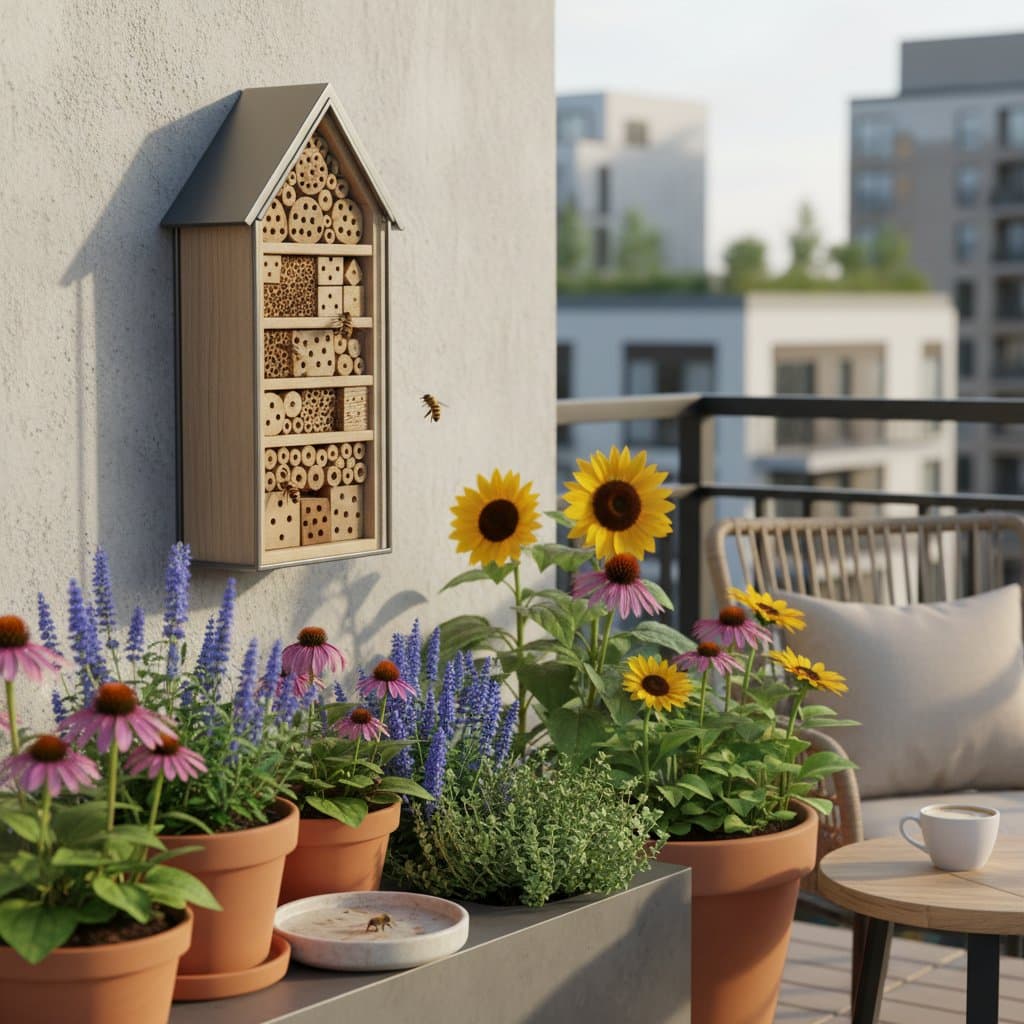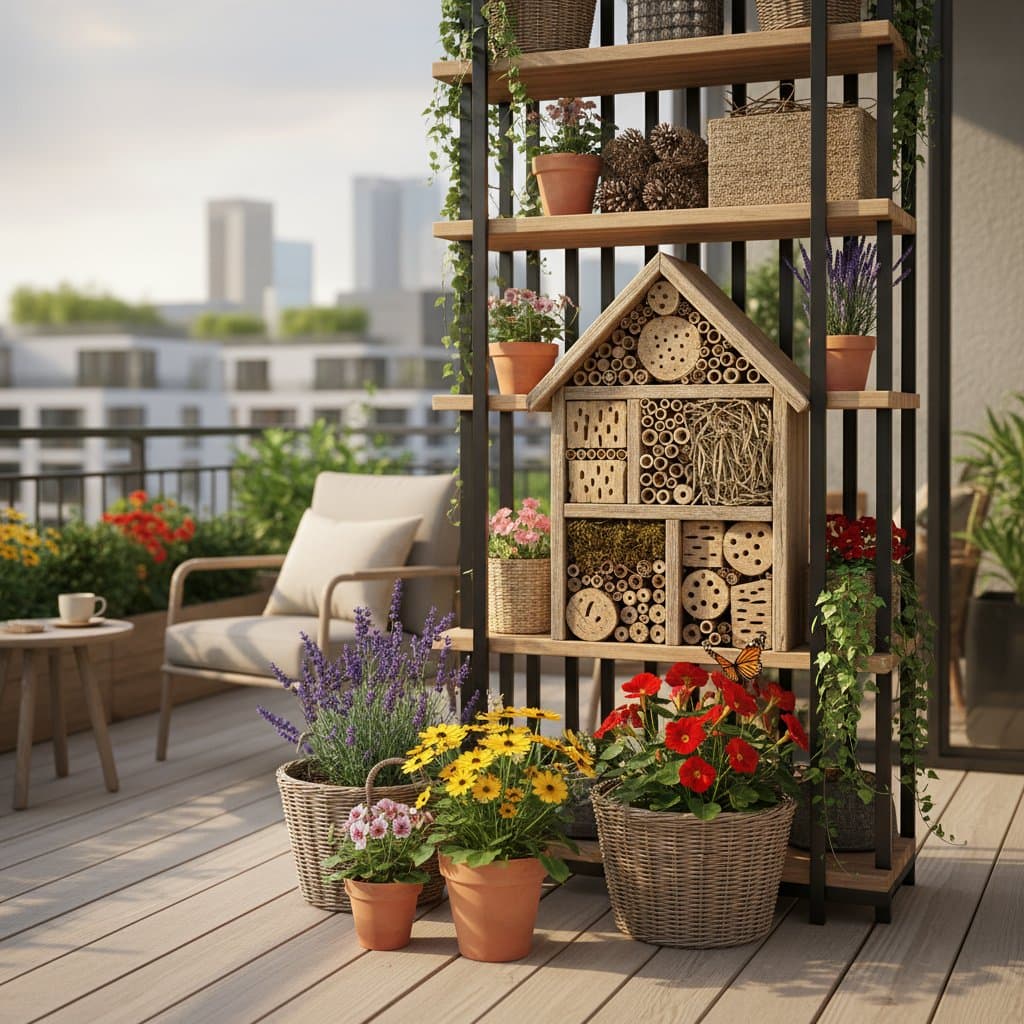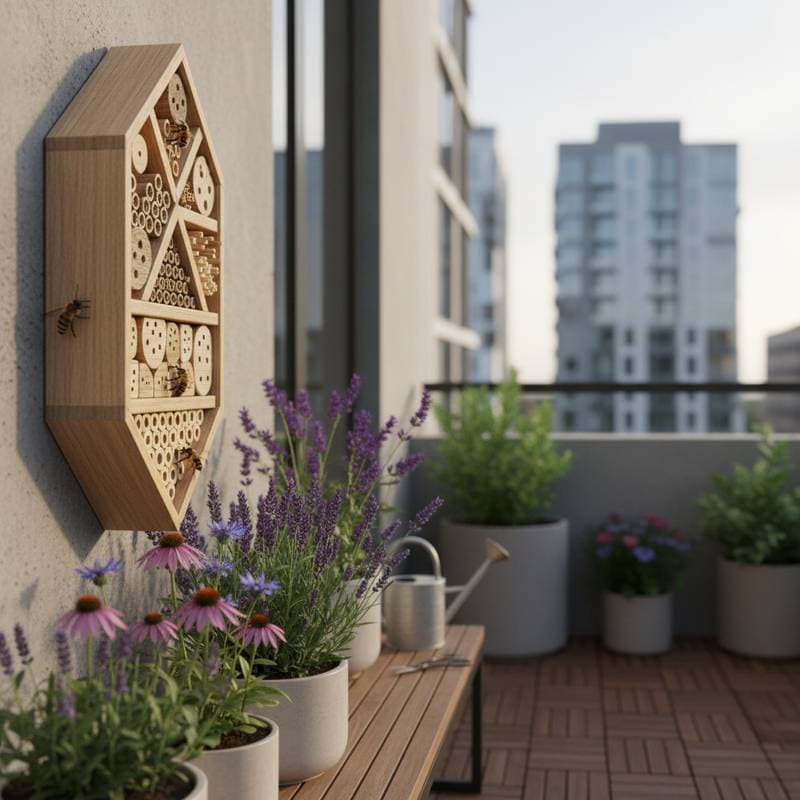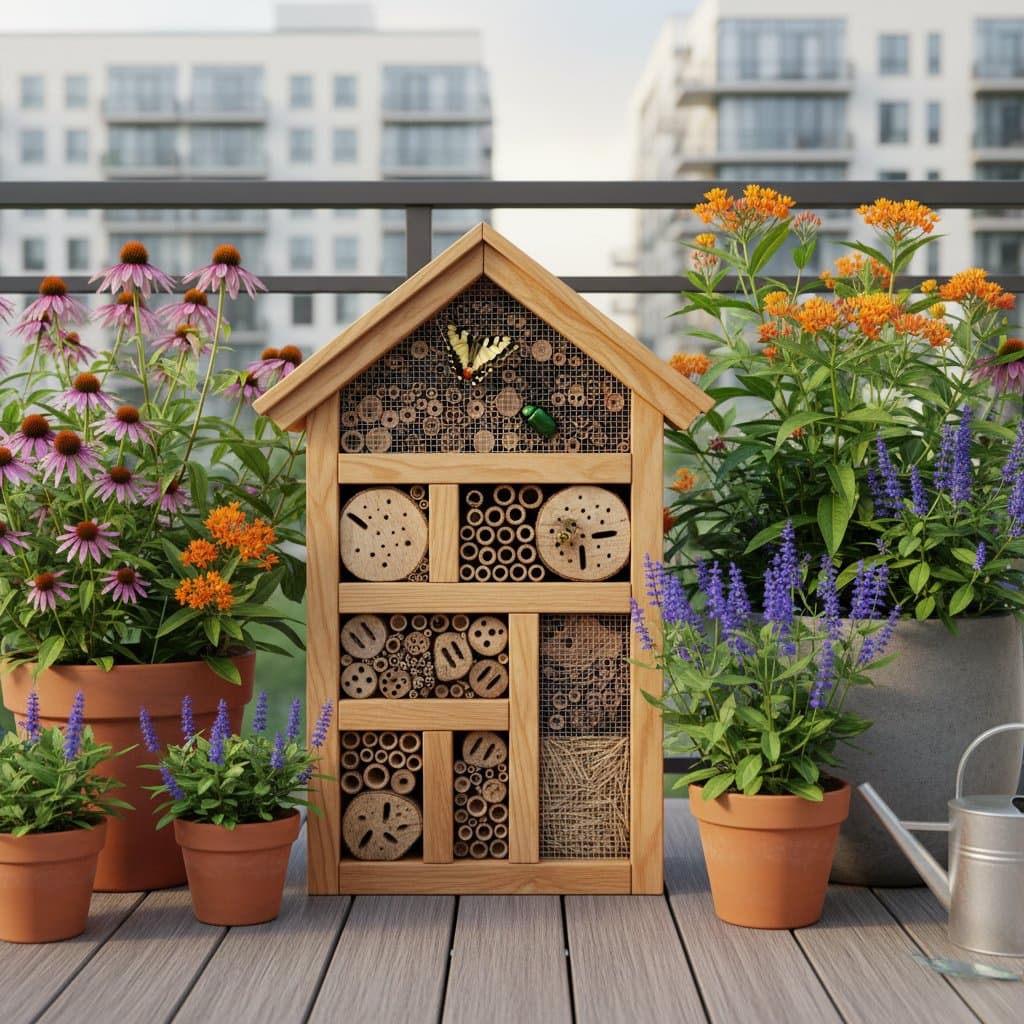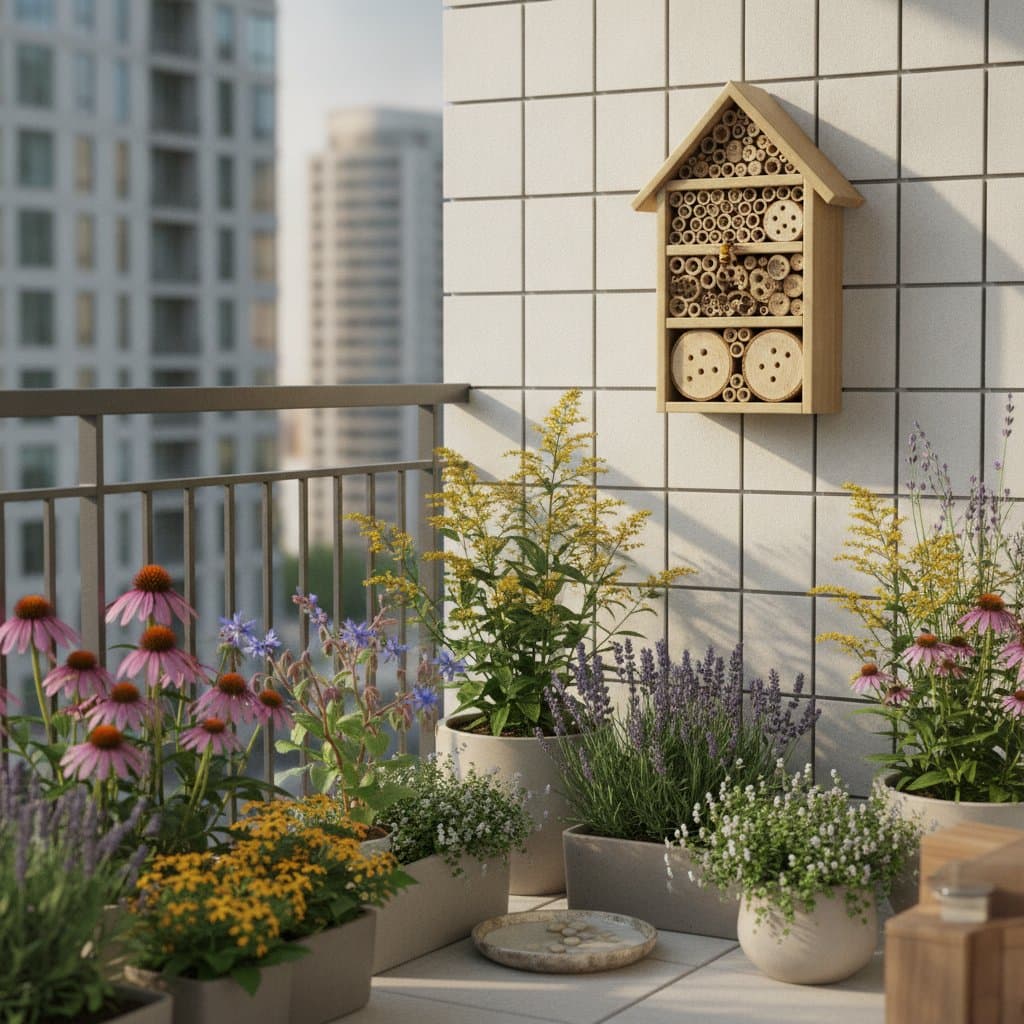
Bee Hotels Turn Balconies Into Pollinator Havens
A bee hotel and a few flowering planters convert any balcony into a pollinator station. Learn placement, seasonal care, and simple troubleshooting that helps solitary bees thrive in the city.
Articles tagged with hotels
A bee hotel and a few flowering planters convert any balcony into a pollinator station. Learn placement, seasonal care, and simple troubleshooting that helps solitary bees thrive in the city.
Convert your balcony into an essential habitat for pollinators using a bee hotel. These structures provide nesting sites for solitary bees, enhance urban biodiversity, and allow you to observe nature's intricate processes up close. Follow straightforward, cost-effective methods to construct, care for, and safeguard this vital urban ecosystem throughout the year.
Turn a standard balcony into a vibrant ecosystem using a DIY mini bug hotel. Constructed from recycled wood, bamboo, and natural fillers, this project offers safe nesting for pollinators and insects. Affordable and eco-friendly, it promotes city biodiversity, aids local gardens, and reveals nature's subtle dynamics close to home.
Elevate your balcony gardening by installing a bee hotel for solitary pollinators. This guide details construction materials, safe placement, seasonal care, and plant pairings to foster a vibrant urban habitat that benefits bees and your green space.
Compact bee hotels convert urban balconies into vital refuges for solitary bees, which play a crucial role in pollinating plants. Constructed from basic untreated materials, these structures provide safe nesting sites that promote robust growth in limited spaces. Explore techniques for building, positioning, and caring for your bee hotel to establish a sustainable pollinator habitat amid city surroundings.
Convert your balcony into a vibrant biodiversity hub with a pollinator deck. Build and maintain an insect hotel to shelter bees, butterflies, and beetles, while enhancing urban ecosystems in compact areas. Employ basic materials, strategic placement, and native plants to maximize every inch of space for city wildlife.