
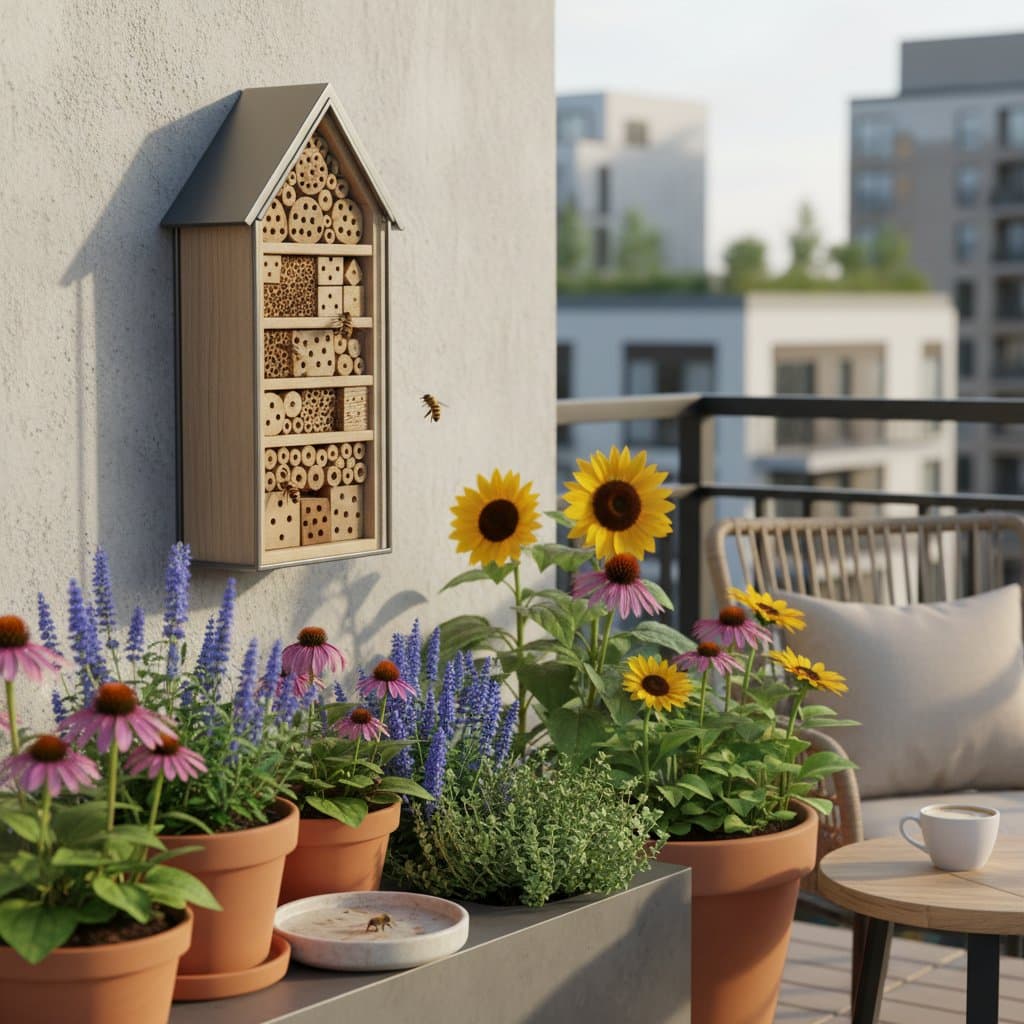
Enhancing Balcony Biodiversity with Bee Hotels
Urban balconies offer limited space, yet they hold potential as vital refuges for pollinators. These insects, including bees and butterflies, sustain city ecosystems by aiding plant reproduction. A bee hotel transforms even modest outdoor areas into supportive environments without requiring extensive landscaping.
This guide details the purpose of bee hotels, their ecological importance, construction or purchase options, and strategies for year-round maintenance and protection.
Understanding Bee Hotels
A bee hotel consists of a compact structure designed to offer nesting cavities for solitary bees. Unlike honeybees, solitary bees do not form colonies in hives. Females provision individual cells within tubes or holes with nectar, pollen, and an egg, then seal the entrance with mud, resin, or chewed leaves for the offspring to develop undisturbed.
In dense urban settings, natural nesting sites such as hollow stems or wood crevices remain scarce. Bee hotels address this shortage by attracting non-aggressive species like mason bees and leafcutter bees. One mason bee accomplishes the pollination work of approximately 100 honeybees, benefiting nearby flowers, vegetables, and wild plants while providing residents with an engaging view of pollinator activity.
Essential Materials and Tools
Constructing a bee hotel requires basic, accessible items, with total costs typically below twenty dollars. Many components can derive from household recyclables or inexpensive purchases.
Core Materials
- Untreated softwood block, measuring roughly 8 inches wide by 6 inches deep and 4 inches thick
- Bundles of hollow bamboo canes or sturdy paper straws, cut to 4-6 inches in length
- Power drill equipped with spade or Forstner bits ranging from 3/32 inch to 3/8 inch (2.5 mm to 10 mm)
- Medium-grit sandpaper for refining hole edges
- Galvanized wire or heavy-duty twine for secure hanging
- Sloped scrap wood or plastic panel for a protective overhang
Additional Options
- Fine metal mesh or hardware cloth to shield against birds
- Non-toxic, water-based sealant applied solely to exterior surfaces
- Adjustable railing bracket for stable mounting on balcony edges
Construction Process
Follow these steps to assemble a functional bee hotel suited to balcony constraints.
-
Choose the Installation Location. Select a position receiving at least six hours of direct sunlight, ideally morning exposure from the south or southeast. Position the hotel 3 to 5 feet above ground level, sheltered from prevailing winds and heavy downpours by nearby walls or planters.
-
Prepare the Wooden Base. Select solid, chemical-free pine or cedar to avoid toxicity risks. Clamp the block securely and sand all surfaces to eliminate sharp edges that could injure insects or users.
-
Create Nesting Cavities. Drill holes of varying diameters (3/32 to 3/8 inch) to depths of 4 to 5 inches, ensuring they stop short of penetrating the back. Space holes at least 1/4 inch apart in a staggered pattern to accommodate multiple bee species and promote airflow.
-
Incorporate Tubing Options. Insert bamboo canes or paper tubes into pre-drilled channels or bundle them within a wooden frame using natural twine. Ensure rear ends remain sealed or capped to mimic natural nests.
-
Install Weather Protection. Affix a protruding roof element, extending 2 inches beyond the front and sides, using corrosion-resistant screws. This feature directs rainwater away and maintains internal dryness.
-
Secure the Structure. Attach via looped wire through pre-drilled top holes or a bracket to prevent movement. Test stability by applying gentle pressure; a firm hold encourages bee occupancy.
-
Document Setup Details. Affix a discreet label noting the installation date and season. This record aids in monitoring emergence cycles and assessing long-term success.
Safety Considerations
Prioritize caution during assembly to protect both builder and future inhabitants.
- Equip yourself with safety goggles and gloves when operating power tools.
- Steer clear of pressure-treated or varnished wood in nesting areas, as preservatives leach toxins harmful to developing larvae.
- Maintain a firm grip on materials and use clamps to stabilize workpieces, keeping hands distant from rotating bits.
- Disinfect tools post-use with soap and water to eliminate wood particles that might introduce contaminants.
Annual Maintenance Routine
Regular upkeep prevents disease transmission and ensures the hotel remains an attractive nesting site. Perform deep cleaning annually, ideally in late winter or early spring.
- After nesting season, extract completed tubes and store them horizontally in a breathable mesh bag or ventilated container at cool temperatures (around 50 degrees Fahrenheit) until emergence.
- Inspect and discard any moldy or damaged sections; gently scrub reusable frames with a 1:10 vinegar-water mix, then rinse thoroughly and dry completely in sunlight.
- Replenish with fresh, clean materials before peak nesting periods, typically March through June in temperate climates.
Conduct monthly inspections for signs of excess moisture or structural wear. If pooling occurs, add discreet 1/8-inch drainage vents at the base, positioned to avoid intersecting nesting paths.
Common Challenges and Solutions
Address potential issues promptly to sustain a healthy habitat.
Lack of Bee Activity. Relocate to a brighter, warmer spot if initial placement receives insufficient light. Trim overhanging foliage and ensure proximity to flowering plants within 50 feet.
Moisture and Mold Issues. Enhance ventilation by spacing tubes slightly apart and selecting breathable materials. Replace affected elements immediately and avoid impermeable coatings inside cavities.
Predation by Birds. Install a removable mesh screen with openings no smaller than 1/4 inch over the entrance face, secured with ties for easy bee access.
Intrusion by Ants or Wasps. Eliminate nearby attractants like sugary spills or decaying matter. If competition persists, shift the hotel 10 feet away into direct sunlight, where solitary bees thrive over social species.
Cost and Time Investment
A homemade bee hotel assembles in approximately two hours, depending on tool familiarity. Commercial versions range from fifteen to fifty dollars, with premium choices featuring durable hardwoods and integrated drainage. Invest in quality to extend usability beyond three years, reducing replacement frequency.
Year-Round Care Schedule
Align maintenance with seasonal bee behaviors for optimal results.
-
Spring Preparation: Inspect for emerging adults and refresh nesting provisions. Position near early-blooming nectar sources like herbs or perennials.
-
Summer Monitoring: Observe nesting progress without interference; clear spider silk or debris that might block entrances.
-
Fall Protection: Allow completed nests to remain undisturbed for larval maturation. Harvest tubes only after confirming emergence.
-
Winter Safeguards: Relocate to a wind-protected balcony corner or insulate with breathable fabric if extreme cold threatens. Avoid enclosed storage that traps humidity.
Set recurring reminders via a digital calendar to foster consistent care, enhancing the habitat's effectiveness over time.
Effective Storage Practices
Maintain spatial consistency if rearranging balcony elements; bees navigate by landmarks and prefer familiar sites. Preserve spare tubes in airtight containers within a cool, dry interior space, inspecting annually for degradation.
Apply subtle, non-toxic markers—such as colored twine ties—to batches for rotation tracking. Discard and replace older stock every two seasons to minimize pathogen risks.
Seeking Expert Assistance
Consult local environmental organizations or extension services if you detect unusual damage, such as enlarged holes from wood-boring insects or unidentified residues. Professionals can diagnose issues and recommend targeted interventions without disrupting the ecosystem.
Key Benefits and Next Steps
Bee hotels deliver targeted support to solitary pollinators essential for urban green spaces. By ensuring dryness, stability, and sunlight, you create a reliable haven that boosts local flora and fauna.
Annual material refreshes curb pests and diseases, while passive observation deepens appreciation for biodiversity's role in city life. Start small, track progress, and expand your efforts to foster a more resilient urban environment.