
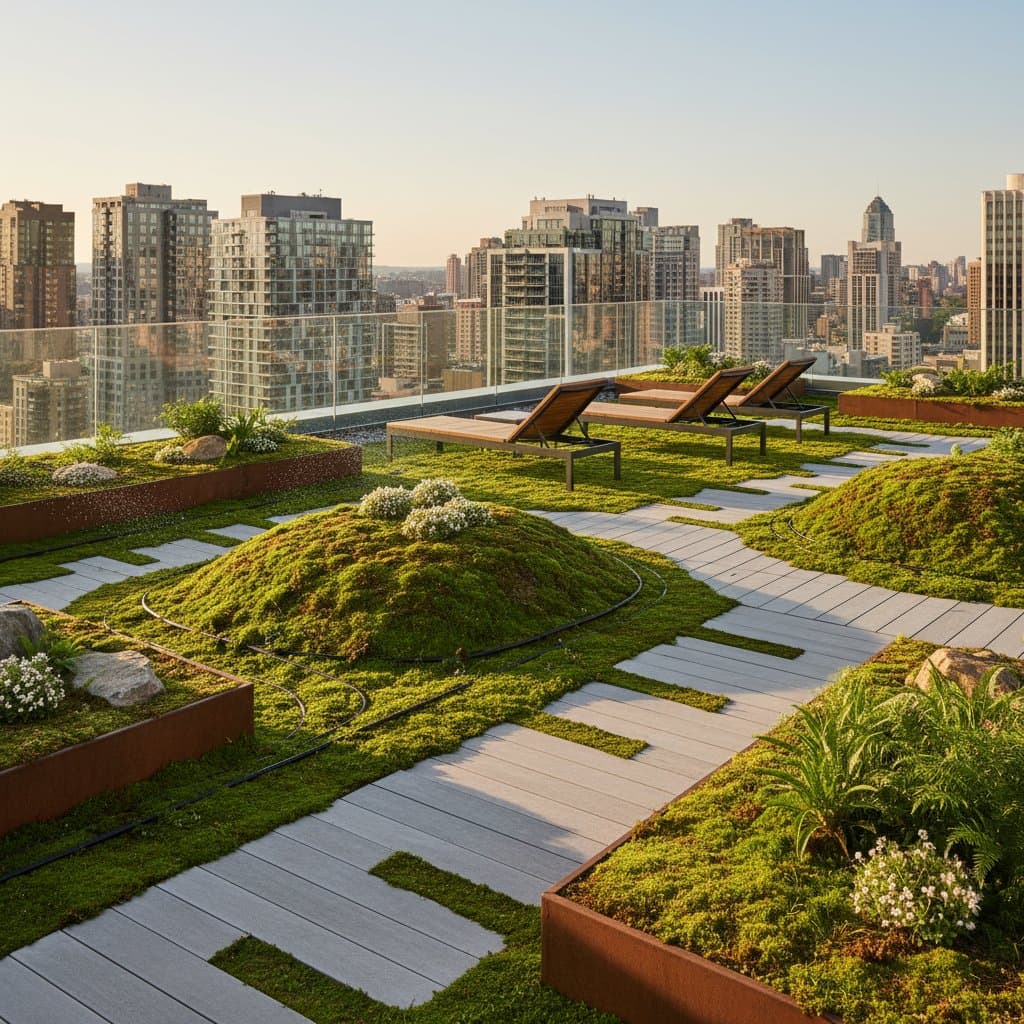
Moss Carpets as a Low-Maintenance Alternative to Grass in Rooftop Gardens
Urban dwellers often seek greenery for rooftops, yet the demands of watering, mowing, and soil management associated with grass prove burdensome. Moss carpets provide a soft, verdant appearance with far less effort. These installations create lush, low-maintenance surfaces that remain cool and resilient in confined city environments. This article explains the nature of moss carpets, their advantages in elevated settings, and a detailed process for installation.
Overview of Moss Carpets
A moss carpet consists of tightly interwoven moss species that form a dense, living mat over soil or specialized fabric. In contrast to grass, moss requires no mowing and flourishes in shallow substrates. It absorbs moisture directly from the atmosphere and performs best in shaded or partially shaded conditions. On rooftops, moss serves as an ideal replacement for turf, which often succumbs to intense sunlight and wind exposure.
Primary advantage: Moss carpets retain moisture effectively, mitigate rooftop temperatures by up to 30 degrees Fahrenheit, and deliver a tranquil, natural aesthetic while using 80 percent less water than conventional grass.
Essential Tools and Materials
Projects can begin with modest trays or extend to entire roof decks. Gather these items to proceed:
- Moss sheets or plugs: Typically available in packs covering 10 square feet
- Lightweight substrate: 2 to 3 inches (5 to 8 cm) of sandy loam or a proprietary moss blend
- pH test kit: To verify levels between 5.0 and 5.5, optimal for moss growth
- Mister or spray bottle: For precise, gentle hydration
- Shading fabric or pergola: Recommended for roofs with high sun exposure
Ensure the overall roof load remains below 20 pounds per square foot. Consult a structural engineer for assessments on expansive installations.
Installation Steps
Step 1: Inspect the Roof Foundation
Verify that the roof membrane remains intact and waterproof, with no punctures present. Address any leaks prior to proceeding. Moss thrives with steady moisture but cannot tolerate pooling water.
Step 2: Prepare the Substrate Layer
Install a slim drainage base using gravel or coarse sand. Layer the lightweight substrate atop it, targeting a 2-inch depth to retain hydration and secure the moss.
Step 3: Install the Moss
Firmly press moss sheets into the moistened substrate. For plugs, position them 4 inches apart to allow spreading. Apply a light mist until the surface develops a subtle sheen.
Step 4: Maintain Initial Moisture
During the first month, mist daily during warmer periods. Without roots, moss draws water through its foliage. After establishment, limit watering to two or three sessions per week.
Step 5: Provide Temporary Shade
On sun-drenched roofs, introduce partial shading for the initial weeks. Established moss varieties endure brief dry periods with resilience.
Safety Considerations
- Select non-slip footwear for all rooftop activities.
- Refrain from working during high winds or inclement weather.
- Avoid traversing newly installed moss for at least two weeks to permit secure attachment.
Common Issues and Solutions
Developing dry patches: Increase misting frequency or evaluate wind patterns that accelerate evaporation.
Moss turning yellow: Test for elevated pH levels and apply a diluted vinegar solution to adjust acidity.
Delayed growth: Boost ambient humidity with nearby water trays or minimize direct sunlight.
Ongoing Maintenance Practices
Established moss carpets demand minimal intervention. Clear debris and dust monthly through gentle rinsing. Employ a soft broom to remove accumulated leaves or particles. In arid or winter months, apply water weekly to preserve vibrancy and texture.
Opt for rainwater collection, as municipal supplies often prove too alkaline. Extract emerging weeds manually to prevent proliferation.
Handling Excess Materials
Preserve spare moss sheets in a shaded, humid container. Shield them from direct light and utilize within weeks. Revive dried pieces by submerging for ten minutes prior to use.
Cost and Timeline Estimates
A 100-square-foot installation ranges from $300 to $600, varying by moss variety and substrate quality. Small-scale setups complete over a single weekend. Annual maintenance expenses pale in comparison to those for grass lawns.
Engaging Professional Assistance
Enlist a certified roofer for load-bearing evaluations or drainage modifications. Green roof specialists prove invaluable for commercial-scale projects, including irrigation planning and membrane reinforcements.
Inquire about:
- Precise load capacities per square foot
- Moss species suited to local light and climate
- Ongoing service agreements for seasonal upkeep
Adapting to Seasonal Changes
In summer, monitor for excessive dryness and mist as needed to sustain green hues. Winter preparations involve clearing fallen debris to avoid smothering. Spring offers ideal timing for expansions, leveraging natural humidity for faster establishment.
Building a Thriving Rooftop Ecosystem
Rooftop moss carpets not only conserve water but also enhance biodiversity in urban settings. They support pollinators and improve air quality, fostering sustainable living. Begin by assessing your space's conditions, then scale installations to match your vision for a resilient, green retreat.