
Loading...

Solar Drip Irrigation Automates Balcony Garden Watering | urbanoutdoorsnyc.com | Urban Outdoors - Small-Space Gardens, Rooftop Decks, Balconies, Decks, Backyard Design
Skip to main content
Urban Outdoors
Search
Home
  1. Home
  2. /
  3. Small-Space Gardens
  4. /
  5. Solar Drips Water Your Balcony Garden Automatically
Small-Space Gardens

Solar Drips Water Your Balcony Garden Automatically

byDawn Hayden
2026-04-14 05:08:37April 14, 2026
7 min read
Featured image for Solar Drips Water Your Balcony Garden Automatically

Categories

Navigation

  • Home
  • All Articles
  • About Us
  • Privacy Policy
  • Terms of Service

© 2026 Urban Outdoors. Crafted for bold city dwellers.

2026-04-14 05:08:37
Urban Outdoors - Small-Space Gardens, Rooftop Decks, Balconies, Decks, Backyard Design

Automate Balcony Garden Watering with Solar Drip Systems

Balcony herbs and rooftop vegetables require consistent moisture to flourish, yet manual watering demands significant daily effort. A solar drip irrigation system addresses this challenge by harnessing solar energy to provide reliable hydration without relying on electrical outlets or rigid schedules. This approach maintains optimal soil conditions, allowing gardeners to focus on enjoyment rather than routine tasks. The following sections explain the system's components, operation in compact urban settings, and straightforward installation and maintenance procedures.

System Overview

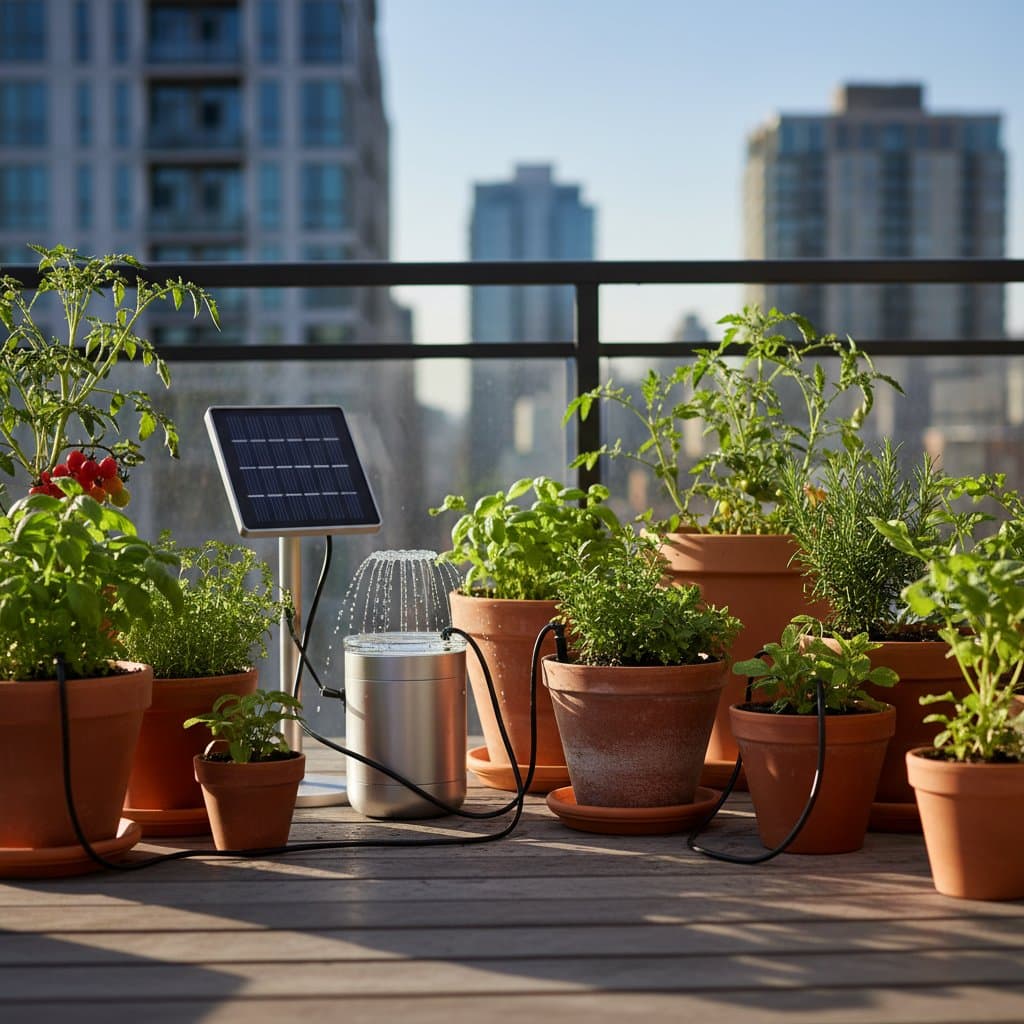
A solar drip irrigation system employs compact solar panels to generate power for a submersible pump, which draws water from a reservoir and distributes it via narrow tubing to individual drip emitters positioned at plant bases. These emitters release water gradually, ensuring direct delivery to root zones for maximum absorption efficiency. Many systems feature adjustable timers or flow regulators, enabling customization based on specific plant requirements and environmental conditions.

This technology proves essential for urban gardeners facing space constraints and limited access to power sources. Traditional hand-watering can consume up to five gallons per session with a hose, whereas a drip emitter typically uses only one gallon per hour, minimizing overall water usage. By keeping foliage dry, the system reduces the risk of fungal infections, a common issue in humid city environments. Solar-powered designs suit balconies, patios, and rooftops perfectly, offering portability and independence from grid electricity.

Key advantages encompass:

  • Automated operation powered by abundant sunlight.
  • Uniform soil hydration that enhances root development and yield.
  • Minimal water loss, preventing runoff in confined areas.
  • Easy relocation, benefiting renters and those with modular garden setups.

In addition to efficiency, these systems promote sustainability by reducing reliance on municipal water supplies and eliminating the need for battery replacements. Gardeners report up to 50 percent savings in time and water compared to conventional methods, making it a practical choice for busy urban dwellers.

Essential Tools and Materials

Assembling a foundational solar drip setup requires selecting components scaled to your garden's dimensions. Prioritize durable, weather-resistant items designed for outdoor applications to ensure longevity.

  • One compact solar panel rated at 3 to 10 watts, sufficient for small pumps.
  • One pump unit equipped with a built-in timer or manual controller for cycle management.
  • One water reservoir, such as a 2- to 5-gallon bucket or tank, positioned for gravity assistance.
  • 20 to 50 feet of 1/4-inch micro tubing for flexible routing.
  • 10 to 20 drip emitters calibrated at 0.5 to 1 gallon per hour output.
  • Assorted connectors, elbows, and stakes to anchor tubing securely.
  • Sharp scissors or a dedicated tubing cutter for precise cuts.
  • An optional inline filter to prevent debris accumulation, particularly with rainwater sources.

When purchasing, verify compatibility between the solar panel's output and the pump's voltage requirements, typically 6 to 12 volts. Kits from reputable suppliers often bundle these elements, simplifying the process for beginners.

Installation Steps

Step 1: Design the Layout

Map out your container placements and identify watering zones. Calculate the number of plants to determine tubing length and emitter count; allocate one emitter per plant for even coverage. Elevate the reservoir slightly above the garden level to leverage natural gravity for improved flow, especially on flat balconies.

Step 2: Install the Solar Panel

Secure the panel in a south-facing spot receiving at least six hours of direct sunlight daily. Tilt it at 30 to 45 degrees to optimize energy capture, mimicking the sun's path. Ensure the connecting cable extends to the pump without excessive tension, using zip ties for neat cable management.

Step 3: Set Up the Reservoir

Select a stable, shaded location for the reservoir to inhibit algae growth. Fill it with clean tap water or filtered rainwater, then submerge the pump using its suction cup base. Attach an intake hose with a filter if sourcing from non-potable supplies, securing all connections to avoid leaks.

Step 4: Lay the Main Tubing

Attach the primary tubing line to the pump's outlet and snake it along container edges or railings. Trim sections to fit between plants, employing T-connectors or elbows for branching paths. Secure the tubing with stakes or clips to prevent shifting from wind or foot traffic.

Step 5: Position the Emitters

Punch small holes in the tubing near each plant base, inserting emitters approximately two inches from stems. Select flow rates based on plant type: 0.5 gallons per hour for delicate herbs like basil, and 1 gallon per hour for thirstier vegetables such as tomatoes. Pressure-compensating emitters maintain consistent output across varying elevations.

Step 6: Test and Fine-Tune

Activate the system during peak sunlight hours and observe drip patterns at each emitter. Run initial cycles of 10 to 20 minutes, then monitor soil moisture after 24 hours; adjust timer intervals to avoid over- or under-watering. Experiment with emitter additions or removals to balance coverage, ensuring no dry spots emerge.

Safety Considerations

Protect electrical components by positioning them away from direct rain exposure and using protective covers during storms. Opt exclusively for low-voltage, UL-certified solar pumps intended for exterior use to minimize shock risks. Monitor reservoir levels diligently to prevent pump operation without water, which can cause overheating or damage.

Common Troubleshooting

If flow weakens, inspect emitters for clogs from sediment or roots; flush with a vinegar solution for 10 minutes to clear mineral deposits. For uneven distribution, verify tubing alignment and tighten all fittings to eliminate air pockets. Should the system fail to power on, wipe the solar panel clean, as even light dust can reduce efficiency by 50 percent; reposition if shading from nearby structures is suspected.

Additional issues may include tubing kinks, resolved by straightening paths, or timer malfunctions, addressed by resetting or replacing the controller. Regular checks prevent minor problems from escalating.

Ongoing Maintenance and Storage

Perform a monthly flush of the entire system with fresh water to deter bacterial or algal buildup. During winter, drain all lines completely, disassemble the pump, and store components indoors at room temperature to shield from freezing. Coil excess tubing loosely and suspend from a hook to preserve flexibility; clean the solar panel biweekly with a soft, damp cloth to sustain peak performance.

Annual inspections of seals and connections extend the system's lifespan beyond three years. Replace worn emitters promptly to maintain precision.

Cost and Time Investment

Entry-level solar drip kits range from 40 to 90 dollars, varying by reservoir capacity and included accessories. Initial assembly for a 10-container garden requires one to two hours, with subsequent adjustments taking minutes. Spare parts like emitters and tubing cost less than one dollar apiece, offering economical upkeep. The upfront investment yields long-term savings through reduced water bills and labor.

Seasonal Adjustments

In spring and summer, extend watering cycles to 20-30 minutes daily, accounting for higher evaporation rates. Fall preparations involve shortening sessions as temperatures drop, while monitoring for frost to protect the reservoir. Winter storage prevents freeze damage; for mild climates, insulate the setup and reduce frequency to weekly checks. Adapt based on local weather patterns to optimize plant health year-round.

Professional Assistance

Seek expert help for complex installations involving multiple zones or integration with existing irrigation. Electricians can address custom solar wiring if standard panels prove insufficient. Consult professionals for rooftop gardens with weight restrictions or high-wind exposure to ensure structural safety.

Implementing Your System

Begin by measuring your balcony dimensions and inventorying containers to gauge scale. Acquire a kit accommodating at least one gallon per plant per watering cycle for reliability. Pilot the setup on a small group of pots to verify performance, then scale up confidently for full coverage and sustained garden vitality.

You Might Also Like

Solar Retractable Roofs Generate Power While You Relax

Solar Pergolas Cut Power Bills While Shading Rooftops

Water 40 Plants from One Bottle with Micro-Drip

Turn Balcony Railings into Solar Power Stations

Smart Shade Sails Cut Rooftop Heat by 30 Degrees

Tagged:

solar,systems,micro,automated,drip,irrigation,watering,automated-watering,micro-drip-systems,solar-irrigation

Recent by Dawn Hayden

Image for Solar Pergolas Cut Power Bills While Shading Rooftops

Solar Pergolas Cut Power Bills While Shading Rooftops

Apr 1, 2026
Image for Cut Urban Deck Noise with Acoustic Panels

Cut Urban Deck Noise with Acoustic Panels

Apr 1, 2026
Image for Water 40 Plants from One Bottle with Micro-Drip

Water 40 Plants from One Bottle with Micro-Drip

Mar 31, 2026
Image for Balcony Microclimates: Your Key to Year-Round Comfort

Balcony Microclimates: Your Key to Year-Round Comfort

Mar 22, 2026
Image for Mushroom-Based Deck Tiles Cut Carbon and Maintenance

Mushroom-Based Deck Tiles Cut Carbon and Maintenance

Mar 22, 2026

solar

Image for Solar Retractable Roofs Generate Power While You Relax

Solar Retractable Roofs Generate Power While You Relax

Apr 13, 2026
Image for Solar Pergolas Cut Power Bills While Shading Rooftops

Solar Pergolas Cut Power Bills While Shading Rooftops

Apr 1, 2026
Image for Turn Balcony Railings into Solar Power Stations

Small-Space Gardens

Water 40 Plants from One Bottle with Micro-Drip

Elevate your balcony garden with a micro-drip irrigation system that hydrates up to 40 plants from one bottle. This guide covers setup instructions, troubleshooting, seasonal care, and ways to achieve water-efficient, low-effort plant health in city spaces.

Mar 31, 2026

Garden Walls That Block 70% City Noise in Small Spaces

Convert a bustling urban balcony or patio into a tranquil haven using a garden wall that diminishes up to 70 percent of city noise. This guide covers selecting optimal materials, installing sound-absorbing panels, incorporating plants, and performing upkeep to achieve enduring noise mitigation, seclusion, and aesthetic appeal in just one weekend.

Mar 21, 2026

Turn Your Balcony into a Pollinator Refuge

Elevate your balcony into a flourishing pollinator retreat featuring native flowers, basic equipment, and thoughtful maintenance. This guide demonstrates how modest planters can support bees and butterflies, boost city biodiversity, and add vivid hues to apartment living with limited space, expense, and mere minutes of daily attention.

Categories

Deck Construction & Remodeling(228)
Balcony Design(193)
Rooftop Decks(83)
Small-Space Gardens(83)
Backyard Design(22)

Turn Balcony Railings into Solar Power Stations

Mar 29, 2026
Image for Rooftop Decks Stay 40% Cooler with Shade Sails

Rooftop Decks Stay 40% Cooler with Shade Sails

Mar 17, 2026
Image for Retractable Shade Sails Cut Rooftop Heat by 20°F

Retractable Shade Sails Cut Rooftop Heat by 20°F

Mar 15, 2026
Mar 19, 2026

Native Plants Turn Balconies into Bee Havens

Elevate your balcony into a vibrant pollinator sanctuary by incorporating native plants that support bees year-round. This guide covers plant selection for diverse blooms, optimal setup in containers, essential care routines, and strategies to ensure safety and longevity in compact urban spaces.

Mar 16, 2026

AI Sensors Cut Water Waste and End Plant Guesswork

Elevate your balcony or windowsill garden using AI sensors that track soil, light, and nutrients instantly. Discover automation techniques to cut water use, avoid plant distress, and streamline maintenance for precise, rewarding results in urban settings.

Mar 12, 2026

Balcony Gardens That Feed City Bees in 5 Containers

Turn a compact balcony into a vital habitat for pollinators using simple containers and native flora. This practical guide details plant selections, setup tips, and maintenance routines that draw bees, support ecosystems, and elevate city greenery.

Mar 12, 2026

AI Cuts Balcony Watering Work by Half

Transform your urban balcony into a vibrant garden using AI-powered watering technology. Intelligent sensors and mobile applications eliminate uncertainty in plant hydration, conserve resources, and maintain lush growth. Discover setup methods, personalization options, and upkeep strategies that require no advanced horticultural skills, only innovative tools.

Mar 8, 2026

Using Plants to Block Noise in Tiny City Gardens

Turn a bustling urban garden into a tranquil haven by leveraging plants to dampen noise. Dense shrubs, varied greenery layers, and textured plants work together to absorb and redirect sound waves. Gain insights into optimal plant selections, arrangement techniques, and upkeep advice for a vibrant, noise-mitigating retreat.

Mar 6, 2026

Plants That Absorb City Noise on Small Balconies

Turn a bustling city balcony into a tranquil haven using sound-absorbing plants. This guide covers optimal choices like bamboo, ferns, vines, and evergreens, plus arrangement strategies, container tips, and upkeep advice to enhance quiet and aesthetics in limited spaces.

Mar 3, 2026

Turn 100 Square Feet Into a Thriving Urban Meadow

Revitalize neglected urban corners into serene, pollinator-friendly meadows within 100 square feet. Explore practical steps for site assessment, selecting native plants, installation, and ongoing care to foster biodiversity and tranquility in city environments.

Feb 27, 2026

Balcony Fish Tanks Feed Plants While Cleaning Water

Convert your balcony into a compact, self-sustaining garden using aquaponics. Fish provide nutrients for plants, which in turn cleanse the water, enabling continuous harvests of lettuce and herbs. Explore setup, maintenance, and tips for efficient urban food production that reduces costs and environmental impact.

Feb 27, 2026

Silent Drip Tape Solves Deck Container Watering

Convert a compact deck into a vibrant garden using silent drip tape. This low-pressure system delivers precise hydration to container plants without generating noise or wasting resources. Follow steps to plan, install, and maintain the setup for reliable moisture, reduced maintenance, and an enhanced urban outdoor space.

Feb 22, 2026

Fish Waste Feeds Plants in 4x6 Feet of Space

Convert your balcony into a self-sustaining food system with aquaponics, where fish and plants support each other in a closed-loop setup. This guide details how to design, assemble, and maintain a compact system in a 4x6-foot space, yielding fresh greens and nutritious fish while conserving water and eliminating synthetic fertilizers.

Feb 16, 2026

Dwarf Fruit Trees Turn Balconies into Productive Orchards

Transform your balcony into a productive micro-orchard with dwarf fruit trees designed for containers. These compact varieties deliver full-sized flavor from citrus, figs, apples, peaches, and cherries. Follow expert guidance on selection, setup, and maintenance to harvest fresh fruit, add seasonal beauty, and create a serene urban retreat.

Feb 16, 2026

Build Living Walls That Block Urban Noise

Urban noise can disrupt outdoor enjoyment, but a well-designed living wall offers an effective solution. This guide details how to construct an acoustic plant barrier that reduces sound, boosts greenery, and improves air quality in compact yards. Follow these practical steps to install a sustainable feature that requires minimal ongoing effort.

Feb 15, 2026

AI Drip Systems End Uneven Deck Garden Watering

Elevate your deck garden with AI-powered drip irrigation that maintains ideal soil moisture through sensors, intelligent controls, and adaptive algorithms. This guide covers planning, setup, and optimization for a hassle-free, eco-friendly watering solution tailored to urban outdoor spaces.

Feb 14, 2026

Dwarf Fruit Trees Bring Fresh Harvest to Your Balcony

Transform your balcony into a productive mini orchard using dwarf fruit trees. Select suitable varieties, containers, and soil mixtures, and follow guidance on pruning, watering, and seasonal maintenance. Harvest pesticide-free fruit, gain lush greenery, and create a serene urban oasis.

Feb 12, 2026

Pergolas That Fit Balconies Under Six Feet Wide

Turn a narrow balcony into a private outdoor haven with a compact pergola under six feet wide. This guide covers planning essentials, step-by-step construction, material choices, safety measures, budget considerations, and maintenance strategies to create a functional shaded retreat in urban environments.

Feb 11, 2026

AI Sensors Text Care Reminders to Your Balcony Plants

Struggling to keep balcony plants healthy in the city? AI-powered sensors eliminate guesswork by monitoring key conditions like soil moisture, light exposure, and humidity. These devices send direct text reminders to your phone, guiding you toward optimal care and vibrant growth year-round.

Feb 9, 2026

AI Plant Walls Cut Daily Watering to 10 Minutes a Week

Convert urban walls into thriving, self-sustaining gardens using AI plant walls. These innovative systems manage irrigation, lighting, and nutrients automatically, delivering lush foliage with minimal effort while boosting indoor air purity and aesthetic appeal.

Feb 7, 2026