
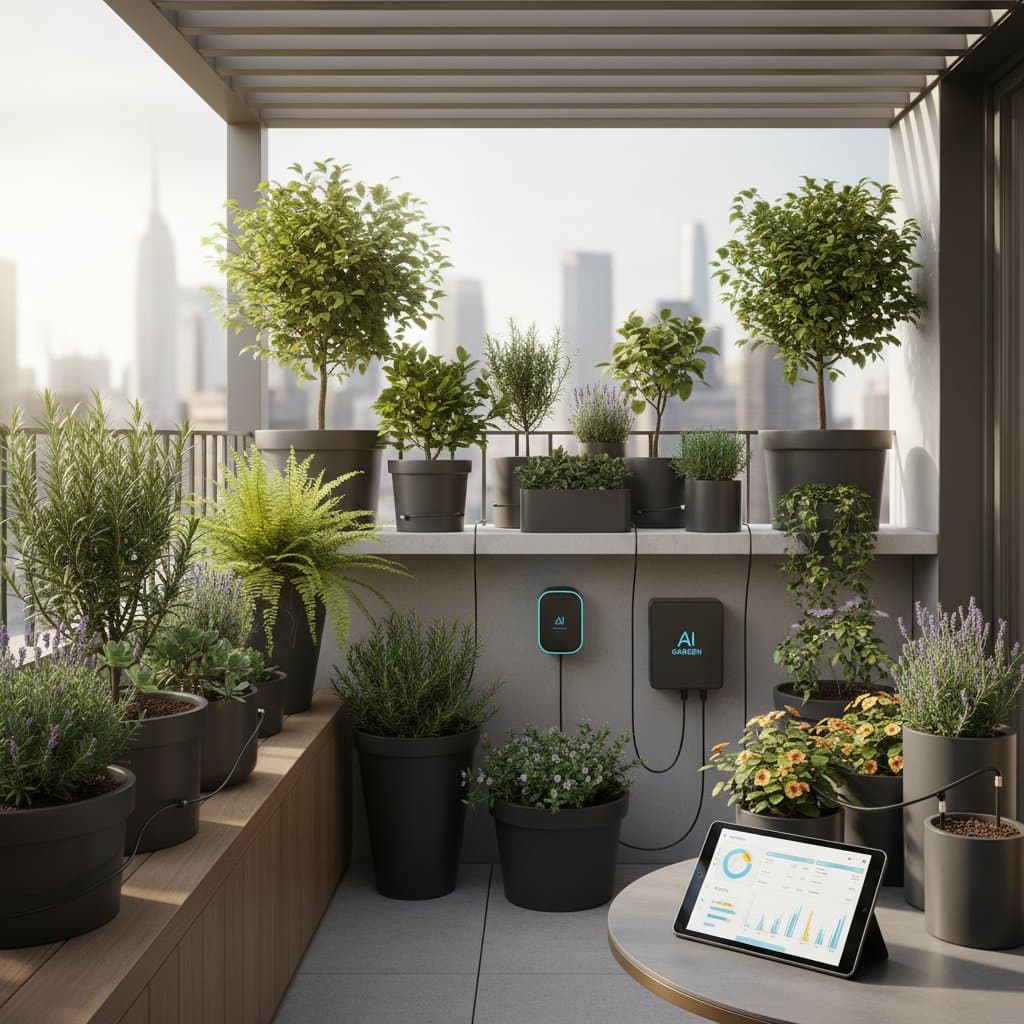
AI Drip Systems Automate Balcony Plant Care Effortlessly
Balcony plants lose moisture quickly due to sun exposure, wind, and limited soil volume. A single missed watering session often leads to wilting or slowed growth. AI drip systems address this challenge by monitoring conditions and delivering exact amounts of water to each container.
Users set up the tubing and controller once. The system then manages daily irrigation while owners focus on other garden tasks.
Core Components of an AI Drip System
An AI drip system combines sensors with automated controls to regulate water delivery. Soil moisture probes, light meters, and temperature readings feed data into software that calculates precise volumes for each plant. Microtubing carries water from a reservoir or faucet to individual emitters placed in the pots.
This configuration reduces excess runoff, protects balcony surfaces, and operates effectively in spaces without permanent plumbing.
Required Tools and Materials
Assemble the following items for a typical balcony installation:
- AI irrigation controller with wireless connectivity
- Soil moisture sensors, positioned to cover groups of two or three pots
- Drip tubing measuring approximately 25 feet
- One emitter per plant
- T-connectors and hose clamps for secure joins
- Water source adapter or small pump
- Outdoor rated power supply
Select UV resistant parts when the balcony receives direct sunlight.
Installation Process
- Group plants according to similar water requirements before laying out lines.
- Cut tubing to length and position it with slight slack for future adjustments.
- Insert emitters one inch into the soil near each plant.
- Place sensors midway between emitters and stems.
- Secure the controller close to the water source while keeping cords elevated.
- Connect the controller to its companion application and set thresholds based on plant species.
- Activate a test cycle and verify uniform flow at every emitter.
Keep tubing free of sharp bends or foot traffic to maintain consistent pressure.
Safety Measures
Install the controller on a ground fault protected circuit. Route all lines away from walkways. Examine fittings each month to detect leaks before they affect flooring.
Common Issues and Corrections
Wilted foliage usually indicates sensors positioned outside the active root zone. Move probes closer to the plant base. Excessive watering cycles can be corrected by lowering frequency settings in ten percent steps through the application. Blocked emitters respond to removal and rinsing with warm water.
Cost and Setup Time
A basic system for ten to fifteen containers requires an investment between 90 and 150 dollars. Assembly and calibration generally require two hours. Durable components lower replacement expenses over multiple seasons.
Ongoing Care
Flush lines every three months to remove mineral deposits. Inspect power connections during the same interval. Clean sensor surfaces with a soft cloth to preserve measurement accuracy.
Planning Your Installation
Survey the balcony layout and identify clusters of plants that share water needs. Record daily sun patterns and container sizes. Select a compact AI drip kit matched to these observations. After activation the system maintains hydration on its own schedule.