
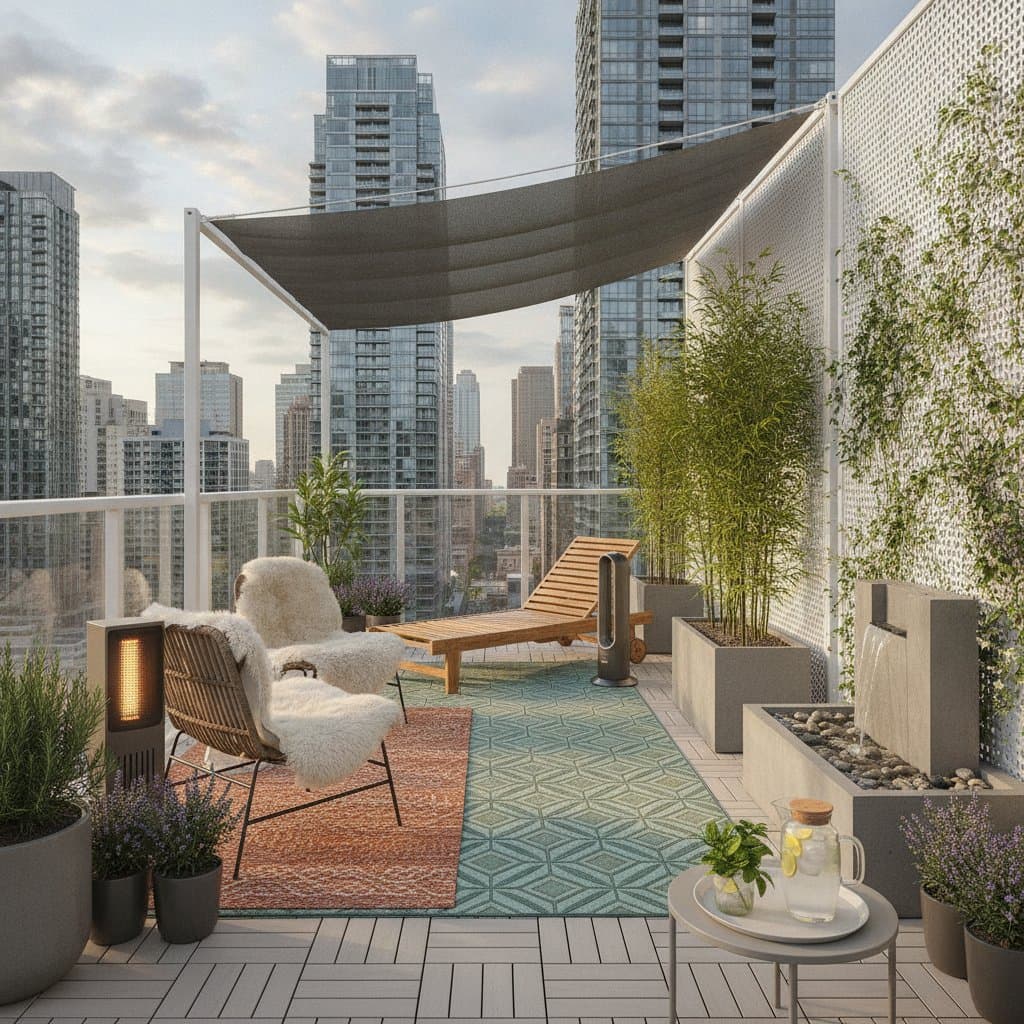
Balance Light and Privacy
Install LED string lights that emit a warm color temperature near 2700 kelvin. This setting replicates the soft glow of sunset and avoids harsh glare. Secure all cords along railings or under furniture edges to eliminate trip hazards. Connect the lights to a timer or smart plug so they activate automatically at dusk.
Pair the lighting with tall plantings for added privacy. Position planters of ornamental grasses or bamboo 18 to 24 inches apart. The vertical foliage blocks sight lines while remaining light enough for most balcony structures.
Manage Moisture
Damp air lowers perceived temperature and accelerates corrosion on metal surfaces. Store cushions and textiles in waterproof bins when not in use. Select quick-dry fabrics for seating and rugs. Inspect railing joints and floor seams regularly for pooled water. On covered balconies, leave one side open during humid periods to encourage airflow.
Never obstruct built-in drains or scuppers. These outlets protect the building structure from water damage.
Layer Surfaces
Multiple surface layers create small air pockets that buffer temperature swings. Lay a weatherproof rug over a closed-cell foam mat, then top both with slatted deck tiles. The trapped air adds roughly 1.5 to 2 R-value per inch of foam thickness. The added insulation often raises perceived warmth enough for comfortable bare feet on cool evenings.
Safety Guidelines
- Select only devices and cords rated for outdoor exposure and connect them to grounded outlets.
- Examine every cord for cracks or moisture before each use.
- Keep open-flame heaters and candles away from fabric panels and wood screens.
- Verify railing load ratings before attaching heavy planters or wind screens.
Consult the building manager whenever weight limits or fire regulations remain unclear.
Common Issues and Solutions
Wind remains noticeable across the space. Angle wind panels slightly inward so gusts rise rather than cross the seating area.
Humidity builds quickly. Reduce fabric coverage and place a small fan on a timer to maintain steady air movement.
A heater trips the circuit. Move the unit to a dedicated outlet or choose a lower-wattage model. Never rely on extension cords that lack outdoor heavy-duty ratings.
Ongoing Care
Inspect outdoor fabrics monthly for mildew. Clean with mild soap and rinse thoroughly. Store cushions indoors during extended wet or cold spells. Cover and unplug heaters before severe freezes.
Wipe thermometer and humidity sensors clean each season. Replace batteries annually. Check shade anchors and fasteners for rust and tighten any loose hardware ahead of windy months.
Cost and Schedule
A complete microclimate arrangement typically costs between 250 and 900 dollars, depending on balcony size and chosen materials. Begin with a single heater, one outdoor rug, and a basic wind screen for under 150 dollars.
Assembly for a standard 6 by 10 foot balcony requires three to five hours. Additional time may be needed for drilling or electrical work.
Professional Assistance
Engage a licensed electrician before adding a new outlet or hardwired heater. Hire a contractor for awning frames or structural brackets. Confirm three points with any professional: whether the planned load stays within balcony limits, whether all anchors carry exterior ratings, and whether the heater needs a dedicated circuit.
Immediate Actions
Map sun and wind patterns across the balcony during a single ten-minute observation. Introduce one new comfort layer, such as a rug or shade sail. Record temperature changes with a basic thermometer to measure the effect of each addition.