
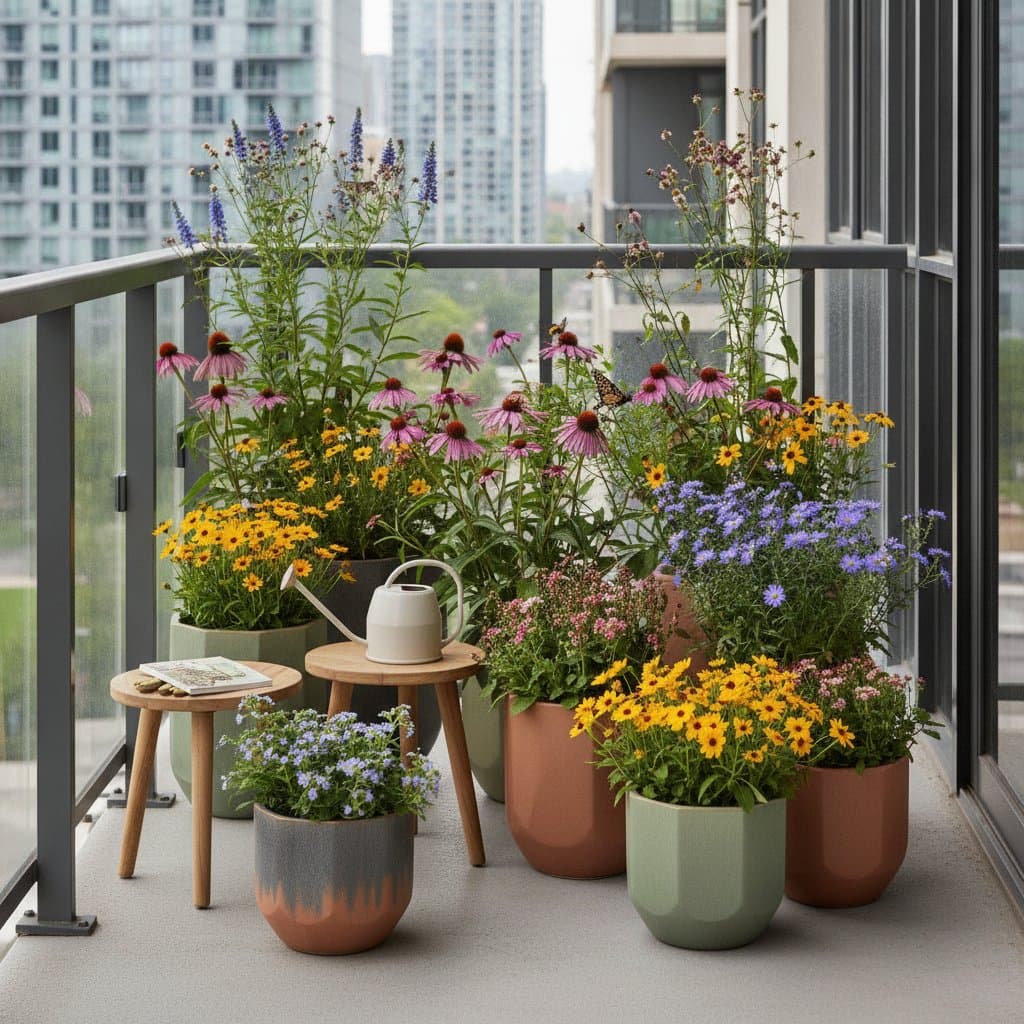
Small Balcony Designs That Support Local Pollinators
A small balcony can host more life than many expect. Even a six by four foot space can feed bees, butterflies, and small birds when it offers the right plants and shelter. The goal remains straightforward. You want a calm corner for yourself and a steady food source for local pollinators.
With a few containers, smart plant choices, and attention to light and water, your balcony can become a pocket habitat that helps balance city biodiversity.
Overview
Pollinators move pollen between flowers and help plants produce seeds and fruit. In cities, native bees, moths, and butterflies often struggle to find enough nectar and nesting areas. Balconies and terraces fill that gap when they include native plants and small resting spots.
You do not need a large garden. You only need a clean start, sunlight, and a plan that fits your balcony size and exposure.
Tools and Materials
You can set up your pollinator balcony with a few simple materials. Gather items before planting day so you can finish in one session.
Basic supplies include the following items:
- Four to six medium containers, each at least 10 inches deep
- Lightweight potting mix blended with compost
- Hand trowel, watering can, and gloves
- Natural mulch such as shredded bark or leaf mold
- One small trellis or railing planter for vertical space
- A shallow water dish with small stones for landing spots
- Native plants grouped by bloom time: spring, summer, and late season
Store tools near the balcony door in a plastic bin so they stay dry and ready.
Steps
- Assess sunlight. Count the hours of direct sun your balcony receives. Most pollinator friendly flowers prefer at least four hours of light. If your space receives less, select shade tolerant natives such as wild ginger or foamflower.
- Clean and prepare the area. Sweep the floor, check railings for rust, and confirm drainage holes in each container. Standing water can attract mosquitoes, so ensure containers drain freely.
- Mix soil. Fill each pot three quarters full with potting mix, then blend in one handful of compost per gallon of soil. This approach keeps nutrients steady through the season.
- Plant in layers. Place taller plants such as bergamot or black eyed Susan toward the back or railing. Fill middle zones with coneflower or wild geranium. Use low growers such as creeping phlox near the front.
- Add water and mulch. Water until runoff appears from the pot base, then top with half an inch of mulch to hold moisture.
- Position the water dish. Set the shallow dish on a stable surface. Add stones or marbles so insects can land safely while drinking. Replace water every two days.
- Observe and adjust. Watch which plants attract bees or butterflies first. If one species stays dry or shaded, shift its pot by one foot to find better light. Small changes matter in tight spaces.
Safety Tips
Wear gloves when handling compost and soil to avoid skin irritation. Bend at your knees rather than your waist when lifting containers heavier than 15 pounds. Keep paths clear of loose tools to prevent trips.
If your balcony has weight limits, choose lightweight containers made of resin or fiber rather than clay.
Smart Storage Moves
Space remains limited, so store items vertically. Use a three tier plant stand or hang baskets from sturdy hooks. A narrow shelf can hold up to 20 pounds per level. Keep fertilizers and spare soil sealed in a plastic tub under a bench seat.
Label each plant container with waterproof tags so you can track bloom times and maintenance needs.
Budget and Time
A starter setup with six containers and ten plants usually costs between 80 and 120 dollars. Most of the cost comes from the first round of pots and soil. Each planting session takes two to three hours, including cleanup.
After setup, plan 15 minutes twice a week for watering and quick checks. Low cost tips include swapping seeds with neighbors or local garden groups, reusing food grade buckets or wooden crates as planters after drilling holes, and collecting rainwater in a small barrel to reduce water bills.
Avoid cutting corners on soil quality. Cheap, dense mixes restrict roots and hold too much water.
Seasonal Reminders
Pollinator support changes with the weather. Each season needs a small adjustment.
Early spring requires cleaning debris and pruning dead stems to one inch above soil. Add fresh compost and check for winter cracks in containers.
Mid summer calls for watering early in the morning or late in the evening to prevent leaf scorch. Remove faded blooms to encourage new flowers.
Late fall involves leaving a few seed heads for birds. Move pots closer to the building wall for warmth and wind protection.
Troubleshooting
If you see few insects after several weeks, check for these issues. Too much wind calls for a mesh screen or tall plant barrier to slow airflow. Pesticide drift requires asking nearby residents or building managers to avoid spraying chemicals near your balcony. Bloom gaps mean ensuring at least one species flowers each month of the warm season.
If plants wilt quickly, test drainage by pouring one quart of water into the pot. If water stands for more than 30 seconds, add coarse sand or perlite to lighten the mix.
When to Call a Pro
If your balcony structure shows cracks, loose railings, or water damage, contact a building maintenance professional before adding weight. For pest infestations such as wasp nests or carpenter bees in walls, call a licensed pest service. Ask them to use pollinator safe methods that avoid broad insecticides.
Creating Your Urban Habitat
Your balcony can become part of a network of small urban habitats that feed and shelter pollinators. Start by planting three reliable species native to your region. Keep one water source clean and visible. Record which insects visit and share notes with nearby gardeners.