
Planting and Watering
Set each seedling so the top of its root ball rests level with the soil surface. Backfill the container gently and firm the mix around the base of the plant. Water thoroughly until excess moisture drains from the bottom holes.
During the first two weeks, provide water each morning. Once roots establish, reduce frequency to every two or three days and adjust the schedule according to heat or rainfall.
Features That Support Pollinators
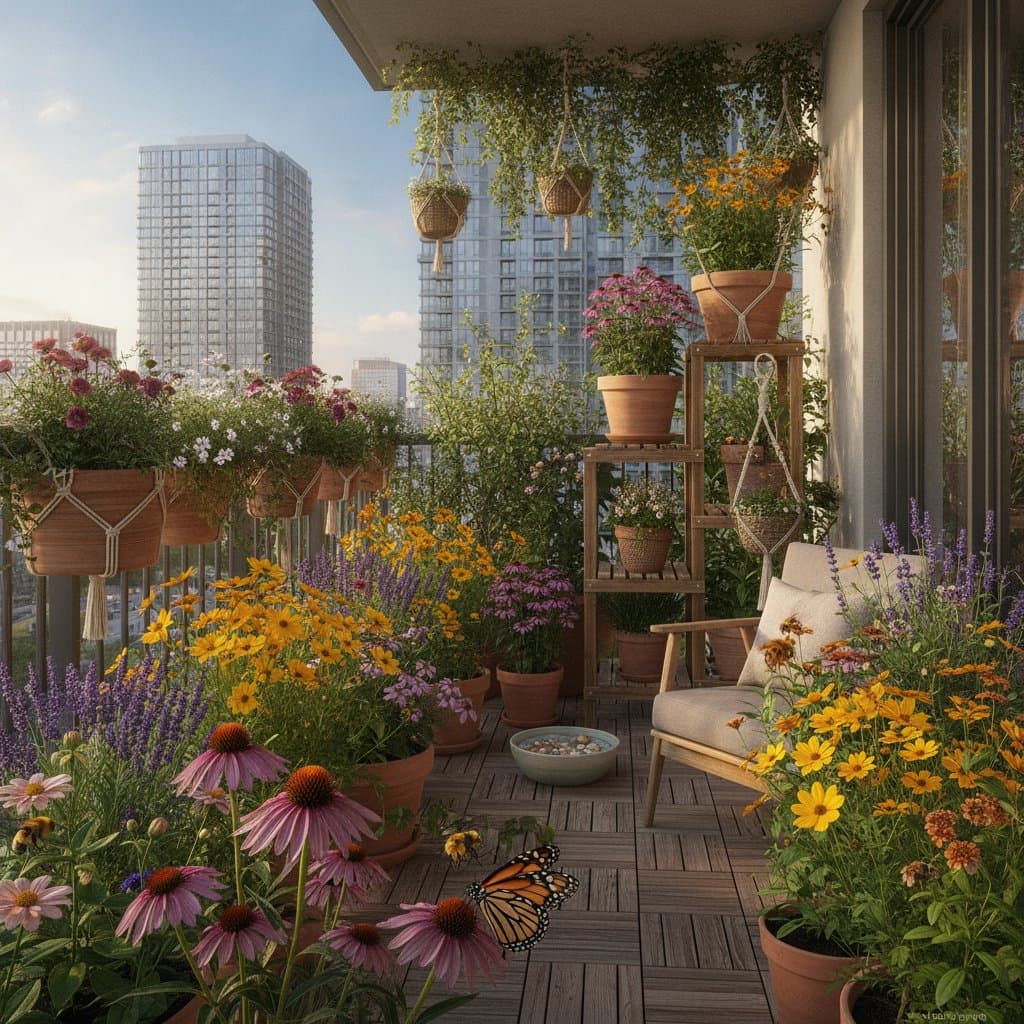
Bees and butterflies require water and shelter in addition to flowers. Place a shallow dish filled with pebbles and one inch of water to create a safe landing site. Bundle hollow stems or install a small bee house in a dry, shaded location to offer nesting opportunities.
Seasonal Maintenance Practices
Remove spent blooms promptly to stimulate fresh growth. Apply a light dose of fertilizer every three weeks. Turn each container a quarter rotation monthly so all foliage receives balanced light. Replace struggling plants at once to maintain dense coverage.
Safety Measures for Balcony Gardens
- Verify the weight capacity of the balcony before positioning heavy containers.
- Anchor hanging planters securely and keep them away from public walkways.
- Store tools and fertilizers beyond the reach of children and pets.
- Wear gloves during pruning and cleaning to avoid cuts.
- Wipe the watering area dry after each use to prevent slips.
Solutions for Common Problems
Leaves that dry or curl often indicate wind or sun stress. Shift pots nearer the wall or add a mesh screen for partial shade.
Sparse flowers or thin growth usually result from low soil nutrients. Incorporate compost or a balanced fertilizer that supplies equal parts nitrogen, phosphorus, and potassium.
Aphids or whiteflies respond to a strong spray of plain water. Repeat the treatment every two days until the insects disappear.
Mold on the soil surface signals excess moisture. Reduce watering frequency and improve drainage with added perlite or coarse sand.
Absence of pollinator visits may improve with greater color contrast or the addition of a shallow water dish. Bees and butterflies notice movement and reflections readily.
Budget Considerations and Time Requirements
A balcony pollinator garden typically requires an initial outlay of eighty to one hundred fifty dollars, with the largest share allocated to containers and potting mix. Packets of seed remain the most economical option at under three dollars each, while seedlings cost more yet deliver earlier blooms. The entire setup can be completed across two weekends.
Monthly maintenance adds only a few dollars for compost and occasional replacements. Watering requires roughly ten minutes every other day. Reused food containers with drilled drainage holes and plant cuttings exchanged with neighbors reduce expenses further.
Routine Care Steps
- Deliver deep watering every few days rather than frequent light applications.
- Blend compost into the upper inch of soil once each month.
- Remove dead stems and faded blooms to promote air circulation.
- Rinse and dry tools after every session to limit rust and disease transfer.
- Inspect and tighten railing brackets and trellis ties at the start of each season.
In colder months, prune plants back to several inches above soil level. Position containers against walls for residual warmth and cover them with burlap to shield roots.
Storage Solutions for Limited Space
- Mount wall hooks or stackable shelves to hold lighter pots.
- Keep soil and tools inside a waterproof bin that also serves as seating.
- Attach waterproof labels to pots to monitor bloom periods.
- Maintain a notebook or photo record of successful plant placements.
When Professional Help Is Needed
Cracks in concrete, rusted railings, or loose brackets require immediate attention from building maintenance or a structural engineer. Rapidly spreading pests that affect neighboring units call for a licensed specialist who can recommend pollinator-safe treatments.
Beginning Your Own Garden
Select three containers, identify one sunny corner, and choose several pollinator-friendly plants. Observe which species attract the greatest activity and note bloom duration. Each small garden strengthens the larger urban network that sustains bees, butterflies, and native vegetation while providing daily enjoyment of living color.