
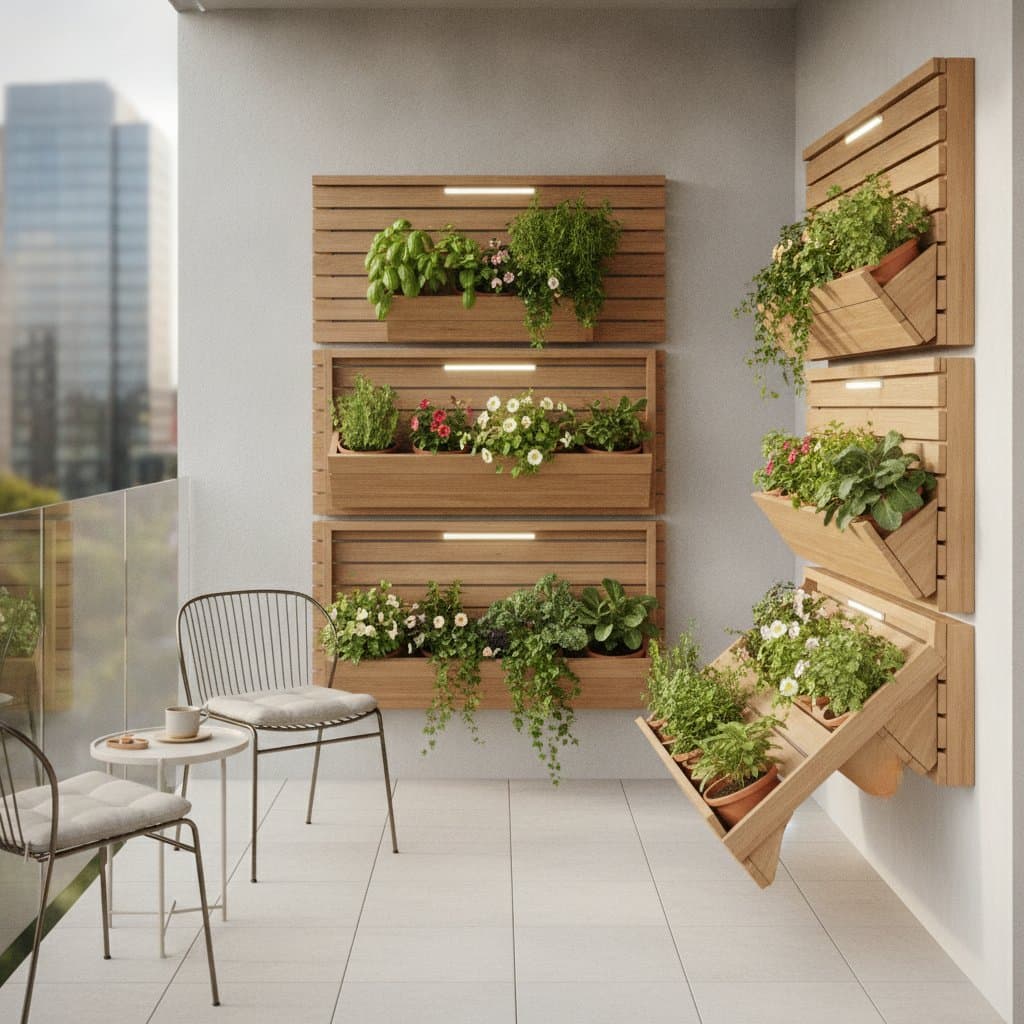
Fold-Down Planters Free Up Balcony Floor Space
Fold-down planters allow urban residents to convert limited balcony areas into productive garden zones. These wall-mounted units swing down for use and fold away when not needed. Proper planning ensures stability, adequate drainage, and long-term durability.
Safety Considerations
- Verify bracket weight ratings before purchase. A compact planter often surpasses 40 pounds when filled with soil and water.
- Select corrosion-resistant screws and hinges. Rust reduces joint strength and raises collapse risk.
- Avoid deep-rooted crops such as tomatoes unless additional reinforcement supports the frame.
- Seal the wall surface around entry points to block moisture intrusion.
- Inspect hinges at the start and end of each growing season. Tighten any loose fasteners immediately.
Common Issues and Solutions
Planter sags or leans. Loose brackets or anchors in soft material cause this problem. Reinstall with heavier-duty anchors or relocate the unit to a wall stud or railing post.
Soil remains soggy. Add several small drainage holes to the liner base. Place a layer of gravel at the bottom to promote airflow.
Plants lose moisture quickly. Strong balcony winds accelerate evaporation. Apply a light mulch layer or shift the planter a few inches inward from the edge.
Hinges show rust. Swap in stainless steel hardware. Apply silicone spray to moving parts monthly.
Cost Breakdown and Setup Time
A ready-made fold-down planter kit ranges from 40 to 80 dollars. Constructing one from cedar or powder-coated steel typically costs 60 to 100 dollars. Budget two hours for mounting and initial planting.
Reclaimed wood panels offer a lower-cost option when lined with heavy plastic to prevent rot. Never economize on hinges or anchors, because these components bear the full load.
Ongoing Care
Check soil moisture every two days during warm periods. Maintain slight dampness without saturation. Wipe hinges and exterior surfaces weekly to clear dust and pollen. Refresh soil annually and replace liners when wear appears. Fold the unit and secure it with a latch during cold months to prevent wind damage.
A well-maintained planter lasts five years or longer. Routine inspections reduce the chance of major repairs.
Optimizing Storage on Small Balconies
Position a vertical rack beside the planter to hold small pots and watering tools. Install hooks beneath the frame for items used only when the unit is lowered. Limit shelf loads to lightweight objects. Heavy items can distort the hinges over time.
Choose matching containers in neutral tones. This approach keeps the area orderly and allows foliage to remain the visual focus.
Professional Installation Options
Engage a handyman or carpenter for masonry, metal, or irregular wall surfaces. Request confirmation of load capacity, sealant application around drilled holes, and precise hinge alignment. Professional installation of a single unit usually requires less than one hour. Labor fees range from 40 to 70 dollars depending on location.
Getting Started with Your First Planter
Begin with one unit and plant frequently used herbs such as basil or parsley. Once the system proves suitable, add further planters at different heights while preserving at least 12 inches between units for air circulation.