
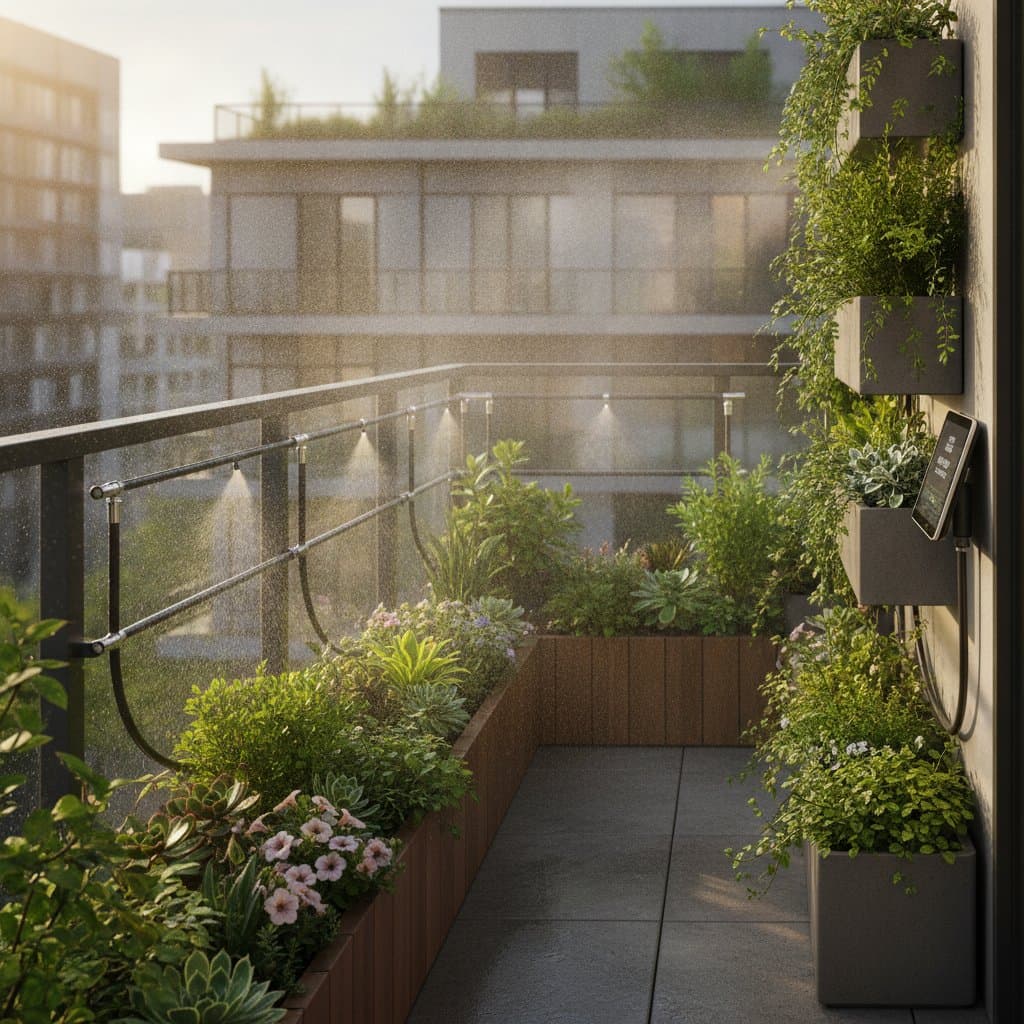
Grow Lush Balcony Gardens With Zero-Water Fog Systems
City balconies expose plants to wind, heat, and shallow soil that cause rapid drying. A zero-water fog system counters these conditions by delivering a fine mist that maintains humidity without daily intervention. This approach reduces water consumption by up to 80 percent while supporting steady plant growth.
Overview
Fog irrigation converts water into microscopic droplets that foliage and roots absorb directly. The process stabilizes surrounding air moisture rather than saturating soil, which eliminates runoff. In confined urban settings the result is cooler microclimates and reduced maintenance.
The system replicates natural dew formation. Pairing it with shade cloth or vertical supports creates a compact, productive garden that remains healthy through dry periods.
Tools and Materials
Ready-made kits or individual components both work. Match every part to balcony dimensions and available water sources.
- Fog nozzles (four to six for a small balcony, stainless steel or brass)
- High-pressure tubing (approximately 20 feet)
- Water reservoir (one to three gallons)
- Pump rated for 100 psi or higher
- Timer or humidity controller
- Mounting clips or zip ties
- Outdoor-rated extension cord
Closed-loop reservoirs capture condensed moisture and return it to the tank, enabling true zero-water operation.
Steps
Plan your layout
Position nozzles 12 to 18 inches above the tallest plants. Distribute them evenly for uniform coverage. Keep mist away from walls and windows to avoid moisture accumulation.
Mount the tubing
Secure tubing along railings or beams with clips spaced every 12 inches. Maintain straight runs to preserve consistent pressure. Add a lightweight frame when existing structures are insufficient.
Connect the pump and reservoir
Locate the pump near a power source but clear of walkways. Fill the reservoir with clean water and attach the tubing inlet with a secure clamp. Route any capture tray return line back into the reservoir.
Install the nozzles
Thread nozzles into the tubing ports and verify seals. Run a brief test to confirm a soft, cloud-like mist rather than large droplets.
Set the timer or humidity controller
Program 10- to 20-second bursts every 15 to 30 minutes during daylight. Target 60 to 80 percent relative humidity and adjust intervals with changing weather.
Monitor plant response
Observe foliage for white residue or mold. Reduce cycle length or improve airflow if these appear. Most setups stabilize within several days.
Safety Tips
Use only outdoor-rated cords and keep connections dry. Switch the system off before any adjustment. Supply filtered water to limit mineral deposits. Place the pump on stable surfaces.
Troubleshooting
Nozzles that sputter require soaking in vinegar solution for 15 minutes followed by rinsing. Dull leaves improve with slightly longer mist cycles and occasional wiping. Drips at joints indicate loose fittings or pressure above 120 psi.
Maintenance and Storage
Clean the reservoir weekly and flush tubing monthly. Replace filters every two months. Drain and coil all components loosely for off-season storage. In freezing climates remove every water-carrying part before the first frost.
Budget and Time
Parts for a small balcony total 100 to 150 dollars. Operating costs remain low because moisture recycles. Installation requires two to three hours. Weekly upkeep averages under 15 minutes. Adding a humidity controller increases the initial outlay by about 40 dollars yet automates daily operation.
When to Call a Pro
Hardwiring the pump or tying into a building supply line requires a licensed plumber or electrician. Confirm that the circuit supports the 60-watt load before permanent installation.
Seasonal Adjustments
Increase mist frequency during heat waves and inspect nozzles weekly. Lower settings in cooler months to avoid excess indoor humidity. Windy conditions benefit from mesh screens that keep fog near foliage.
Building Your System
Begin with a pump, several nozzles, and a clear reservoir tub. Test on one shelf before expanding. Track responses from moisture-loving plants such as ferns and herbs. The finished installation delivers consistent greenery while conserving water and reducing routine tasks.