
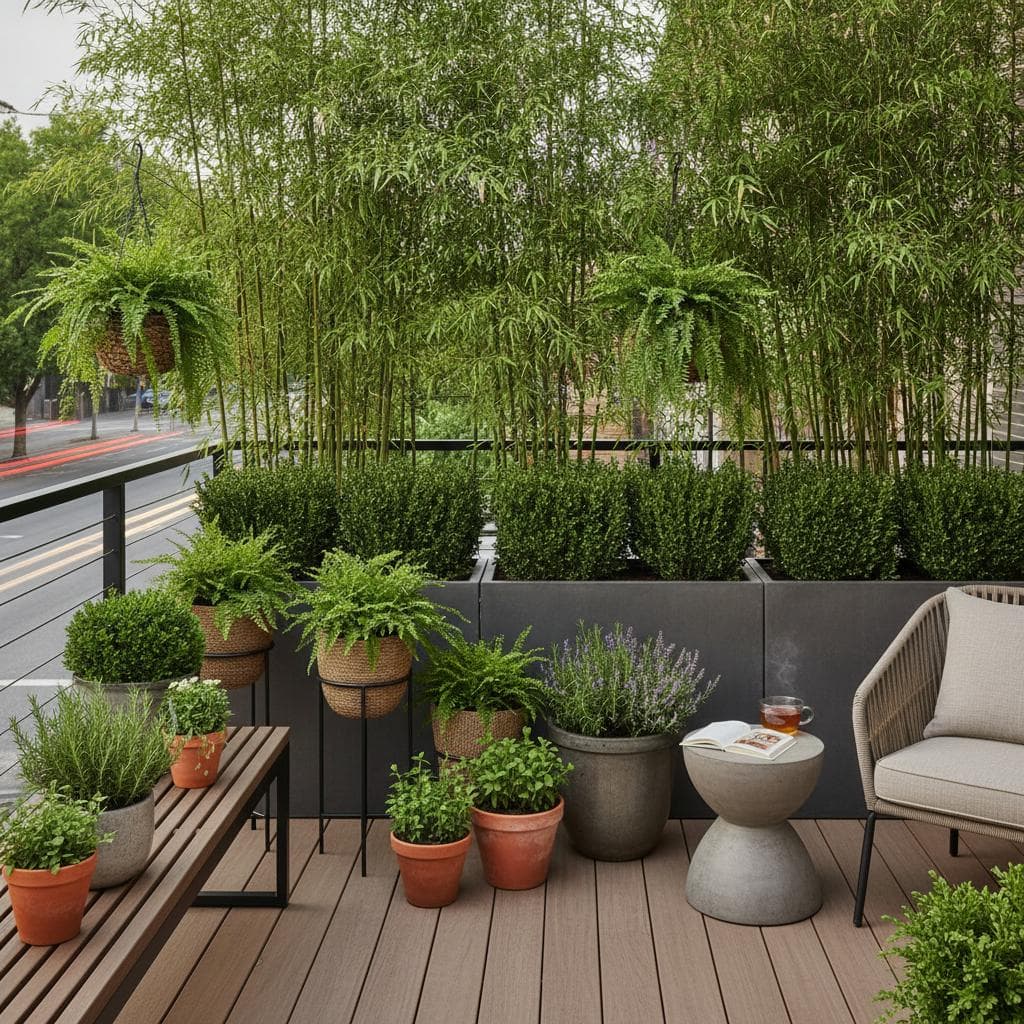
Choosing Plants for Noise Reduction
Dense foliage and layered heights form the foundation of an effective sound barrier on a compact urban deck. Select species with thick leaves or flexible stems that trap sound waves rather than letting them pass through. Bamboo provides quick vertical coverage while boxwood offers dense evergreen screening at lower levels.
Ferns add soft texture that absorbs mid range frequencies. Fragrant herbs such as rosemary and lavender contribute pleasant scent and fill gaps near seating areas. Combine at least three plant types to address different sound frequencies.
Planning the Layout
Position the tallest plants along the deck edge facing the street. Stagger heights so no straight line of sight remains to the traffic source. Place medium shrubs in front of the tall layer and low containers or hanging baskets at the base.
Leave narrow access paths that still allow movement without creating sound tunnels. Measure available floor space first and reserve at least thirty percent of the deck for seating and circulation.
Testing for Sound
After a week of settling, step outside during peak noise. Notice where sound leaks through. Fill open spots with smaller pots or a hanging basket of greenery. The goal is to close visual and sound gaps without blocking light.
Troubleshooting Common Issues
- Plants drying out too fast: Add mulch and shade cloth or move containers out of direct afternoon sun.
- Noise still feels loud: Add height. Even one extra foot of plant cover can cut noise by several decibels. Combine with fabric screens or lattice for extra absorption.
- Uneven growth or yellow leaves: Rotate containers every few weeks. City decks often have one sided light.
- Wind damage: Replace brittle plants with flexible species like bamboo or feather reed grass.
- Limited floor space: Go vertical. Use wall planters or railing boxes to extend coverage upward.
Maintenance Routine
Sound barriers need steady care to stay effective. Check soil twice a week because container plants dry faster than ground gardens. Add slow release fertilizer every few months.
Shape tall plants to keep sightlines open and prune dead stems to reduce clutter. Sweep leaves and debris to prevent drainage issues. Shift planters seasonally so all sides receive light.
City air can coat leaves with dust, which dulls both sound absorption and plant health. Wipe broad leaves gently with a damp cloth once a month.
When Professional Help Is Useful
If the deck faces heavy traffic or a major road, sound levels might exceed what plants alone can manage. A landscape designer or acoustics consultant can test noise levels and suggest combined solutions such as acrylic or wood privacy screens, sound absorbing wall panels, or double row plantings with staggered heights.
Keeping the Barrier Effective
Add one new plant type each season to keep the barrier fresh. Track which spots stay noisy and adjust with portable pots. Spend a few minutes outdoors daily to notice how sound shifts with wind and growth. Over time the layered greenery creates a quieter, more inviting space for daily use.