
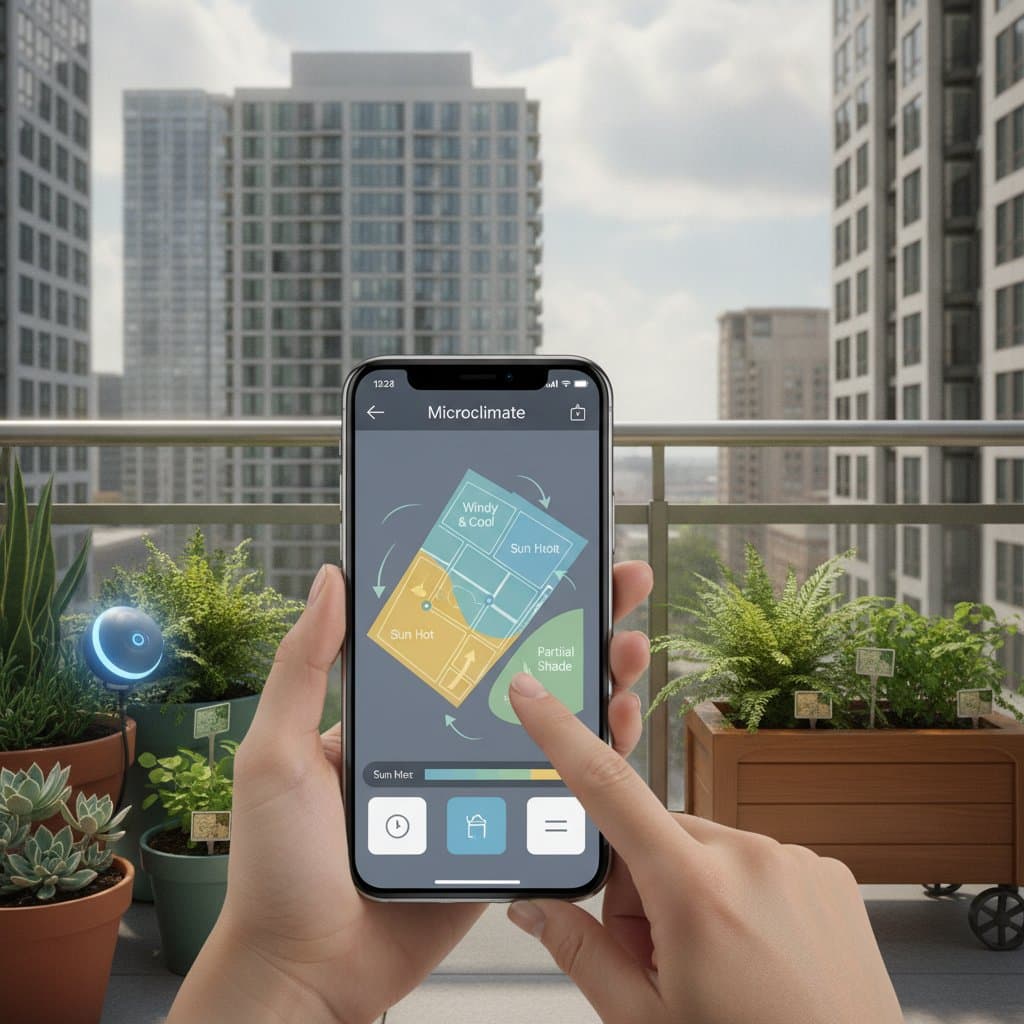
Assess Wind and Humidity Patterns
Some applications rely on phone sensors to gauge wind speed. Confirm these estimates by suspending a small ribbon or lightweight flag to observe air movement directly. Record humidity levels through the sensor or application. When humidity falls below 40 percent, plants with thin leaves benefit from added shade or mulch.
Select Plants for Specific Conditions
Identify zones that receive full sun, partial sun, or shade, then match plants accordingly. Full sun areas suit rosemary, lavender, and dwarf tomatoes. Partial sun supports lettuce, basil, and impatiens. Shade zones work well for ferns, hostas, and begonias.
Group plants that share similar requirements within the same zone. This arrangement simplifies watering routines and reduces risks of over drying or rot.
Refine the Overall Layout
Relocate heavy pots to cooler zones to avoid soil overheating. Choose light colored containers in bright areas to reflect heat effectively. In corners that trap wind, install a trellis or mesh screen roughly three feet high to diffuse gusts. Applications with three dimensional sunlight tracking allow visualization of shadow patterns throughout the day.
Configure Alerts and Watering Schedules
Many applications deliver push notifications when temperature or humidity reaches defined thresholds. Connect these alerts to watering reminders. On balconies that dry rapidly, schedule two short watering sessions each day rather than one extended soak. This approach stabilizes roots and reduces water consumption.
Track Conditions Across Seasons
Repeat sensor measurements monthly or following significant weather shifts. The data reveal whether the current layout maintains stable conditions. Adjust shade cloth or plant groupings when large fluctuations appear. Log every modification in application notes to compile a seasonal record.
Address Common Issues
Plants may wilt despite mild forecasts because balcony heat rises faster than street level readings. Review sensor data for midday temperature peaks and relocate sensitive plants to shaded zones or apply reflective mulch.
Soil that remains wet for extended periods often results from limited airflow or excessive shade. Elevate pots by one inch using risers and increase spacing to improve air circulation.
Inconsistent application readings frequently occur when sensors receive direct sunlight. Shield sensors with a small vented cover to capture ambient air temperatures instead of surface heat.
Bluetooth connections can drop when sensors exceed fifteen feet from the phone. Maintain that distance or switch to Wi Fi models equipped with a compact hub.
Perform Routine Upkeep
Inspect sensor batteries each month. Wipe devices with a dry cloth to remove accumulated dust. Flush lines in smart watering systems once per season to prevent blockages. Recalibrate the light meter annually or whenever readings diverge from visible brightness levels.
Update the application regularly to maintain synchronization with weather services. Developers often improve algorithms for greater accuracy in high rise or shaded environments.
Consult Experts When Necessary
Structural constraints on the balcony or plans to install electrical lines for lighting and sensors require input from the building manager or a licensed electrician. Discuss load limits for planters and furniture, approved attachment points for screens or trellises, and safe pathways for extension cords or irrigation tubing. Professional guidance keeps the setup compliant and secure on upper floors or shared spaces.
Achieve Year Round Garden Success
Consistent monitoring and targeted adjustments create a stable environment that supports healthy plant growth across changing conditions. Data driven decisions reduce maintenance time while maximizing the productivity of limited urban space.