
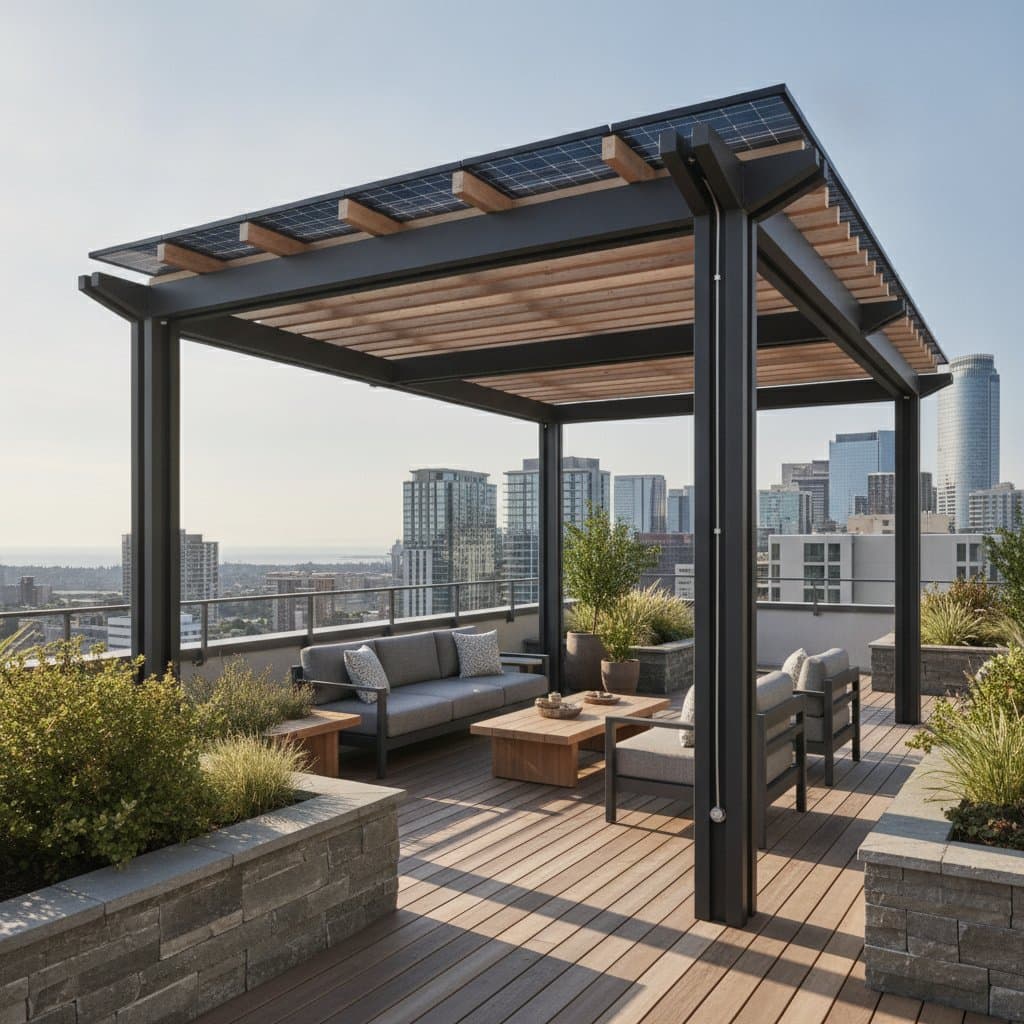
Solar Canopy Pergolas Generate Power While You Relax
Your deck or patio should invite calm, not higher electric bills. A solar canopy pergola can do both. It shades your outdoor space while turning sunlight into energy you can use. The panels above your seating area feed the grid or charge your home battery. You sit below with a book or a drink while your roof quietly earns its keep.
This guide explains what solar canopy pergolas are, how they work, what to expect during installation, and how to keep them efficient. You will see how to plan, budget, and maintain one so it stays safe, beautiful, and productive all year.
Tools and Materials
You can buy a ready-made system or build your own. Either way, you will need these essentials:
- Pergola frame: Wood, aluminum, or steel. Pressure-treated lumber or rust-resistant metal lasts longer.
- Solar panels: Choose monocrystalline or bifacial models rated for outdoor mounting.
- Inverter: Converts the direct current (DC) from panels to alternating current (AC) for home use.
- Mounting brackets and rails: Hold panels in place above beams.
- Wiring and conduit: Carry electricity safely to your main panel or battery system.
- Concrete footings: Anchor posts for stability.
- Fasteners and sealant: Stainless screws, bolts, and weatherproof caulk.
- Safety gear: Gloves, eye protection, non-slip shoes, and a sturdy ladder.
A professional installer will bring specialized tools such as voltage testers, torque wrenches, and grounding kits. If you prefer a DIY approach, make sure each electrical connection follows local code and inspection rules.
Safety Tips
- Check the roof load: Each panel weighs about 40 pounds. Make sure your beams can support that plus snow or rain.
- Avoid working on wet surfaces: Electricity and moisture are a dangerous mix.
- Use approved wiring: Only outdoor-rated cables and connectors prevent corrosion.
- Ground the system: Attach a copper ground wire to reduce shock risk.
- Keep panels clean but safe: Use a soft brush or low-pressure hose, never climb on the panels.
A few hours of careful setup prevent years of repair costs or accidents.
Budget and Time
Costs vary with size, materials, and electrical setup. A standard 12 by 12 foot solar pergola with six bifacial panels usually totals between $8,000 and $14,000. About half goes toward solar components and the rest covers framing and labor. DIY installation can save roughly 25 percent but requires more time and caution.
Expect to spend:
- 2 days for site prep and frame assembly
- 1 day for panel mounting
- Half a day for wiring and inspection
Keep an extra $500 for contingencies such as hidden wiring needs or upgraded breakers. Do not cut corners on safety gear or electrical parts. Cheaper wire or untested inverters can fail early and void warranties.
Seasonal Reminders
Spring
- Clear pollen and dust before the strong sun season begins.
- Tighten bolts that may have loosened during winter.
- Test inverter readings while sunlight is mild.
Summer
- Watch for overheating. Panels should stay below 149 degrees Fahrenheit for best efficiency.
- Clean bird droppings promptly since they block light.
- Use the shaded space for outdoor relaxation or as a charging station.
Fall
- Remove leaves that collect between panels.
- Inspect wiring insulation for cracks caused by heat.
- Apply a fresh coat of sealant on wood beams before rain returns.
Winter
- Brush off snow gently with a soft broom. Never use metal tools.
- Check that drainage paths stay open.
- If you store patio furniture beneath, cover outlets to prevent moisture buildup.
When to Call a Pro
DIY work stops where electrical code and safety testing begin. Hire a professional if you face any of these:
- Electrical panel upgrades
- Grid tie-in or meter installation
- Structural load calculations
- Roof attachments near existing wiring
A licensed installer can verify grounding, voltage balance, and permit compliance. Ask for a written warranty on both structural and electrical work. Many installers guarantee performance for 10 years or longer.
Making It Happen
You do not need to overhaul your property to start generating solar energy. Begin by measuring your deck and sketching a layout. Price out materials and compare quotes from at least two installers. Ask about bifacial panels, inverter brands, and warranties.
Next, decide whether you want grid-tied power or battery storage. Grid-tied systems cost less up front. Battery systems add independence during outages. Either way, you gain an outdoor living space that earns its keep.
Finally, schedule a weekend for frame assembly, then bring in a certified electrician for wiring. By the time your first sunny afternoon arrives, you can relax under the gentle shade of your new solar canopy pergola, knowing every ray above is quietly powering your home.