
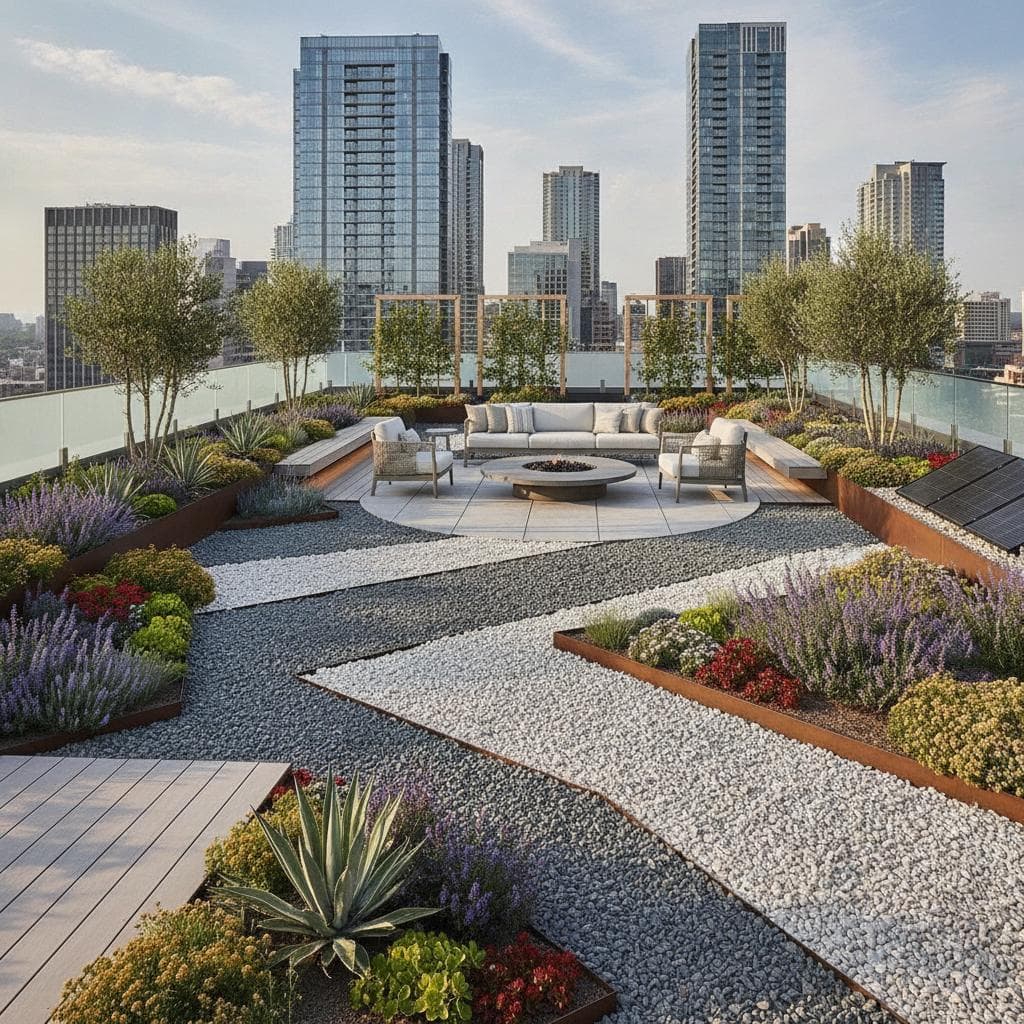
Introduction to Rooftop Gravel Gardens
Gravel gardens provide an effective solution for urban rooftops that demand minimal water and no mowing. These designs layer lightweight gravel over specialized soil and fabric to support drought tolerant plants. The approach creates a clean surface that manages heat and reduces runoff in city environments.
Homeowners gain a modern aesthetic along with practical advantages. The system avoids the heavy irrigation needs of traditional lawns. It also eliminates regular cutting and trimming tasks.
Preparation Steps
Select a flat roof area with confirmed structural capacity before starting. Measure the space accurately to determine material quantities. Clear the surface of debris and inspect the existing membrane for any damage.
Install a root barrier membrane across the entire area. Overlap seams by at least six inches and secure edges with tape designed for outdoor use. This layer protects the roof while allowing excess water to drain.
Add a lightweight growing medium three to four inches deep. Mix in organic matter suited to the chosen plants. Rake the soil level to create an even base for planting.
Planting and Surface Application
Cut small crosses in the fabric at each plant location. Dig holes sized to the root ball and set plants in place. Firm the soil around roots and apply a light initial watering.
Spread a one to two inch layer of gravel over the soil. Rake the material smooth so it covers the surface without covering plant stems. Choose pea gravel sized around half an inch for stability in windy conditions.
Anchor edging with border stones or metal strips. These elements contain the gravel and mark paths or seating areas clearly.
Safety Considerations
Wear gloves during gravel handling to avoid cuts or abrasions. Keep all roof drains and scuppers free of obstruction. Avoid walking on freshly watered soil to prevent compaction.
Position tools and containers away from roof edges at all times. Use footwear with good grip when moving across the surface.
Common Issues and Solutions
Yellowing leaves often indicate excess moisture. Improve drainage paths and adjust watering frequency accordingly. Sinking gravel requires seasonal additions to maintain coverage depth.
Weeds can be removed by hand before seed production. Ensure fabric overlaps remain tight to block light. Larger gravel particles resist wind displacement better than finer grades.
Mix gravel shades during installation to reduce visible stains over time. This creates a more uniform appearance across the garden.
Cost and Time Estimates
Materials for a one hundred square foot garden typically range from two hundred to three hundred thirty dollars. Gravel accounts for sixty to one hundred dollars. Soil costs forty to sixty dollars while plants range from eighty to one hundred fifty dollars.
Edging and membrane add about twenty dollars. Two people can complete the project in one weekend. Larger areas or deeper soil layers increase expenses. Smaller plant sizes and reused containers help control costs.
Ongoing Care Routines
Remove leaves and debris each month to keep the surface clean. Inspect drainage points every three months for blockages. Add fresh gravel and prune dead growth each spring.
Apply slow release fertilizer midseason only if plant growth slows. Cut back grasses and herbs in fall to a few inches above the gravel. Most selected plants spread gradually and rarely require replacement.
Storage and Water Collection
Store extra gravel and a narrow rake in a covered rooftop bin. Keep fertilizer and small tools in a weatherproof container with clear labels. These supplies allow fast repairs after storms.
A small rain barrel can capture runoff from adjacent structures when space permits. Collected water supports occasional deep watering during dry periods.
Professional Assistance
Contact a roofer or landscape professional when water pools after rainfall. Cracked roof membranes also warrant expert evaluation. Heavy planters or furniture additions require structural review first.
Long Term Advantages
Rooftop gravel gardens maintain visual appeal with minimal intervention throughout the seasons. The design supports local biodiversity while lowering overall water consumption. Property owners achieve a durable outdoor space that requires no mowing equipment or frequent upkeep.