
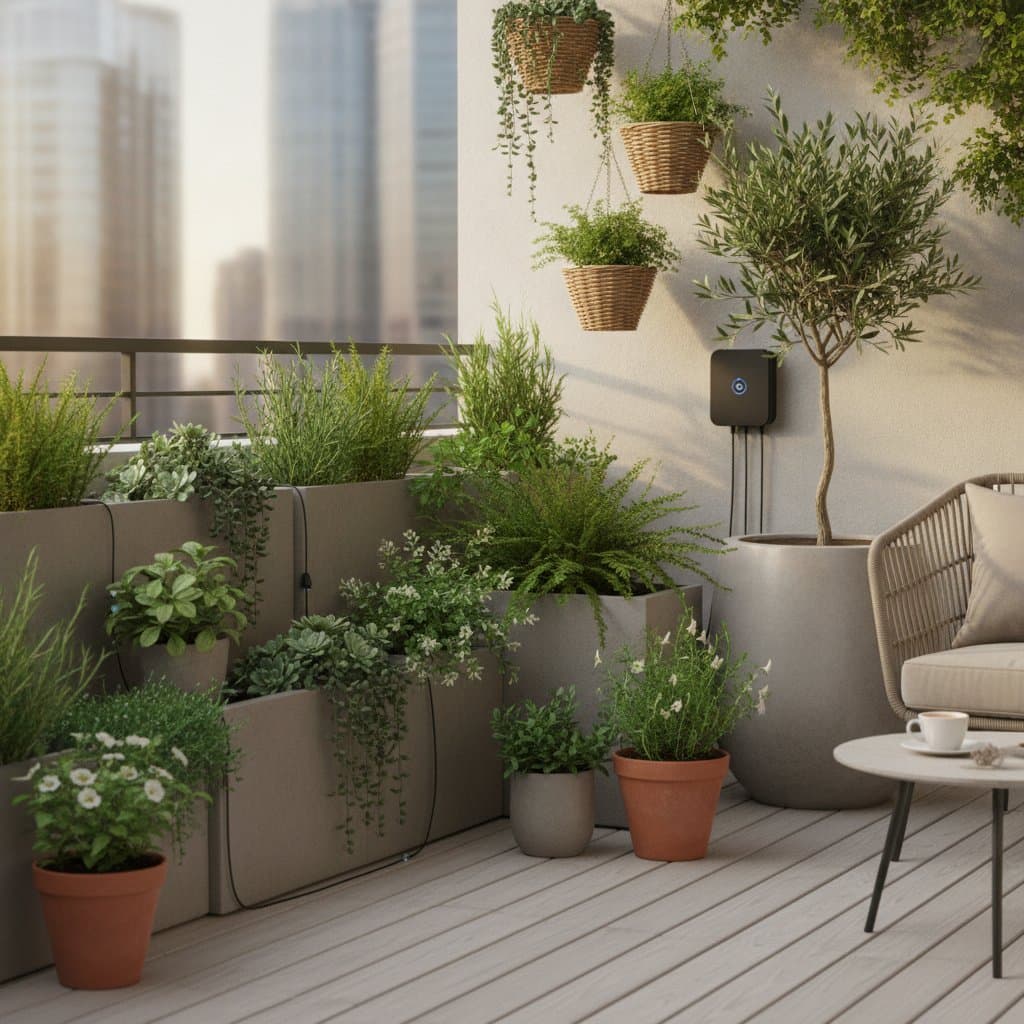
Micro-Drip Systems Reduce Balcony Watering Time
City balconies dry out quickly due to sun exposure, wind, and shallow soil depths. This turns daily watering into a routine chore. A micro-drip system delivers precise moisture to each container. It reduces waste and maintains plant health during periods of absence.
Planning the Layout
Count every pot and measure the distance from the water source to the farthest container. Sketch the route on paper before cutting any tubing. Place the reservoir at least two feet higher than the tallest pot when using gravity flow. This height creates sufficient pressure for even distribution.
Select emitters rated at one gallon per hour for small pots and two gallons per hour for large planters. Position each emitter near the root zone and secure it with a stake. Route tubing along the balcony edge and fasten it with reusable clips to prevent tripping hazards.
Required Components
- Reservoir holding three to five gallons
- Thirty feet of micro tubing for a typical four by eight foot balcony
- One emitter per pot
- Barbed connectors and end caps
- Inline filter to block sediment
- Battery powered timer
- Scissors and pliers
Reuse food grade buckets as reservoirs when they are clean and opaque. Avoid clear containers that promote algae growth.
Installation Steps
Cut tubing to length and flush each section with water before assembly. Attach the filter directly to the reservoir outlet. Connect the timer next, then run the main line along the planned route. Punch holes at each pot location and insert emitters. Test the system for ten minutes and adjust any emitters that produce uneven flow.
Safety Considerations
Verify that the combined weight of filled containers and the reservoir stays within the balcony load rating. Keep all electrical connections in weatherproof boxes. Install a backflow preventer if the system ever connects to a municipal supply. Clean the reservoir interior every thirty days with a mild bleach solution followed by thorough rinsing.
Seasonal Upkeep
Inspect tubing every two weeks for mineral deposits. Soak emitters in vinegar for fifteen minutes at the start of each growing season. Drain all lines completely before the first frost. Store the pump and timer indoors during winter months. Label each line with the corresponding plant name to speed reassembly in spring.
Space Saving Arrangements
Mount vertical shelves along the railing to hold both plants and the reservoir. Coil excess tubing inside a small ventilated box placed beneath a bench. This arrangement keeps the area tidy while allowing quick access for refills.
Initial Testing Protocol
Begin with a five pot section. Run the timer twice daily for five minutes and record soil moisture levels each evening. Increase duration by two minutes if soil dries within twenty four hours. Decrease duration if water pools on the surface. Once the test section performs consistently, expand to the remaining containers.
Long Term Advantages
Consistent moisture delivery eliminates daily watering chores. Plants receive water at the root zone rather than on foliage, which reduces disease risk. The closed system uses up to fifty percent less water than overhead sprinkling. With proper winter storage the same components last multiple seasons.