
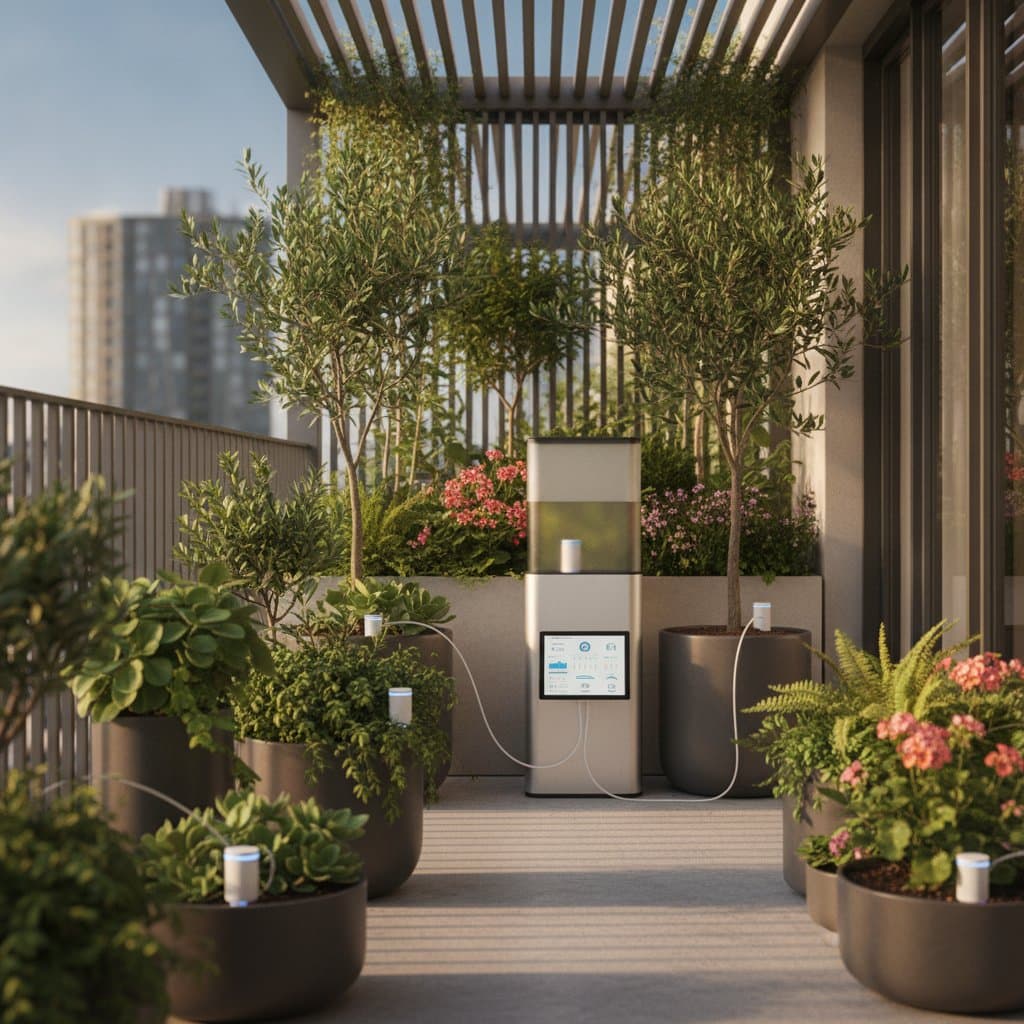
AI Self-Watering Systems for Effortless Balcony Gardens
A balcony garden lifts mood, cools living space, and adds greenery to city life. The challenge lies in delivering the right amount of water at the right time. AI self-watering systems remove daily guesswork through sensors, valves, and adaptive controls that respond to actual soil conditions.
This guide covers system function, required components, safe installation steps, troubleshooting methods, and maintenance routines. Readers will also find guidance on choosing between compact kits and larger setups suited to different balcony sizes.
Core Functions
An AI self-watering system combines moisture sensors, a control hub, and drip lines that monitor soil conditions and sunlight exposure. The controller adjusts water delivery through an app interface that displays live readings and usage trends. Balcony conditions vary sharply between sunlit edges and shaded corners, so automated adjustments prevent both drought stress and root rot.
These systems deliver measurable gains. They reduce water consumption by up to half compared with manual methods. They cut daily care time to a few minutes per week. They maintain plant health during extended absences.
Required Components
Select parts that match the number and type of containers on the balcony.
- Moisture sensors, one per planter or shared between similar small pots.
- A control hub or smart valve that links sensors to the water source.
- 0.25-inch tubing and drip emitters sized for typical balcony containers.
- A 2-to-5-gallon reservoir or hose adapter fitted with a backflow preventer.
- A USB, solar, or battery power supply.
- An optional weather sensor that detects rainfall and sunlight changes.
Complete kits range from 70 to 200 dollars.
Installation Sequence
Plan the Layout
Measure the balcony and group containers by water needs. Herbs and succulents require lower moisture thresholds than tomatoes or ferns. Assign one sensor to each large planter and one sensor for every two small pots that share similar plants.
Position the Water Source
Set the reservoir on a stable, shaded surface to limit algae growth. When using a hose adapter, install a backflow preventer at the faucet. Keep the power supply accessible yet protected from direct rain.
Route Tubing and Emitters
Cut tubing to length and run lines from the valve to each container. Place emitters two inches from the stem base. Secure lines with clips so wind cannot shift them.
Install Sensors
Insert each sensor halfway into the soil, midway between the rim and center of the pot. Avoid root contact. Pair the sensors with the app and run a test cycle to confirm moisture readings rise after watering.
Set Thresholds and Refine
Program the app to water only when moisture falls below chosen levels, such as 35 percent for herbs or 45 percent for ferns. Observe readings for several days. Raise the threshold if soil remains soggy. Lower it if leaves begin to droop. The algorithm gradually incorporates sunlight and temperature patterns to refine future cycles.
Safety Practices
Unplug power before any maintenance. Keep cords and tubing clear of walkways. Use only food-grade materials when growing edibles. Never allow the reservoir to run dry, because dry pumps can overheat.
Common Issues and Fixes
Sensors may report dry soil while the surface appears wet. Clean the sensor tips to remove mineral deposits, then reinsert them. Weak or uneven flow usually results from kinks or debris. Flush lines and add an inline filter near the pump. Connection drops are resolved by moving the hub closer to the router or adding a range extender.
Ongoing Care
Perform monthly checks. Rinse the reservoir, inspect tubing joints, and wipe sensor contacts. Review app logs for sudden changes in water use. Before freezing weather arrives, drain all lines and store sensors indoors. These steps keep components accurate and extend equipment life.
Budget Considerations
A basic setup for three to five containers costs about 100 dollars and requires roughly two hours to install. Larger systems with ten or more pots range from 150 to 300 dollars. Monthly operating costs stay under 10 dollars. Automated care replaces ten-minute daily watering sessions and saves more than five hours each month.
Seasonal Adjustments
Increase thresholds in spring as sunlight intensifies. Reduce cycles in fall when growth slows. In winter, run the system only for evergreens. A weather sensor pauses watering after rain and prevents soggy soil.
Professional Help
Contact a licensed plumber when tying the system directly into building supply lines. Confirm that any permanent connection includes a backflow preventer and meets local codes. Most renters achieve reliable results with portable reservoir kits that require no structural changes.
Next Steps
Begin with one or two planters to verify sensor accuracy over a full week. Once readings prove consistent, expand to remaining containers. Measure the balcony, note sun and shade zones, and select a kit rated for at least five pots. Schedule monthly sensor cleaning to maintain performance. The result is steady growth and reduced daily effort throughout the season.