
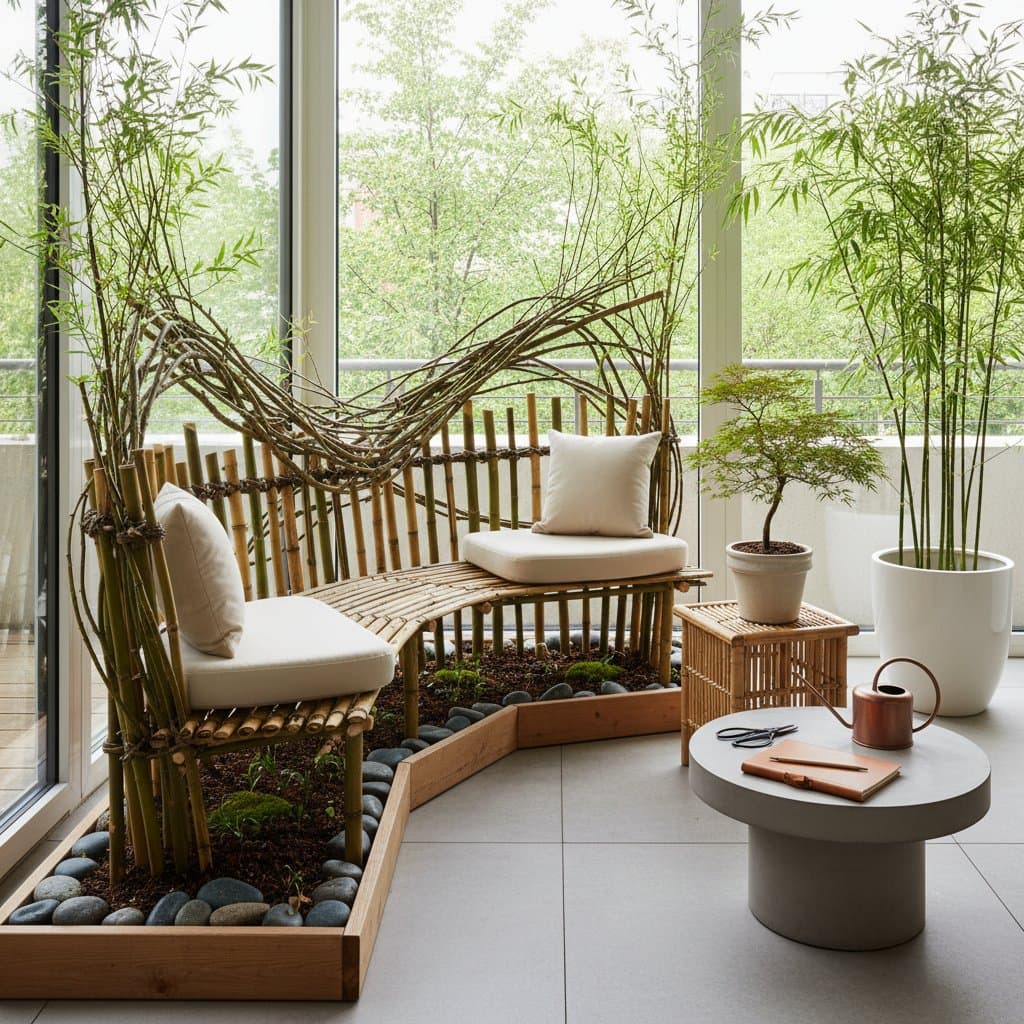
Introduction to Living Furniture
Living willow and bamboo furniture offers a sustainable alternative to conventional seating. These pieces grow directly from the ground, strengthening over time through natural processes. Gardeners and designers shape young shoots into benches, chairs, and other forms that remain rooted and functional for years.
The approach combines traditional weaving techniques with plant biology. Willow roots establish quickly in moist soil, while bamboo provides rigid vertical support. Both materials respond well to pruning and training, allowing creators to guide growth into desired shapes.
Selecting and Preparing the Site
Choose a location with full sun to partial shade and consistent moisture. Willow thrives in damp conditions, so avoid areas prone to drought without supplemental watering. Test soil drainage and amend heavy clay with organic matter before planting.
Order dormant willow rods in late winter or early spring. Select straight, flexible shoots approximately one half inch thick at the base. Prepare bamboo poles for the main frame if additional height or rigidity is required.
Planting the Framework
Drive the thickest rods into the ground at intervals that match your intended seat dimensions. Space vertical supports about twelve inches apart for a standard bench. Angle some rods inward to form the backrest and armrests.
Weave thinner rods horizontally through the uprights, starting at the base. Alternate the weave direction with each row to create a stable lattice. Continue until the structure reaches the planned height and depth.
Grafting for Strength
Where two stems meet, remove a small strip of bark and tie the exposed parts tightly together. Within a few weeks, they will fuse into one stronger joint. This step gives your furniture its solid, connected appearance.
Finishing the Surface
Once the frame feels firm and the shape holds, sand or seal the seat area. Use natural oils or beeswax instead of synthetic finishes. These protect the living surface while allowing it to breathe.
Safety Considerations
- Keep pruning tools clean to prevent disease spread.
- Avoid using chemical fertilizers near living furniture, as they may burn roots.
- If children help, have them handle only light tasks such as weaving or watering.
- Check stability before sitting by pressing lightly on the frame to confirm it supports weight evenly.
Common Issues and Solutions
Weak growth. Add compost or organic matter to improve soil nutrition. Increase watering during dry spells.
Leaning structure. Add extra stakes and re-tie loose joints with fresh twine. Adjust while stems are still flexible.
Pests or leaf spots. Rinse leaves with a mild soap-and-water mix. Repeat weekly until healthy growth returns.
Uneven seating surface. Trim thicker shoots or weave thinner ones across gaps for balance.
Costs and Timeline
Building a small willow bench costs around fifty dollars in materials. Larger pieces may reach one hundred dollars if you buy extra rods or bamboo poles. The full growth period can take six to eight months before the structure becomes strong enough to use.
Once established, living furniture lasts many seasons with minimal upkeep. Most of the cost and effort happen early, during planting and shaping.
Ongoing Care
Keep the area weed-free and apply fresh mulch every season. Prune in early growth cycles to maintain shape. Replace twine ties as they decay or loosen.
If a section dies back, cut it near the base and let new shoots fill the space. Willow in particular regenerates quickly, making repairs simple.
Organizing Multiple Structures
If you grow several pieces, group them in partial shade to avoid uneven sunlight. Label each with planting date and type. Keep spare stakes and twine near the site for quick fixes.
You can also use the same technique to grow natural fences, arbors, or plant supports. Once you learn the pattern, new projects come easily.
Beginning Your First Project
Start with one small structure and practice weaving until the shape holds. Keep a short photo log to track progress. This builds confidence and helps you spot patterns in growth over time.