
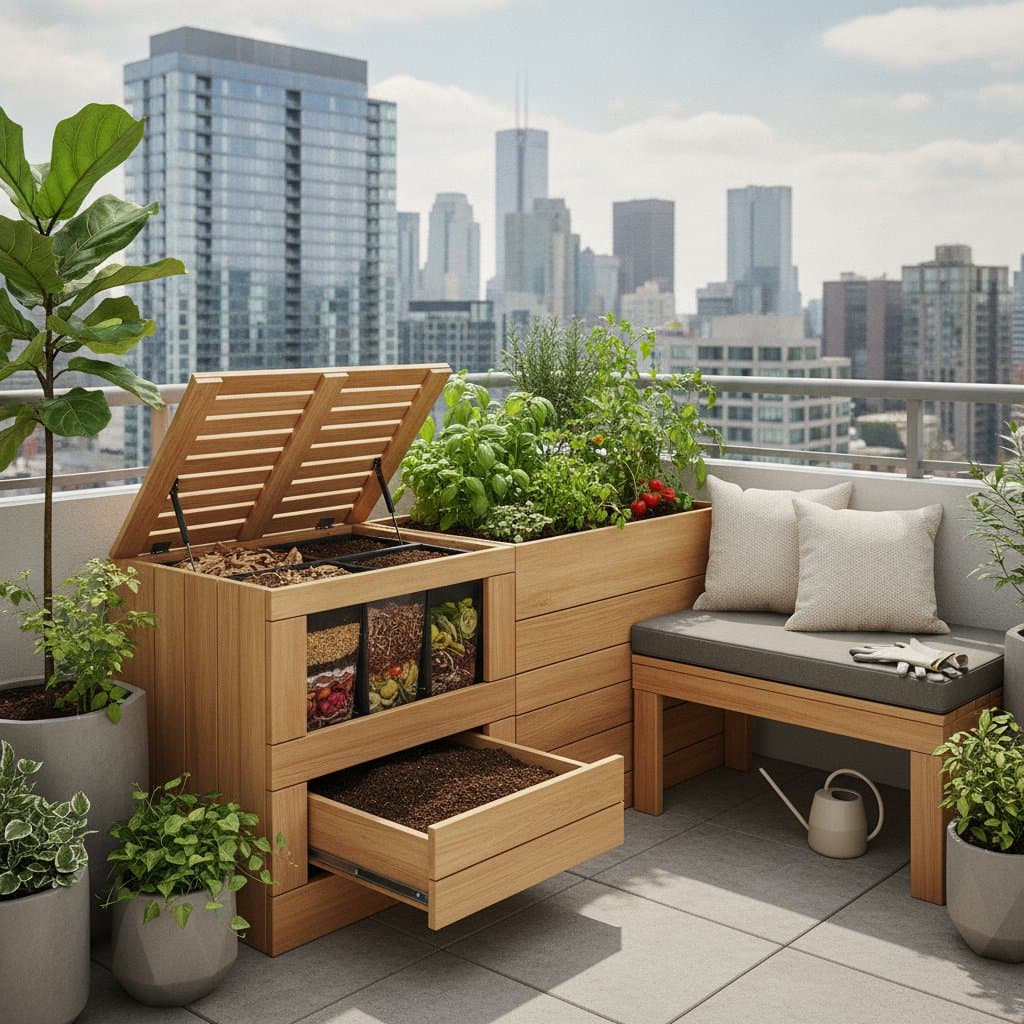
Balcony Benches That Compost Waste Into Plant Food
A balcony composting bench combines seating with a compact system for turning organic scraps into usable soil. This setup suits urban spaces where room is limited yet gardeners seek practical ways to reduce waste. The following sections detail selection, assembly, and ongoing care.
Core Components
A composting bench features a sturdy frame that conceals a small bin. The bin holds three to five gallons of material and includes ventilation holes in its lid. Many models also incorporate a planter section above or beside the bin for growing herbs directly.
The system works by layering food scraps with carbon-rich materials. Microorganisms break the mixture down over several weeks. Finished compost can then be mixed into potting soil to supply nutrients without additional purchases.
Required Supplies
Select a frame of weather-resistant wood, powder-coated metal, or recycled plastic. Acquire a fitted bin insert, a lid with multiple air holes, and a starter supply of coco coir. Keep dry leaves, shredded paper, a small trowel, and gloves on hand for mixing and harvesting.
Ready-made benches range from 120 to 400 dollars. Builders who already own a suitable frame can complete a custom version for 80 to 150 dollars.
Installation Sequence
Measure the balcony floor and confirm at least 18 inches of clearance on all sides. Verify that the structure can bear an additional 10 pounds per cubic foot when the bin is full. Position the bench away from direct rainfall to avoid excess moisture.
Place the empty bin inside the compartment and add a two-inch base layer of dry carbon material. This layer absorbs liquid and limits odors from the start. Secure the lid and test that it opens easily for daily additions.
Daily and Weekly Care
Add vegetable peels, coffee grounds, and plant trimmings in a two-to-one ratio of browns to greens. Stir the contents once each week with the trowel. Mist lightly if the mixture feels dry, aiming for the dampness of a wrung-out sponge.
Harvest dark, crumbly compost after six to eight weeks. Blend one part finished compost with three parts potting mix for balcony containers. Return any larger fragments to the bin for further breakdown.
Odor and Pest Prevention
Keep the lid closed except during additions. Exclude meat, dairy, and oily foods that draw rodents. If fruit flies appear, cover fresh scraps with a thin layer of sawdust or finished compost.
Persistent smells usually indicate excess moisture or insufficient air. Stir in additional dry carbon and loosen compacted areas to restore balance quickly.
Seasonal Adjustments
In spring, begin a new batch while planting herbs that will benefit from the first harvest. During summer heat, check moisture more often and empty the bin at shorter intervals. Add fallen leaves in autumn to increase carbon and provide insulation. In winter, wrap the bin with straw or fabric to retain warmth and slow microbial activity.
Long-Term Upkeep
Empty and rinse the bin with mild soap every three months. Allow it to dry fully before reuse. Inspect wooden frames annually for loose joints and tighten or replace hardware as needed. Refresh planter soil each year with fresh compost to maintain nutrient levels.
Next Actions
Choose a bench model sized for the available floor space and desired planter capacity. Assemble the unit, add the initial carbon layer, and begin collecting kitchen scraps. Consistent weekly mixing produces steady batches of soil while keeping the balcony clean and functional.