
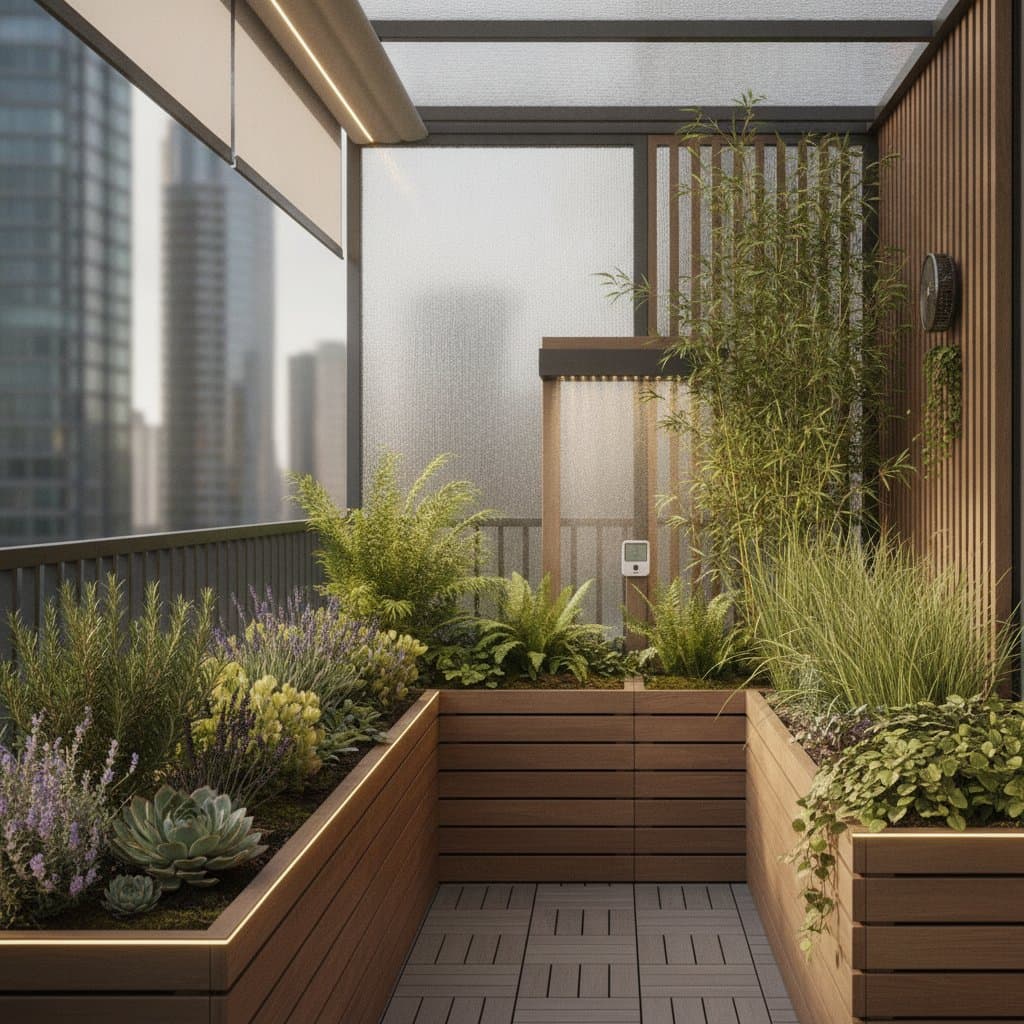
Master Microclimate Zoning on Your 50 Sq Ft Balcony
A small balcony presents distinct weather conditions in close proximity. One area receives intense sun while another remains shaded and damp. Strong winds can quickly dry soil and stress plants. The solution lies in creating microclimate zones that support more plants, improve comfort, and maximize every square foot.
Overview
A microclimate consists of localized conditions where temperature, moisture, and light vary from the larger space. Differences of only a few degrees determine whether certain plants succeed. On a 50 square foot balcony, deliberate management of airflow, shade, and surface heat converts a single area into multiple productive zones.
Effective microclimate control helps plants endure urban heat, reduces wind damage, and limits water waste. The same shade structures that protect crops also create comfortable seating spots. The process begins with observation, followed by material selection and plant grouping.
Tools and Materials
Basic equipment supports accurate assessment and adjustments.
- Thermometer with an outdoor sensor
- Hygrometer to measure humidity
- Light meter or phone application for lux readings
- Small ribbon or flag to detect airflow
- Containers sized 10 to 20 inches
- Shade cloth or bamboo screen measuring 4 by 6 feet
- Reflective tray or light colored tile
- Moisture meter for soil assessment
- Notebook for recording observations
A clip on fan, misting bottle, and insulating mat provide additional control when needed.
Steps
Step 1: Observe and Record
Observe the balcony across multiple times of day. Identify locations of longest sun exposure, persistent shadows, and areas that retain moisture after watering. Record temperature and humidity readings at several points. A difference of 3 degrees Fahrenheit indicates a distinct zone that can be used intentionally.
Step 2: Mark the Zones
Divide the space into three or four sections. Typical divisions include a hot zone along the south railing, a medium zone with partial shade, a cool zone against the building wall, and a wind corridor where air moves consistently. Mark boundaries with chalk or tape for clear visualization.
Step 3: Match Plants to Each Zone
Select plants suited to each condition. Rosemary, thyme, and succulents belong in the hot zone. Basil, petunias, and cherry tomatoes perform well in medium conditions. Lettuce, mint, and ferns suit cooler areas. Hardy grasses or dwarf bamboo tolerate wind corridors. Vary container heights so taller plants provide shade for shorter ones.
Step 4: Control Heat and Light
Position reflective trays or light colored tiles to direct brightness into shaded corners. Suspend shade cloth 12 inches above plants in hot zones to reduce heat and evaporation. A bamboo screen that blocks 40 percent of light offers afternoon protection and neighbor privacy.
Step 5: Manage Wind and Airflow
Hang a ribbon at railing height to test air movement. Constant fluttering indicates the need for a low lattice barrier or clustered taller pots. Maintain small gaps to preserve gentle circulation. When air feels still, run a small fan for 30 minutes to disperse humidity pockets.
Step 6: Balance Moisture
Check soil with a moisture meter two inches below the surface after watering. Group plants with similar water needs near the water source. Place drought tolerant species toward outer edges where evaporation occurs faster. Empty saucers after rain to prevent root rot.
Step 7: Add Thermal Mass
Position a dark ceramic planter or stone slab near cooler areas. A 12 by 12 inch tile stores daytime heat and releases it after sunset, raising nearby temperatures by several degrees.
Step 8: Check and Adjust Weekly
Revisit temperature and humidity readings each week. Shift screens, rotate containers, or elevate pots slightly to refine conditions. Results appear within several days of small changes.
Safety Tips
Secure all screens and tall containers with ties or weights. Keep fire exits and windows unobstructed. Use only outdoor rated cords for fans or lights. Lift heavy pots with bent knees.
Troubleshooting
Too Much Heat
Increase shade coverage or mist foliage in the morning when plants wilt by midday. Add a reflective surface behind pots to reduce wall heat absorption.
Too Much Moisture
Elevate pots on stands when moss or mold forms. Decrease watering frequency and confirm drainage holes remain clear.
Uneven Growth
Rotate planters a quarter turn every few days when one side grows better than the other. Uneven light exposure usually explains the difference.
Wind Damage
Add weight to containers or rearrange them in protective clusters when stems split or pots tip.
Maintenance
Clean screens and tiles monthly. Refresh container soil with compost twice each season. Rinse dust from leaves to support photosynthesis. Replace damaged meters promptly.
Storage
Keep shade cloth, tools, and sensors in a weatherproof box beneath seating or inside a nearby closet. Coil cords neatly and label items. Dry all fabrics before storage to avoid mildew.
Budget and Time
Initial tools cost between 40 and 90 dollars. Setup requires one to two hours. Weekly care takes about 15 minutes for watering, checks, and light cleaning. Later additions such as an irrigation timer or solar fan improve consistency at modest expense.
Seasonal Reminders
Renew shade cloth and mist plants early during hot months. Verify drainage after storms. Wrap containers in burlap during cold months and move tropical plants nearer the building wall. Morning thermometer readings guide daily adjustments.
When to Call a Pro
Hire a licensed electrician for permanent lighting. Consult building rules or a handyman for structural attachments such as railing planters. Verify load limits and waterproof sealing before installation.
Key Takeaways
Temperature variations of 3 degrees Fahrenheit affect plant performance. Shade cloth, reflective surfaces, and grouped containers allow precise control. Weekly observation maintains stable conditions.
Begin Implementation
Record sun, shade, and wind patterns on the balcony today. Install one shade element or reposition two containers to test results. Compare plant health and soil moisture after seven days. Consistent small adjustments create multiple thriving zones within the same limited space.