
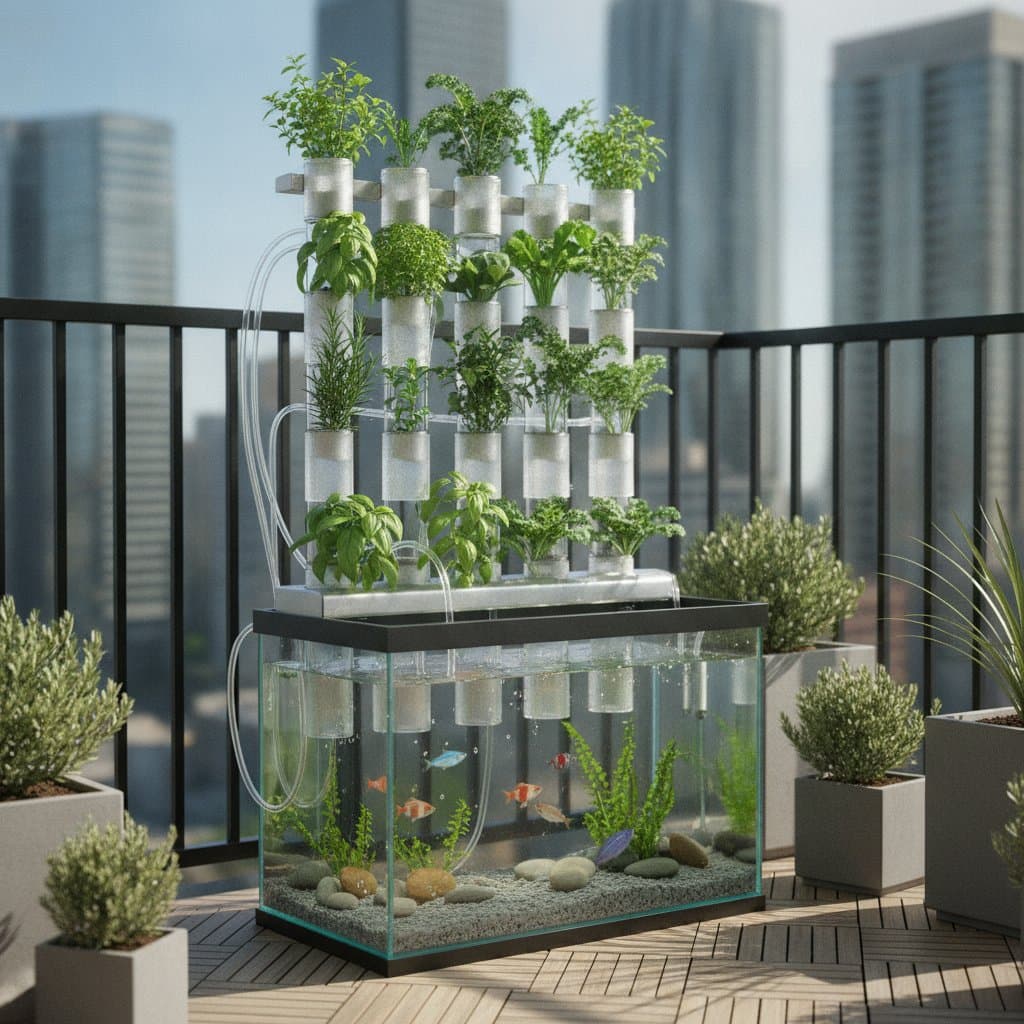
Turn Your Balcony into a Fish-Powered Veggie Garden
Your balcony offers space for more than potted plants. A compact aquaponics system combines fish and plants in one closed loop. Fish waste supplies nutrients to the plants. The plants filter the water for the fish. This approach produces fresh greens and herbs with minimal external inputs.
The system fits urban constraints. It uses less water than soil-based planters and requires only a stable surface plus access to electricity. Assembly relies on common tools and readily available parts.
Tools and Materials
Basic equipment suffices for a functional two-container unit.
Tools
- Drill with bits sized for tubing
- Measuring tape
- Utility knife
- Level
- Bucket for water mixing
Materials
- Sturdy 20- to 30-gallon tank or plastic container
- Shallow grow bed sized to rest above the tank
- Submersible pump rated 50 to 100 gallons per hour
- Six feet of aquarium tubing
- Clay pebbles or lava rock as planting medium
- Two to four small fish such as goldfish or guppies
- Starter plants or seeds including lettuce, basil, and mint
- Beneficial bacteria supplement
- Water test kit for ammonia, nitrite, and pH
Source secondhand tanks or tubs to keep total cost under a few hundred dollars.
Safety Considerations
Electrical cords must remain above the water line. Use a ground-fault circuit interrupter outlet. Verify that the balcony structure supports the combined weight of water, tank, media, and plants. Wear gloves during water changes or filter cleaning. Place a rubber mat beneath the setup to contain drips.
Test all connections for leaks before running the pump unattended.
Costs and Assembly Time
Expect four to six hours for initial assembly. Approximate material costs are as follows.
- Tank or tub: 40 to 60 dollars
- Pump and tubing: 30 to 50 dollars
- Grow bed and stand: 40 to 70 dollars
- Media and test kit: 40 to 60 dollars
- Fish and plants: 20 to 40 dollars
Monthly operating expenses remain low. Fish food and bacterial supplements cost only a few dollars. Electricity use stays modest once the pump cycles properly.
Managing Through the Seasons
Warm weather supports active growth. Feed fish small amounts twice daily and provide shade if water temperature rises. In cooler months, move sensitive plants indoors or install a small aquarium heater. Reduce feeding when fish activity declines. During heavy rain, cover the grow bed with clear plastic to prevent dilution of nutrients.
Check water parameters every two weeks during temperature extremes.
Organizing Supplies
Store fish food, test strips, and spare tubing in a labeled, sealed box near the system. Keep brushes and buckets in a well-ventilated corner so they dry quickly. A small folding table provides a stable surface for trimming plants or measuring water parameters.
Recognizing When Professional Help Is Needed
Consult a structural engineer if the balcony shows signs of stress under load. Seek advice from an aquarium specialist for persistent fish illness that does not respond to basic water changes. Engage a licensed electrician for any wiring concerns beyond simple plug-in connections.
Sustaining Your Urban Ecosystem
Regular monitoring of water chemistry and fish behavior keeps the loop stable. Harvest greens as they mature and replace fish only when necessary. The result is a reliable source of fresh produce produced directly outside your door.