
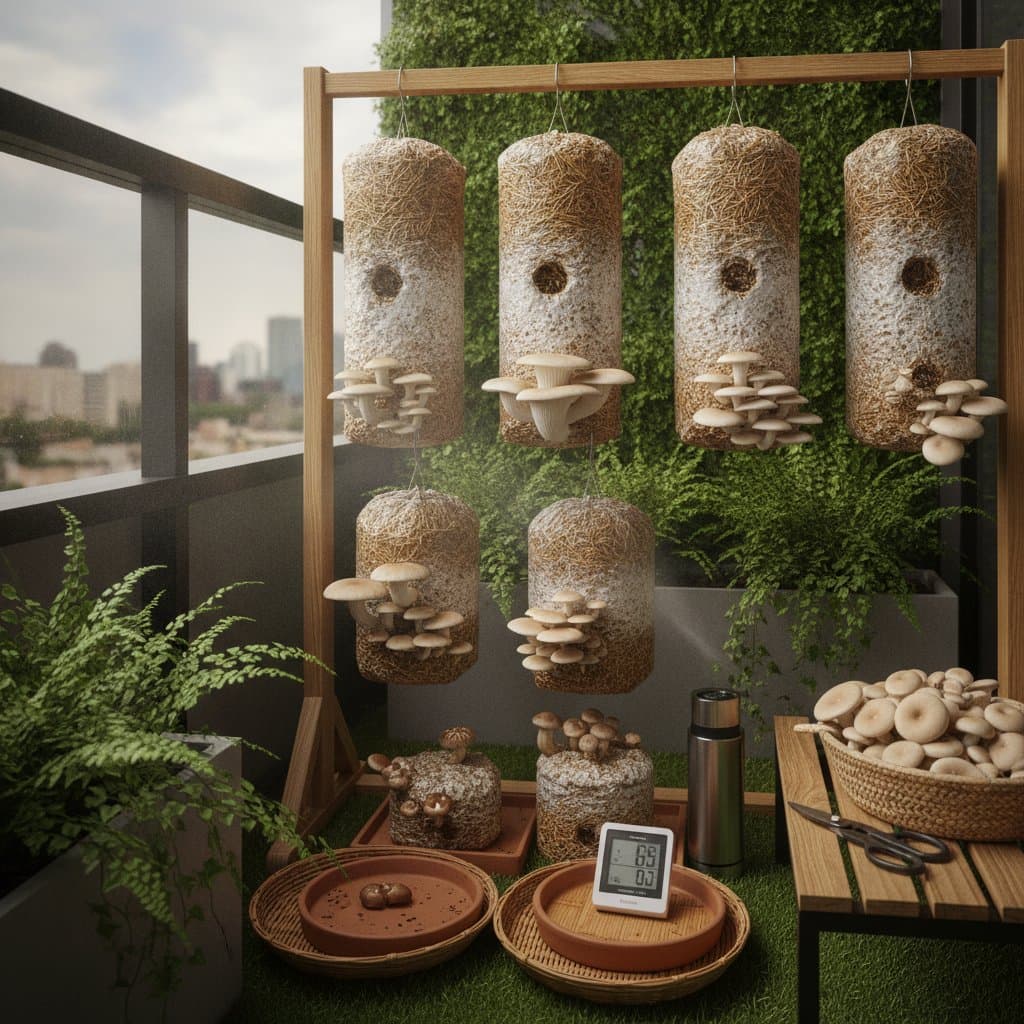
Turn Shady Balcony Spots into Homegrown Mushrooms
A shaded balcony often seems like unused space because most plants require sunlight. Mushrooms grow well in dim, cool, and humid conditions. This preference makes them suitable for underused balcony areas. With containers, substrate, and some patience, fresh mushrooms can be ready in a few weeks.
The process involves setting up containers, maintaining moisture levels, and harvesting at the proper stage.
Overview
Mushrooms represent the fruiting bodies of fungi that consume organic matter. They require no soil and no direct sunlight. Growth occurs on substrates such as straw, sawdust, or coffee grounds. This adaptability suits small urban spaces with limited light and room.
Beginners can use ready-to-use kits or start from spore syringes and grain spawn. Kits offer simplicity because they arrive pre-inoculated. Only the correct environmental conditions are needed for fruiting.
Tools and Materials
Collect these items in advance. Most are available from garden centers or online suppliers.
- Mushroom spawn or kit, with oyster or lion’s mane as dependable choices for beginners
- Plastic tubs or 5-gallon buckets that include lids
- Drill equipped with a 1/4-inch bit to create air holes
- Straw, sawdust, or used coffee grounds to serve as substrate
- Spray bottle filled with water for misting
- Thermometer and hygrometer to monitor conditions
- Rubbing alcohol and gloves to maintain cleanliness
Allocate roughly 3 square feet of balcony space near a wall or railing. This location provides gentle airflow and low light.
Steps
1. Prepare the Containers
Clean each tub or bucket with rubbing alcohol. Drill 8 to 10 holes evenly spaced about 2 inches from the top edge for air exchange. This prevents stale air that can slow growth.
2. Prepare the Substrate
Cut straw into 2-inch pieces or use sawdust. Pasteurize it by soaking in hot water around 160 degrees Fahrenheit for one hour. Drain and cool it. This step kills unwanted molds and bacteria.
3. Inoculate the Substrate
Mix the cooled substrate with mushroom spawn in a clean bowl. Aim for one part spawn to four parts substrate. Pack the mixture into your containers and close them loosely to allow airflow.
4. Incubate
Place containers on your shady balcony. Ideal temperature is between 60 and 75 degrees Fahrenheit. Keep them out of wind and rain. For the next 14 to 21 days, the fungus will grow through the substrate, turning it white. If it smells sour or shows green patches, contamination has set in, and the batch should be discarded.
5. Fruiting Stage
Once the substrate is fully colonized, open a few of the top holes and mist lightly two or three times a day. The surface should be damp, not wet. Within one week, small mushroom pins will appear. Continue daily misting and indirect air flow until caps expand.
6. Harvest
Harvest when the caps flatten but before edges curl upward. Twist gently at the base or cut with a clean knife. Each container can give two or three flushes of mushrooms, spaced one to two weeks apart.
Safety Tips
- Wear gloves when handling substrate and spawn.
- Always pasteurize organic material before mixing.
- Keep pets away from containers during fruiting.
- Do not eat any mushrooms that differ in color, texture, or odor from your chosen species.
Troubleshooting
Dry substrate: Mist more often or move containers closer to a wall to reduce airflow.
Mold growth: Discard contaminated substrate. Clean tools and start fresh.
Slow fruiting: Check temperature. Below 55 degrees Fahrenheit growth slows sharply.
Thin mushrooms: Increase humidity. Aim for at least 85 percent relative humidity.
Budget and Time
Expect to spend around 40 to 60 dollars for a starter setup. The main costs are spawn and containers. Ongoing costs are minimal. Most projects produce edible mushrooms within one month. Once set up, you can repeat the process using fresh substrate and a portion of your existing spawn.
Maintenance
After each flush, remove spent stems and mist the surface. Let the block rest for one week before rehydrating with clean water. Replace substrate after three cycles to keep yields strong. Clean containers with vinegar or alcohol before reuse to prevent contamination.
Smart Storage Moves
Store your harvest in paper bags inside the refrigerator. Avoid plastic bags that trap moisture and cause spoilage. Fresh mushrooms last about five days. To extend shelf life, slice and dehydrate them at low heat for two hours, then store in airtight jars.
When to Call a Pro
If you plan to grow rare or medicinal species, consult a local mycology expert. Some strains have strict humidity or temperature needs that require controlled equipment.
Start Your Balcony Mushroom Project
Your shaded balcony can become a quiet food corner. Start small with one container and one mushroom type. Keep your tools clean, your moisture steady, and your expectations simple. Today, identify one sheltered balcony spot about 3 feet wide, order a mushroom kit, and clean your containers. By the time you finish your next weekend chores, your first batch will already be colonizing. From there, it becomes routine care, misting twice a day and watching new growth appear.