
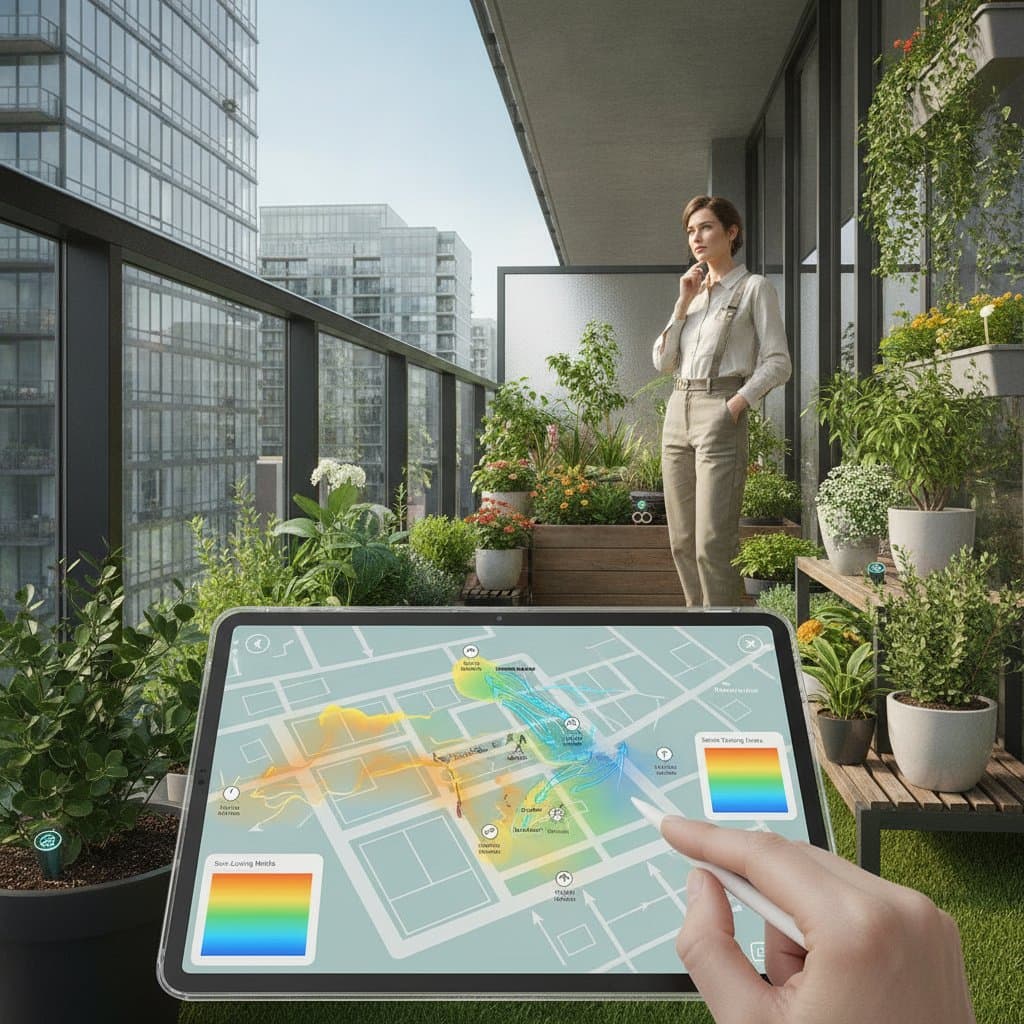
Microclimate Apps Optimize Balcony Garden Layouts
Your balcony receives more light than your neighbor yet basil wilts while ferns flourish. This difference arises from a microclimate. A microclimate consists of localized conditions of light, wind, heat, and humidity that vary across small distances. Mapping these conditions allows precise plant placement that reduces maintenance and improves growth.
Microclimate apps integrate weather data, satellite imagery, and sensor input to produce accurate layout recommendations. Users complete the full mapping process in one weekend without relocating soil or containers.
Core Objective
The aim is balance rather than perfection. Accurate data on light exposure and temperature lets gardeners match each plant to suitable conditions. This approach stabilizes water use and limits intervention.
A short mapping session eliminates repeated trial and error. The resulting plan groups herbs, flowers, and greens according to measured conditions.
Required Tools
- Microclimate app such as Arable, BloomSky, or OpenWeather Garden
- Smartphone or tablet equipped with camera and GPS
- Notebook or digital sketch tool
- Thermometer and humidity gauge
- Three to five planters that include drainage
- Watering can or hose with adjustable spray
Optional sensors for soil moisture or light intensity range from 15 to 50 dollars and connect directly to supported apps.
Mapping Process
- Record light exposure at morning, midday, and late afternoon. Identify zones that receive six or more hours of direct sun and label them full sun.
- Test wind patterns with a ribbon or flag along railings. Mark persistent movement as high wind and confirm readings with app data. Position delicate plants behind taller containers or screens.
- Measure surface temperatures at three times of day. Concrete retains heat longer than wood. Warmest areas suit rosemary and lavender.
- Check humidity levels in shaded sections. Readings above 50 percent support ferns and begonias.
- Draw a top view and divide the space into sun, partial shade, and shade zones. Cluster containers in groups of two or three while placing taller pots toward the rear.
- Water all containers evenly after placement. Note drying times and adjust plant choices or add mulch where soil dries rapidly.
- Store weekly photos and notes inside the app to detect gradual shifts in conditions.
Safety Measures
Secure every planter with clips or weighted bases. Keep sensors away from pooled water. Verify railing load limits before installing large containers.
Common Issues and Fixes
Yellowing leaves in full sun indicate excessive exposure. Relocate plants to partial shade zones confirmed by app graphs. Soggy soil requires raised pot placement on spacers to restore airflow. Temperature differences of five degrees Fahrenheit alter growth rates. Compare logs to identify and correct such variations. Wind damage is reduced by adding vertical barriers or relocating fragile specimens.
Cost and Duration
A capable app plus one or two sensors costs between 30 and 100 dollars. Basic thermometers remain under 15 dollars. Most balconies reach full mapping and rearrangement within four to six hours. Reuse existing planters and recycled trays to control expenses while investing in stable supports.
Routine Upkeep
Reassess the map after any furniture change or new planting. Clean sensors monthly to preserve accuracy. Water early in the morning to cut evaporation by up to 30 percent. Maintain a simple log of water consumption.
Adjustments by Season
Spring requires fresh soil testing and sensor calibration as sun angles intensify. Summer calls for shade cloth and weekly humidity checks. Fall involves moving tender plants inward and logging reduced light hours. Winter storage of sensors indoors supports planning for the following year.
Efficient Organization
Store tools in a weatherproof bin near the door. Label separate containers for fertilizers and cleaning supplies. Hang lightweight implements to conserve floor space. Seal extra soil in a tub and protect spare sensors in a padded case.
Professional Consultation
Extreme temperature swings or water accumulation near walls warrant contact with building maintenance staff. These signs may indicate drainage or insulation concerns.
Practical Recommendations
Collect temperature, light, and moisture readings at three points per zone. Capture short videos on clear days to track shadow movement. Group plants according to shared water requirements. Introduce reflective pebbles or light tiles to brighten shaded corners. Recalibrate sensors each season.
Implementing the Layout
Apply the completed map to arrange containers once. Monitor results through the first full growth cycle and refine placements based on observed performance.