
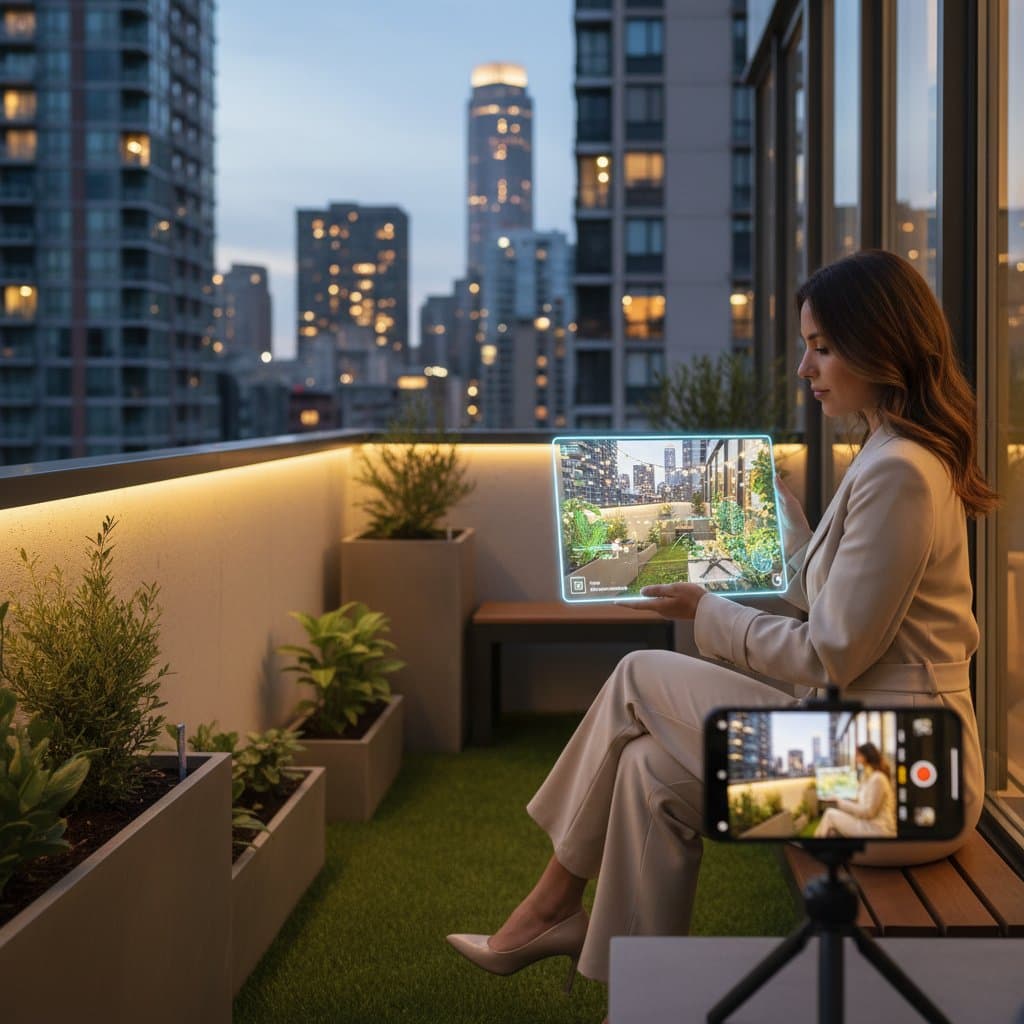
AI Designs Your Dream Balcony in Just 60 Seconds
You gaze at your compact urban balcony and recognize its untapped possibilities, yet constraints abound. Space remains limited, sunlight varies throughout the day, and city sounds persist. You envision a serene escape or a verdant spot for herbs and coffee rituals. The difficulty lies in determining the initial steps.
Recent advancements in AI balcony design applications now produce tailored sketches in less than a minute. You input your preferences, upload an image, and receive proposals for arrangements, foliage combinations, and hues. These tools aim to visualize feasible options before committing resources.
This guide explains the functionality of these applications, preparation requirements, and methods to convert rapid concepts into tangible outdoor enhancements.
Overview
AI balcony design platforms employ image recognition and pattern analysis to evaluate your area, then produce visualizations aligned with dimensions, finances, and aesthetics. Their primary advantage is efficiency. Users preview multiple configurations instantaneously rather than relying on estimates.
An expert in compact urban environments notes, “AI delivers a tangible blueprint that inspires confidence from the outset.” These systems enhance rather than supplant imagination by refining choices, enabling decisive action over hesitation.
Why It Matters
Even a modest balcony enhances urban living by introducing tranquility and natural elements. A thoughtfully planned space achieves several outcomes:
- Enhances ventilation and mitigates interior warmth through strategic shading
- Provides seclusion and acoustic insulation from urban bustle
- Establishes a localized ecosystem supporting pollinators via suitable vegetation
- Bolsters well-being via routine outdoor engagements
Accelerated visualization expedites realization of these benefits.
Tools and Materials
Prior to engaging an AI design application, assemble essential items. Optimal results stem from precise inputs.
Required items include:
- High-resolution images of the balcony from one or two perspectives
- Precise dimensions of length and width in feet and inches, or meters
- Observations on daily sunlight exposure, prevailing winds, and structural regulations
- A concise outline of objectives, such as lounging areas, cultivation zones, or storage solutions
- A mobile device or computer with reliable internet access
Basic versions of these applications generate layouts at no cost, whereas premium options offer immersive 3D renderings or procurement guides.
Steps
Step 1: Capture Images and Dimensions
Photograph the balcony under natural light conditions. Position yourself to encompass walls, barriers, and surfaces fully. Record measurements along primary axes and note barrier elevations to inform safety considerations.
Step 2: Input Data and Specifications
Launch the AI design application. Submit images and dimensions. Articulate objectives clearly, such as “intimate reading nook,” “drought-tolerant garden,” or “compact dining arrangement for two.” Detailed descriptions yield more accurate outputs.
Step 3: Evaluate Proposals
The system generates multiple configurations. Assess each for equilibrium between furnishings and greenery. Verify that recommended containers maintain adequate clearance, ideally 24 inches or 61 centimeters, between elements and edges for ease of movement.
Step 4: Customize and Document
Applications typically permit modifications to shades or textures. Experiment with options like composite decking, interlocking tiles, or resilient mats. Refine selections until the arrangement aligns with preferences, then export or print the finalized blueprint.
Step 5: Implement Incrementally
Initiate with a single component from the blueprint. Install surfacing initially, followed by containers in subsequent phases. Incremental progress sustains momentum and controls expenditures.
Safety Considerations
- Load Assessment: Structural capacities vary; maintain loads below 40 pounds per square foot or 195 kilograms per square meter absent professional verification.
- Anchoring Methods: Employ fasteners or weighted foundations to secure containers and pieces against gusts.
- Flame Alternatives: Opt for battery-operated illuminations or solar fixtures over combustion sources.
Troubleshooting Common Issues
Discrepancies in AI outputs often trace to input errors.
- Distorted Imagery: Recapture photographs perpendicular to surfaces.
- Inaccurate Proportions: Validate dimensions prior to submission.
- Unsuitable Flora: Re-enter light exposure details, as visual cues may mislead assessments.
For irregular geometries, isolate the primary functional zone through image editing.
Ongoing Care
Sustain balcony integrity through routine upkeep.
- Clear debris from surfaces weekly via sweeping or suction.
- Irrigate vegetation at dawn to minimize moisture loss.
- Examine barrier fixings biannually for corrosion or instability.
Store padded elements and coverings inside during inclement weather to prolong durability.
Efficient Storage Solutions
In constrained areas, prioritize vertical organization. Install shelving units or mounting hardware for implements and irrigation tools. Select benches with concealed compartments to integrate seating and concealment. Elevate possessions above ground level during downpours to deter fungal growth.
Cost and Timeline Estimates
Entry-level AI tools incur no fees, with enhancements ranging from 5 to 30 dollars.
For material acquisitions:
- Interlocking flooring: 2 to 4 dollars per square foot
- Containers and substrate: 40 to 100 dollars for modest setups
- Seating ensembles: 100 to 300 dollars for pairs with surfaces
Conceptualization requires under a minute digitally. Procurement and assembly span one to two weekends, adaptable through staged implementation.
Professional Involvement Criteria
Engage certified specialists for:
- Integrated cultivation beds or substantial aquatic installations
- Wiring for illumination or power sources
- Surface reinforcements or barrier modifications
Request documentation of coverage and proficiency in outdoor applications. Consult engineers for load validations on expansive features.
Seasonal Maintenance Protocols
- Spring Preparation: Sanitize areas, verify runoff systems, replenish growing medium.
- Summer Vigilance: Hydrate promptly, shape overgrowth, deploy protective fabrics as required.
- Autumn Transition: Secure textiles, trim hardy specimens, inspect fittings.
- Winter Protection: Relocate delicate vessels, shield assemblies, remove accumulations cautiously.
Cycle vegetation periodically to sustain vitality and mitigate infestations organically.
Launch Your Balcony Transformation
Commence immediately with these actions:
- Document Your Space: Photograph and dimension the balcony accurately.
- Generate Visuals: Employ a complimentary AI tool to produce three distinct configurations.
- Initiate Construction: Select and install one element by the upcoming weekend, whether surfacing or a single vessel.
These steps convert inspiration into an enduring urban sanctuary, enhancing daily routines with purposeful design.