
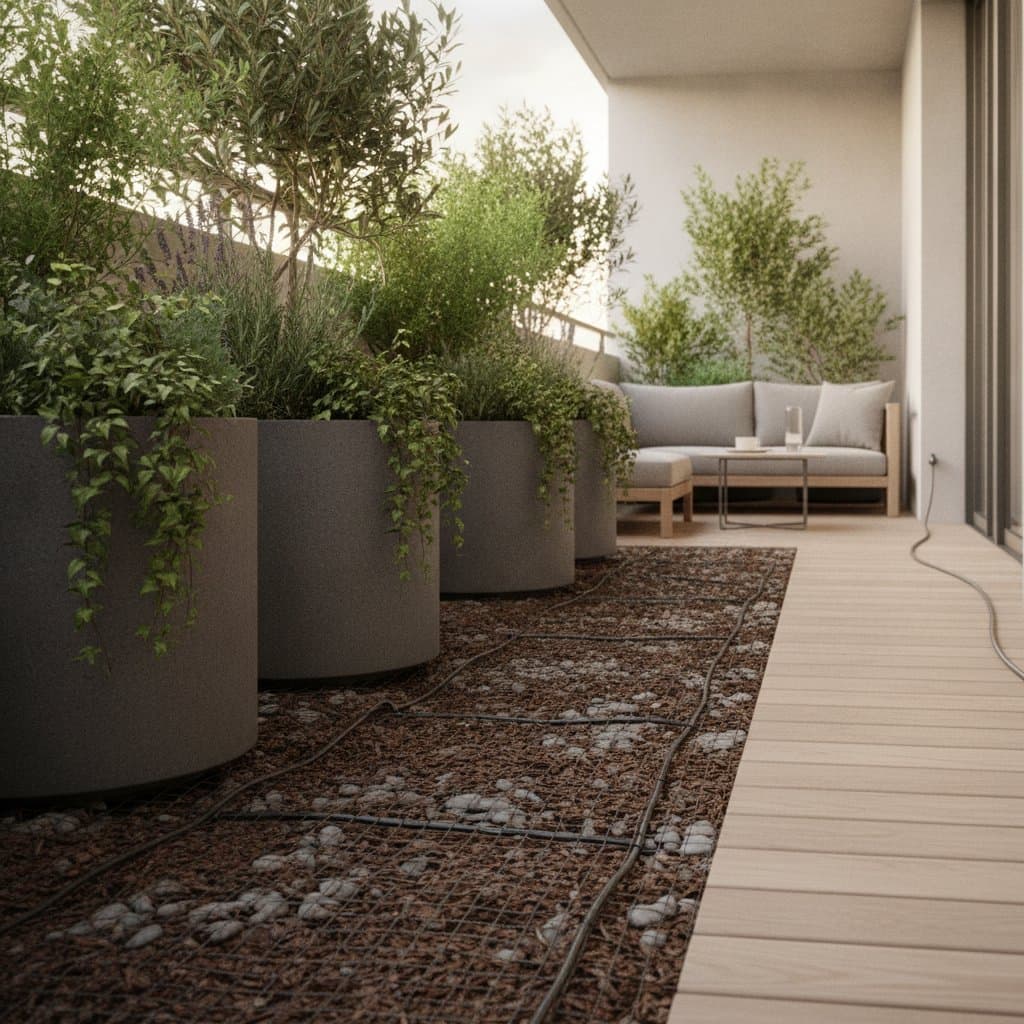
Securing and Covering the Lines
Use small clamps or zip ties to secure tubing along railings or under ledges. Cover visible sections with planter trim or weatherproof tape. Maintain a clean, continuous route to avoid bends that could block water flow.
Testing Water Flow
Turn on the water at low pressure. Check that uniform dampness forms across each mesh strip within two to three minutes. Adjust or replace fittings if any area remains dry. Once balanced, attach the timer and set run times between five and ten minutes based on plant density and weather conditions.
Safety Tips
- Always use a pressure regulator to prevent bursts in micro lines.
- Avoid leaving the system pressurized overnight. Shut off the water or use a timer with automatic closure.
- Keep walkways dry to reduce slip risk.
- Use only drinking-water-safe tubing if you connect to an indoor tap.
Troubleshooting Common Issues
Uneven watering
If one planter stays dry, check for kinks or clogged connectors. Flush the line by disconnecting the mesh and letting water run freely for 30 seconds.
Leaks at joints
Leaks often mean loose fittings. Use a gentle twist while pressing the tubing onto the connector until it clicks. Replace any cracked plastic.
Slow or no flow
Inspect the pressure regulator. If debris blocks it, rinse under running water. For hard water, soak mesh ends in vinegar for 15 minutes to dissolve scale.
Overwatering
If soil feels soggy, shorten watering time or reduce frequency. Mesh systems deliver water slowly, so results appear after a few cycles.
Maintenance Routine
Micro-drip mesh systems need light upkeep. Once a month, remove the mesh from the farthest planter and flush lines for one minute. This clears mineral buildup. Replace mesh every two to three seasons or when flow weakens. Inspect fittings after cold spells since expansion can loosen joints.
Keep the timer battery fresh and cover it from rain. For indoor taps, disconnect the adaptor after use to prevent backflow.
Storage Practices
If you pause watering during cooler months, drain all lines completely. Coil tubing neatly and store it in a dry area. Wrap mesh strips in breathable cloth to avoid mildew. Label each section by planter name for fast reinstallation.
For permanent balcony setups, close the supply valve and leave the lines in place. Cover exposed ends with plastic caps to block insects and dust.
Budget and Time Considerations
A balcony micro-drip mesh kit for four to six planters costs around 40 to 80 dollars depending on brand and automation. Expect to spend one to two hours on planning and installation. Adding a timer raises cost slightly but saves daily attention.
The system can cut water use by about 30 to 60 percent compared with hand watering. Over a season, that reduction can offset the purchase price, especially where water rates are high.
Seasonal Reminders
- Spring: Flush lines before first use and check all seals.
- Summer: Adjust timer weekly for heat waves or rain.
- Autumn: Reduce watering frequency but keep soil slightly moist until plants go dormant.
- Winter: Drain system if freezing is possible. Store mesh indoors.
Regular inspection takes less than ten minutes a month yet prevents most problems before they start.
When to Call a Pro
Call a plumber or irrigation specialist if your balcony tap lacks a backflow preventer or if you need to tap into building plumbing. Licensed pros can install a safe valve that meets building codes. Also seek help if you plan to run long lines above 25 feet since pressure loss increases with distance.
Key Benefits
Invisible micro-drip mesh delivers steady, low-volume water directly to plant roots. It stays hidden, prevents waste, and keeps balcony design clean. Installation is simple with basic tubing, connectors, and a small timer. Consistent maintenance keeps it efficient for years.
Next Steps
You can start today by measuring your balcony planters and noting where a water source sits. Order one starter kit and test it on a single planter to learn flow behavior. Stay patient through the first week while soil balances its moisture. You will soon notice less runoff, stronger roots, and more time to enjoy your space instead of hauling watering cans.