
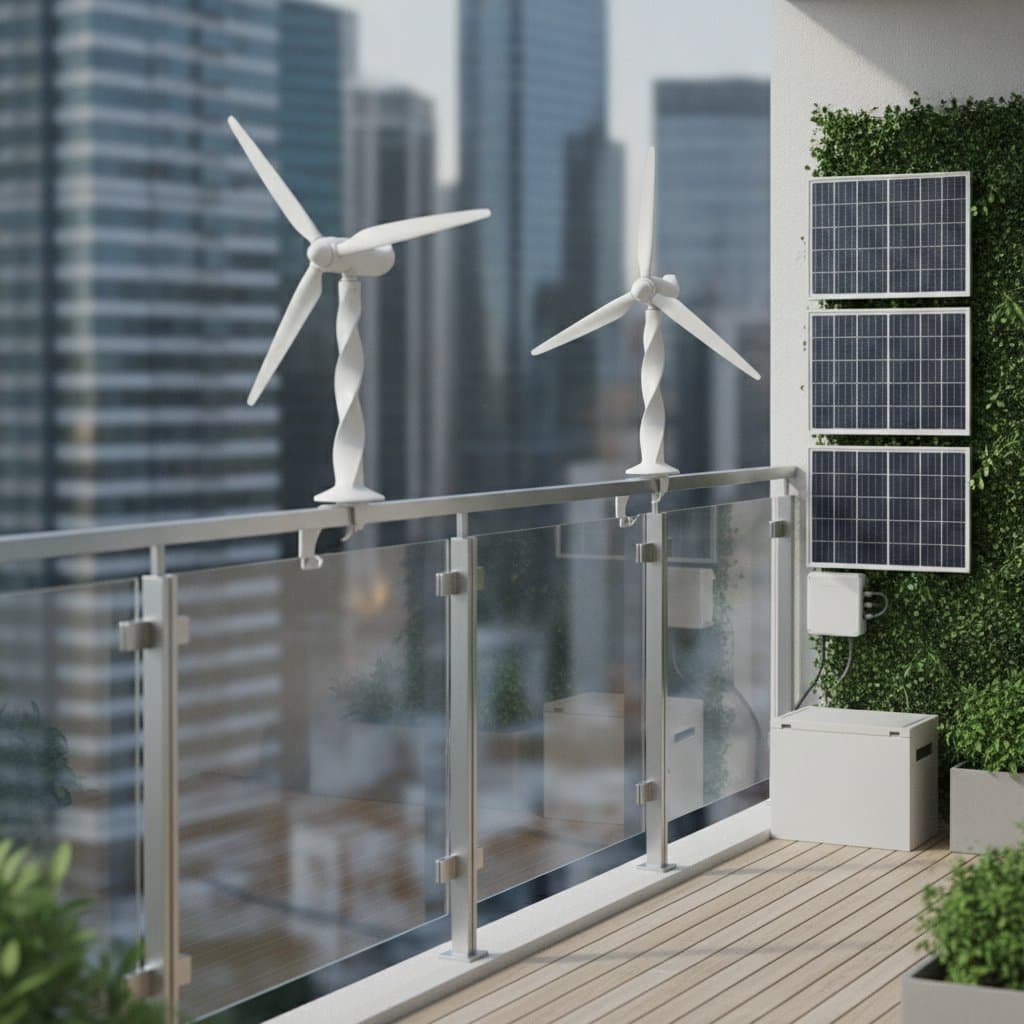
Unlock Urban Renewable Power with Balcony Turbines
City homes often depend completely on the power grid. When a storm hits or demand spikes, residents can lose power fast. Balcony wind turbines change that situation. They give apartment dwellers a way to make clean energy right where they live. Residents need neither a yard nor a roof, and they do not require a large investment.
This guide explains how balcony turbines work, how to set one up safely, and how to keep it running. Readers will learn the real numbers behind small wind systems and how to combine them with solar for steady power all year.
Overview
A balcony turbine is a compact wind generator that mounts to a railing or wall. It converts wind into electricity using small blades about 2 to 4 feet wide. Most are vertical-axis models, shaped like cylinders or spirals. They spin quietly and can handle irregular air currents common in cities.
Urban buildings block and redirect wind. The average city breeze is slower and more turbulent than in open fields. Balcony turbines designed for low wind speeds can still produce usable energy. A single unit can power devices like lights, routers, or laptops. When paired with solar panels, it can offset a meaningful part of an electric bill.
Tools and Materials
A complete balcony turbine kit or assembled components work for a small 12 to 24 volt setup. The list includes a turbine unit with blades and housing, a mounting pole or bracket, railing clamps or wall anchors, a charge controller, a deep-cycle battery, an inverter, electrical cables, weatherproof connectors, basic tools, and safety gear.
Plan to spend about 350 to 900 dollars for a full kit. Prices vary with blade size and storage capacity.
Steps
Check Building Rules and Wind Access
Ask the property manager or board about exterior attachments. Some buildings require permission for visible installations. Hold a small flag or ribbon on the balcony for a few days. If it moves often, the space has enough airflow. Look for open corners or higher floors where wind is stronger. Never lean far over the railing to test wind.
Choose the Right Turbine Type
Two main shapes exist. Vertical-axis turbines spin around a vertical pole. They handle shifting winds well and remain quieter. Horizontal-axis turbines look like mini propellers. They need steadier wind and must face the breeze directly. For city balconies, vertical-axis models are safer and simpler. A 300 to 500 watt vertical-axis turbine can produce around 40 to 80 kilowatt-hours per month in moderate wind.
Mount the Turbine
Attach the pole or bracket to the balcony railing or wall. Check that it is level and secure. Most kits use U-bolts or heavy-duty clamps. Tighten all bolts with a wrench. Position the turbine above the railing edge if possible. Leave at least 18 inches of clearance from walls or nearby surfaces. Do not install during strong wind or rain.
Connect the Electrical System
Run cables from the turbine to the charge controller, then to the battery, and finally to the inverter. Follow the color codes for positive and negative leads. Keep cables away from sharp edges. Mount the controller and battery in a dry, ventilated spot indoors. Many people use a small cabinet near the balcony door. Always disconnect power before tightening wires.
Test and Monitor Output
Once connected, let the turbine spin freely. Use the controller display or a multimeter to check voltage. A steady charge level should appear when wind picks up. If the blades wobble or vibrate, rebalance them by adjusting the hub screws.
Combine with Solar Panels
Balcony turbines pair well with small solar panels. Wind often picks up at night when solar power drops. A 200 watt solar panel and a 400 watt turbine can cover lighting, charging, and small appliances. Use a hybrid charge controller to link both sources safely.
Safety Tips
Keep blades clear of hanging plants, decor, or laundry lines. Never touch moving blades. Wait until they stop to clean or inspect. Turn off the controller before storms to protect electronics. Check local noise limits and choose a turbine rated under 40 decibels. Do not mount near power lines or satellite dishes.
Troubleshooting
Low power output requires checks for blade alignment, free rotation, tight electrical connections, and clean blades. Noise or vibration calls for tightened bolts, balanced blades, rubber pads under mounts, and light lubrication of bearings. Controller overheating improves with better airflow and proper cable sizing. Battery charging problems need voltage tests, cable replacements, and correct polarity at every connection.
Budget and Time
A simple balcony turbine setup costs about 250 to 700 dollars for the turbine kit, 100 to 200 dollars for the battery and controller, and 50 to 100 dollars for mounting and wiring. Installation takes half a day if the mount is ready. Light maintenance occurs every two months. Hiring a technician adds 150 to 250 dollars for labor. Over the first year, production may reach 400 to 800 kilowatt-hours, which equals 60 to 120 dollars in saved utility costs in many cities.
Maintenance
Clean the blades with mild soap and water every two months. Dust and soot can reduce output by 10 percent. Check bolts and clamps quarterly. Tighten any that loosen from vibration. Inspect wires for wear or rust. Store batteries in a dry area between 50 and 80 degrees Fahrenheit. Avoid full discharge and keep charge above 50 percent for longer life. Once a year, open the turbine casing to inspect bearings and apply a small drop of lubricant.
Smart Storage Moves
Multiple turbines or panels allow a small energy station. Use labeled bins for spare parts and wires. Keep a simple logbook with dates of cleaning, battery checks, and voltage readings. Mount a small digital meter near the inverter to track daily output. Many users find that early morning and late evening give the highest results.
When to Call a Pro
Call a licensed electrician for direct connection to the home electrical panel, sparks or melting insulation, repeated tripped breakers, or expansion to multiple turbines. Ask the technician to check grounding and surge protection. A professional can also suggest a grid-tie inverter for feeding excess power back into the building system.
Begin Your Installation
Balcony turbines turn overlooked air currents into steady power. Start small with one unit and a single battery. Track results for a few weeks. Then decide whether to add solar panels or a second turbine. Measure balcony wind with a handheld anemometer or by watching flags. Confirm building rules on attachments. Sketch the layout for the turbine, wires, and battery. Small systems make a real difference. A few hundred watts can keep essentials running and reduce strain on the grid. These turbines help residents live more independently and demonstrate how renewable power works in urban settings.