
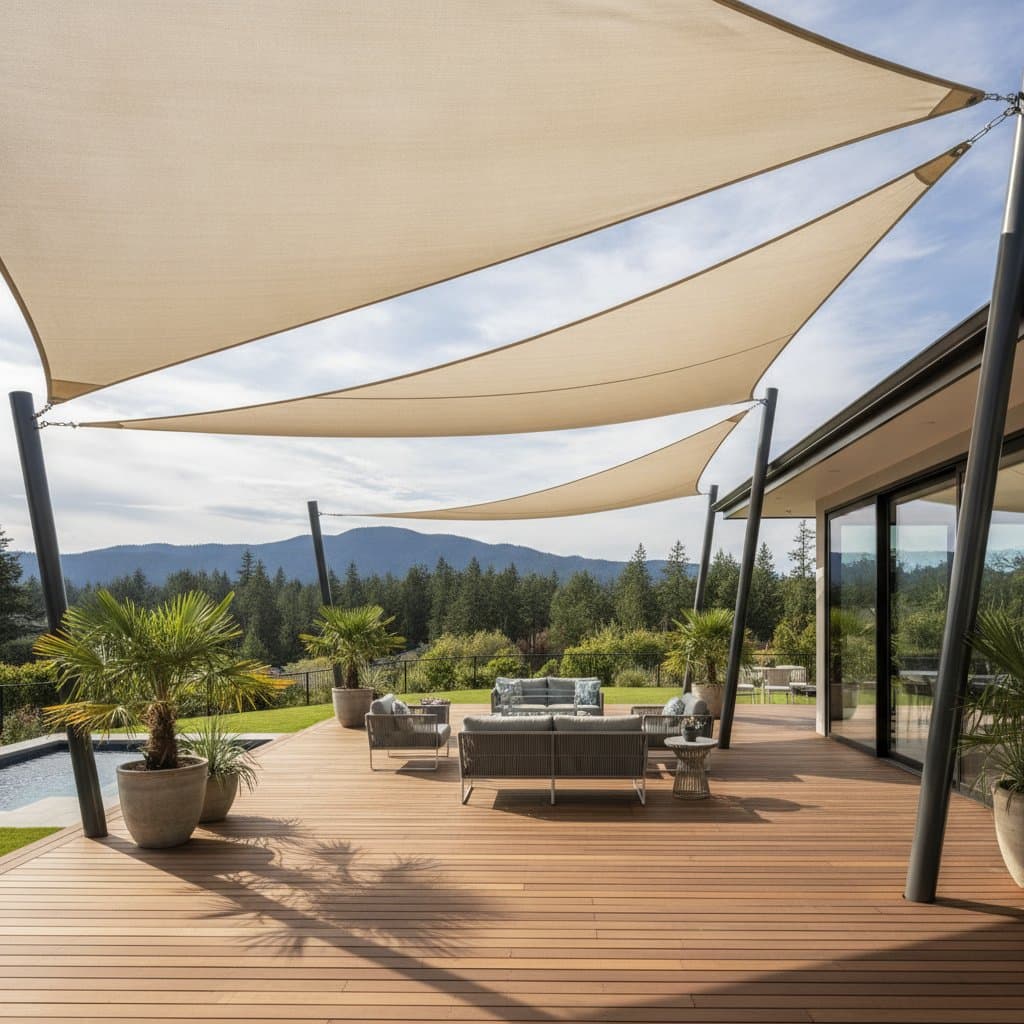
Why Curved Shade Sails Work Well
Curved shade sails provide effective cooling for decks by allowing air to circulate beneath the fabric. This design prevents heat buildup that flat covers often create. The curved form also channels rainwater away from the center and adds visual interest to outdoor areas.
Homeowners appreciate the balance of function and style. These sails block up to 95 percent of ultraviolet rays while maintaining an open feel. Proper tension keeps the surface stable during moderate breezes.
Planning the Layout
Measure the deck area first and mark potential anchor points on walls, railings, or posts. Consider sun patterns throughout the day to position the sail for maximum coverage. Curved edges require slightly more space than straight ones, so allow extra clearance on all sides.
Select a fabric weight suited to local wind conditions. Lighter materials suit sheltered decks, while heavier weaves handle exposed locations. Choose colors that complement existing outdoor furnishings.
Required Hardware and Tools
Gather stainless steel carabiners, turnbuckles, and appropriate anchors for wood or masonry. Include a tension gauge or simple spring scale to verify even pull. Basic tools such as a drill, level, and measuring tape complete the kit.
Installation Steps
Attaching the Sail
Lay the sail flat on the deck surface. Connect one corner to a fixed anchor with a carabiner. Install turnbuckles at the remaining corners. Tighten each turnbuckle in rotation so tension distributes evenly across the fabric. The curved edges should lie smooth without folds or ripples.
Checking Position and Tension
Step back and confirm the sail slopes gently toward one edge for drainage. Adjust turnbuckle settings or anchor heights until the angle looks correct. Press upward at the center point. The fabric should give slightly yet return without sagging.
Final Site Cleanup
Cut away extra cord and tuck loose ends out of sight. Clear the deck of dust and small debris. Place spare hardware in a labeled container for future adjustments.
Safety Considerations
Avoid installation on windy days because the fabric can catch gusts and shift suddenly. Keep the sail away from grills and fire pits. Never suspend objects from the fabric itself. Maintain at least seven feet of clearance at the lowest point to prevent head contact.
Common Issues and Solutions
Sagging fabric responds to an additional full turn on each turnbuckle. Persistent sag may require shortening one corner by two inches. Water pooling indicates insufficient tilt. Raise one anchor point a few inches to improve runoff.
Loose anchors need inspection of the mounting hole. Larger screws or toggle bolts restore grip. Discolored fabric cleans with mild soap and a soft brush. Bleach weakens the fibers and should be avoided.
Cost and Timeline
Two people usually finish a single sail in three to five hours. Adding posts or extra sails extends the project by half a day. Most decks stay under five hundred dollars when existing structures serve as anchors. Stainless hardware prevents early rust and maintains appearance.
Ongoing Care
Wash the fabric every three months with soapy water and rinse well. Allow complete drying before re tensioning. Check hardware for corrosion on the same schedule. Apply silicone spray to turnbuckles to keep them moving freely.
Remove sails before winter or major storms and store them dry. Fold loosely to reduce crease lines. A maintained sail lasts five to ten seasons depending on fabric quality and sun exposure.
Storage Solutions
Mount small hooks beneath railings when the deck serves as dining space. Place folded fabric in breathable bags rather than sealed bins. Label each sail by location for faster reinstallation. Keep a pouch of spare shackles and a wrench nearby.
When Professional Installation Makes Sense
Contact a contractor for brick drilling, tall post work, or sails larger than two hundred square feet. Verify experience with tension fabric systems and confirm stainless or galvanized hardware. This approach avoids rust marks on siding and ensures structural integrity.
Enjoying the Finished Space
A properly installed curved shade sail transforms hot decks into comfortable gathering spots. Regular attention to tension and hardware keeps the system reliable through changing seasons. The result is an outdoor area that stays cooler, looks distinctive, and requires modest upkeep.