
Maintenance
Mycelium decks last about 15 years with care. The key is keeping moisture under control and maintaining the protective finish.
Monthly checks include sweeping leaves and dirt to keep air moving. Inspect screw heads for rust and replace any that show corrosion. Verify that edge trim remains tight and that gaps stay clear.
Yearly steps involve washing with mild soap and water. Reapply mineral sealant once each year for full protection. If you live in a humid area, lift one board near the edge to check for trapped moisture and add extra ventilation if needed.
Winter storage requires removing outdoor rugs or planters before freezing weather. Mycelium boards expand slightly in cold, so keeping surfaces clear prevents cracking.
Troubleshooting
Warping or swelling occurs when boards rise or cup. Check ventilation below the deck. Lift one board and inspect the frame. Add spacers to improve airflow, then re-level the surface.
Soft spots indicate moisture trapped below. Remove the board and check for leaks. Replace any damaged piece with a spare or new panel. Mycelium boards can be composted if they are not coated with synthetic paint.
Discoloration from sunlight can pale the surface. Wipe with diluted vinegar, rinse, and reapply mineral finish. This restores tone and protection.
Mold growth appears as dark spots. Mix one part baking soda with four parts warm water. Scrub gently, rinse, and let dry. The natural pH balance removes mold without chemicals.
Smart Storage Moves
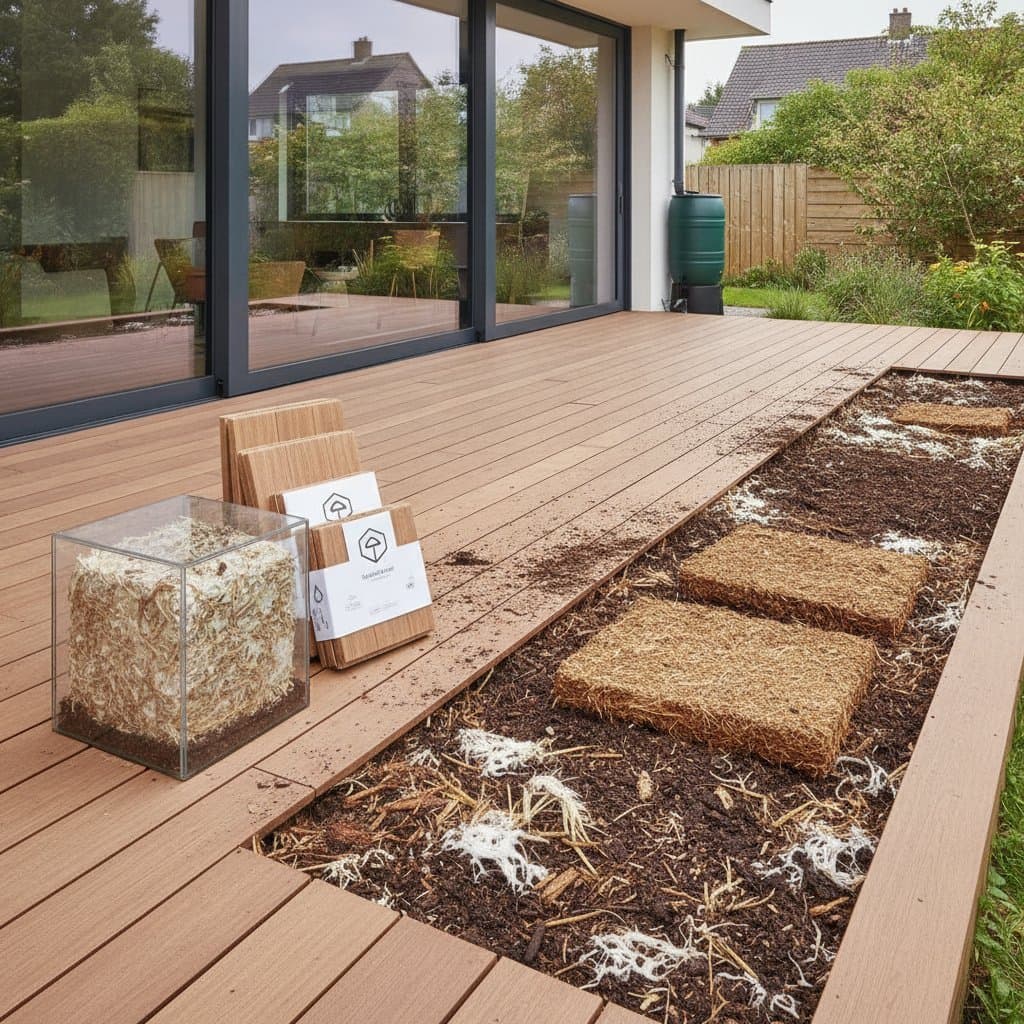
If you grow or store your own panels, keep them in a dry, shaded space. Mycelium boards absorb moisture like cork, so airflow matters.
Stack boards flat with spacers between layers. Do not seal boards until they are fully dry. Store away from direct sunlight to prevent early fading. Keep temperature steady between 60 and 80 degrees Fahrenheit.
Proper storage keeps panels square and ready for use.
Environmental Impact
Each square foot of mycelium decking saves roughly 1.2 pounds of carbon emissions compared to standard composite decking. The material uses agricultural byproducts that would otherwise go to waste. It grows using ambient conditions, not high-heat manufacturing.
When the deck reaches the end of its life, the boards can be shredded and composted. The mineral coating breaks down into trace minerals that enrich soil. No petroleum-based resin, no microplastics, and no long-term waste remain.
For urban homeowners who want a green upgrade, mycelium decking fits small patios and rooftop terraces especially well. It keeps weight low while adding insulation value.
Next Steps
You can take three clear steps today to move closer to a sustainable deck.
- Research suppliers. Look for certified mycelium composite makers who provide moisture ratings and strength tests. Ask if the boards include natural fiber reinforcement.
- Plan your layout. Measure your space, then sketch the frame. Estimate board counts and spacing. Planning saves time and reduces waste.
- Start small. Try a balcony platform or garden walkway before committing to a full deck. This gives you practice and shows how the material looks in your environment.
Once you see how it performs, you can expand with confidence. Mycelium decks combine natural growth with human design. They turn waste into structure, then return gracefully to the earth.