
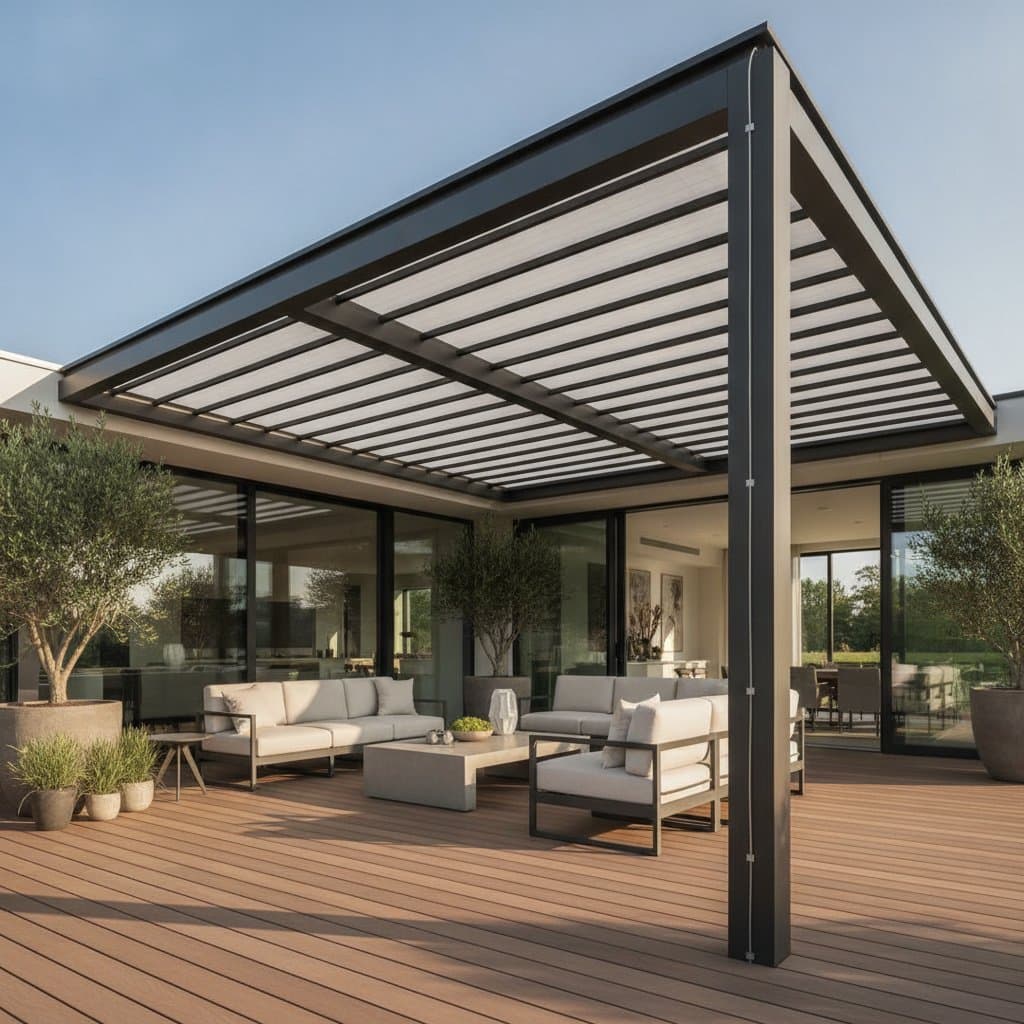
Energy-Generating Pergolas with Retractable Solar Roofs
Your deck or patio can produce clean electricity while offering shade and comfort. A pergola equipped with a retractable solar roof combines structural design with photovoltaic technology. Homeowners use the generated power for outdoor lighting, small appliances, or grid feed in systems. This guide covers design choices, required components, installation steps, safety practices, costs, and ongoing care.
Required Components
Select either a preassembled kit or individual parts matched to your space. The following items support a typical residential installation:
- Aluminum or pressure treated wood frame at least 8 feet high for headroom and stability.
- Retractable roof assembly with tracks, rollers, or adjustable louvers.
- Solar panels sized to the roof surface, commonly eight to twelve modules.
- Inverter that converts direct current from the panels into alternating current for household use.
- Optional battery bank rated around 5 kilowatt hours for nighttime or backup supply.
- Weatherproof wiring, conduit, and connectors rated for outdoor exposure.
- Motor controller with sensors for automated positioning and output monitoring.
- Anchors, brackets, and sealant formulated for the chosen frame material.
- Personal protective equipment including gloves, eye protection, and a secure ladder.
Most mid size projects require two to three days when weather permits continuous work.
Safety Practices
Disconnect the main electrical service before any connection to the household panel. Wear insulated gloves during wiring tasks. Inspect each panel for edge cracks or surface damage prior to lifting. Work only on dry surfaces to reduce slip risk. Install ground fault circuit interrupters on every outdoor receptacle used during or after construction.
Cost and Schedule Expectations
A complete mid size system ranges from 5000 to 12000 dollars. The frame and roof mechanism account for roughly half of this total. Solar modules, inverter, and electrical components make up the balance. Professional installation by a licensed solar contractor adds 1000 to 2500 dollars. The full project spans two to four days with two workers. Budget conscious owners can begin with a manual roof and add motorized controls later. Reject panels that lack independent performance certification, as they often lose output capacity within a few seasons.
Seasonal Maintenance Schedule
- Spring: Clean panel surfaces, verify all electrical connections, and confirm motor operation before regular use.
- Summer: Ensure adequate airflow around the inverter to avoid thermal shutdown.
- Fall: Remove debris from roof channels and lubricate moving tracks.
- Winter: Fully retract the roof ahead of heavy snow. Clear accumulated snow exceeding 2 inches with a soft brush.
Record monthly power production figures in a simple log to detect performance changes early.
Energy Storage Integration
Mount a compact battery bank beneath a bench or inside a protected cabinet. A 5 kilowatt hour unit supplies garden lighting and a compact refrigerator through the night. Label every circuit breaker and switch. Connect the pergola controller to a smart home system for remote open, close, and monitoring commands from a mobile device. Keep cleaning supplies and lubricants in a sealed container near the structure.
Professional Electrical Connections
Engage a certified electrician when tying the pergola output directly into the main service panel or a backup generator. The electrician confirms proper grounding, calculates load limits, and verifies compliance with local codes.
Planning Your Installation
Measure the available deck or patio area first. Compare kit specifications against local wind and snow load requirements. Obtain necessary permits before ordering materials. These steps produce a durable structure that delivers shade and renewable electricity for years.