
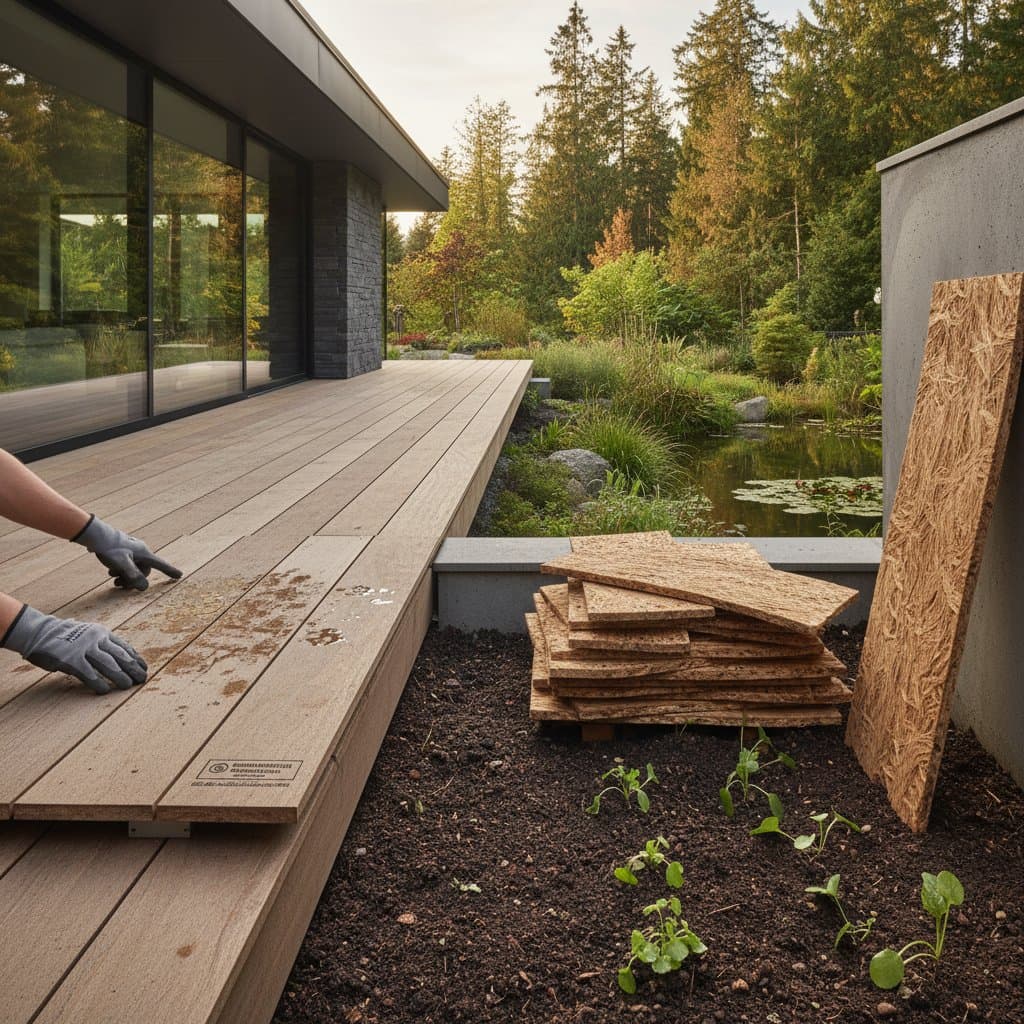
The Promise of Mycelium Decking
Mushroom decking transforms organic waste into durable, biodegradable boards made from mycelium. This root structure of fungi delivers the natural feel of wood without deforestation. The material resists moisture and composts safely at the end of its life. Homeowners gain an outdoor surface that blends strength with environmental responsibility.
Key Safety Practices
Store boards indoors before installation to prevent moisture absorption. Avoid torch-based treatments because heat can damage the organic fibers. Clean spills quickly to avoid staining. Inspect fasteners each season to catch loosening early.
Mushroom decking offers some fire resistance yet should not sit near open flames or grills without a heat barrier. Proper handling from the start protects both the material and the installer.
Addressing Common Issues
Warping or swelling
If boards swell after heavy rain, allow them to dry naturally. Avoid forced heat. Once dry, reapply sealant to restore protection.
Surface scratches
Lightly sand the area with 220-grit paper, then reseal. The fibers close slightly after sanding and restore the original texture.
Mold growth underneath
Improve airflow by adding vent openings or cleaning debris under the deck. Mycelium itself resists decay, but trapped moisture can still foster surface mold.
Loose screws
Retighten or replace with slightly larger stainless steel screws. Always check alignment before adding new holes.
Budget and Time Considerations
Expect mushroom decking boards to cost between $6 and $9 per square foot. A 200-square-foot deck may require $1,200 to $1,800 for materials alone. This price aligns with high-end composites while adding the benefit of biodegradability.
Installation time matches standard decking. Two people can finish a small deck in two to three days, including sealing. No special tools are required, which reduces rental costs.
Low-cost options include using reclaimed joists that pass a structural check, choosing unfinished boards to seal yourself, or skipping decorative trims until later seasons. Never reduce quality on fasteners or sealant because these elements determine performance through wet and dry cycles.
Routine Maintenance
Mushroom decking needs gentle care. Regular cleaning keeps the surface attractive and prevents slipping. Sweep debris weekly. Wash with mild soap and water twice a year. Reseal every two years for best durability. Inspect edges for cracks and fill with sealant if needed.
Never use harsh chemicals or pressure washing. These actions can erode the surface and shorten lifespan. In humid climates, add a small fan or vent under the deck to maintain airflow.
Smart Storage and Furniture Choices
Store leftover boards flat in a dry indoor space. Keep them off the floor with spacers for air circulation. Wrap them loosely in paper or cloth rather than plastic because plastic traps moisture.
Select lightweight deck furniture with rubber feet. Avoid dragging metal chairs because they can scratch the surface. Add felt pads under planters to prevent water rings.
When Professional Help Makes Sense
Call a contractor if the deck spans more than 12 feet, sits on uneven ground, or connects to a structure that requires permits. Professionals verify load requirements and ensure safe anchoring.
Ask these questions before hiring: Have you installed bio-based decking before? What sealants suit my climate? Can you provide a ventilation plan beneath the deck? A pro can also test drainage and confirm that soil conditions will not create long-term moisture problems.
Environmental Advantages
Mushroom decking reduces waste by using agricultural byproducts and avoiding petroleum resins. Each board locks away carbon during its lifespan. When composted, it enriches soil instead of filling landfills.
Researchers note strength comparable to softwood and water absorption rates 30 percent lower than untreated particleboard. The production process uses low heat, which cuts energy use. The surface stays cooler than plastic in summer and feels slightly softer under bare feet.
Exploring Small Projects First
Start with a planter box, bench, or balcony platform before a full deck. Search for certified mycelium decking or bio-composite panels rated for outdoor use. Test a sample outdoors for one week and check for swelling or color change. Choose a covered or partly shaded area at first to extend life and reduce maintenance.
Mushroom decking turns waste into structure and then back into soil. This approach closes a materials loop that has remained open for too long in outdoor construction.