
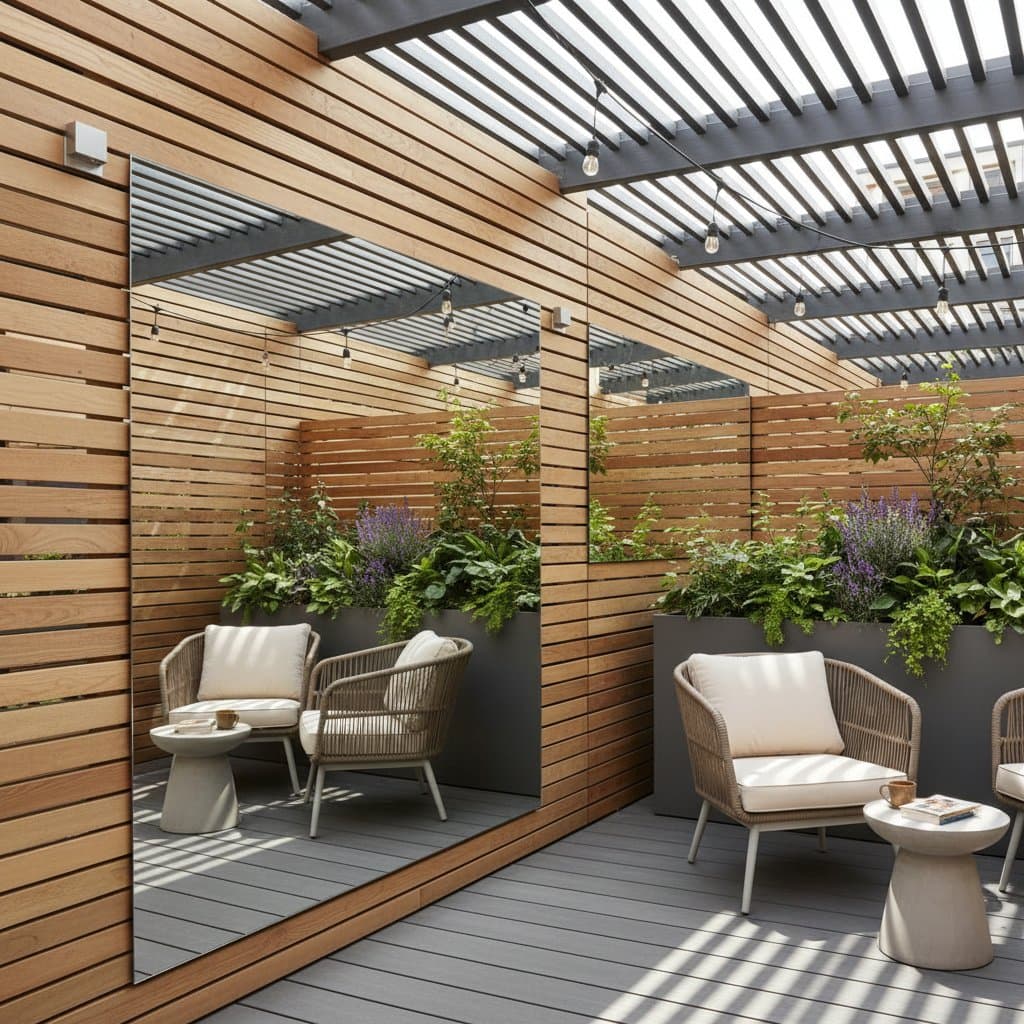
Introduction to Mirror Illusions for Decks
Small decks often feel confined, limiting their potential as relaxing outdoor spaces. Mirrors offer a simple yet powerful solution by reflecting light and scenery, creating an illusion of greater depth and openness. Homeowners can achieve this effect with careful planning and execution, transforming a modest area into a welcoming retreat.
The key lies in selecting mirrors that withstand weather while enhancing the deck's aesthetics. This approach not only expands perceived space but also boosts natural illumination, making the area more inviting for gatherings or quiet evenings. Readers will find practical guidance to implement these changes effectively.
Benefits of Using Mirrors on Small Decks
Mirrors reflect surrounding landscapes, such as gardens or skies, to extend visual boundaries beyond the deck's physical limits. This technique draws in more sunlight, brightening shaded corners and reducing the need for artificial lighting. As a result, the space feels airy and connected to the environment.
Beyond aesthetics, mirrors can highlight architectural features or potted plants, adding layers of interest. They provide a cost-effective alternative to structural expansions, delivering immediate impact with minimal disruption. Property values may even rise due to the enhanced curb appeal and usability of the outdoor area.
Selecting the Right Mirrors
Choose mirrors sized to fit the deck's scale, typically 24 by 36 inches for walls or 18-inch rounds for accents. Tempered glass offers durability and shatter resistance, while acrylic provides a lightweight, shatterproof option ideal for elevated installations. Both materials resist fading when treated with UV-protective coatings.
Consider the frame: stainless steel or powder-coated aluminum prevents rust in humid conditions. For a seamless look, opt for frameless edges that blend with deck railings. Test samples in natural light to ensure reflections align with desired views, such as treetops or distant horizons.
Optimal Placement Strategies
Position mirrors on vertical surfaces like fences or walls to mimic windows, opening up enclosed views. Angle them slightly upward to capture sky reflections, which add height and expansiveness. Avoid direct opposition to busy streets to prevent unwanted visual clutter.
Group smaller mirrors in asymmetrical patterns for a modern touch, or use a single large panel for dramatic effect. Integrate with greenery by placing mirrors behind climbing vines, reflecting foliage to double the sense of nature. Experiment with temporary placements using removable hooks before permanent installation.
Installation Steps
Step 1: Prepare the Surface
Clean the mounting area thoroughly with a mild detergent solution to remove dirt and oils. Allow the surface to dry completely, ideally on a calm day with temperatures above 50 degrees Fahrenheit. Inspect for cracks or loose boards that could compromise adhesion.
Step 2: Measure and Mark
Use a tape measure to determine the mirror's position, ensuring it aligns with eye level when seated. Mark guidelines with painter's tape for precision. Double-check measurements to avoid offsets that distort reflections.
Step 3: Gather Supplies
Assemble outdoor-rated adhesive, such as silicone-based construction glue, along with mounting clips and screws. Include a level, drill, and safety gear. For wooden surfaces, select rust-resistant hardware to maintain long-term stability.
Step 4: Attach the Backing
Apply adhesive to a plywood or composite backing board cut to the mirror's dimensions. Press the mirror firmly onto the backing, using weights to hold it in place for 24 hours. This method distributes weight evenly and protects the reflective surface.
Step 5: Mount the Assembly
Secure the backing to the deck structure with screws and clips spaced every 12 inches. Use a level to ensure flatness, adjusting as needed. For fence posts, reinforce with brackets to handle wind loads.
Step 6: Seal Edges
Apply a thin bead of outdoor-grade sealant along the perimeter to block moisture, dust, and pests. Smooth the sealant with a gloved finger for a clean finish. Allow it to cure fully before exposure to elements.
Step 7: Clean and Test
After the adhesive cures, wipe the surface with a soft cloth dampened in water. Step back to evaluate the reflection's angle, adjusting nearby plants or lights to optimize the framed view. Confirm the setup enhances rather than overwhelms the space.
Safety Considerations
Select tempered glass or acrylic mirrors to minimize shatter risks if impacted. Position installations away from areas where direct sunlight reflections could harm plants, pets, or furnishings through concentrated heat. Anchor larger mirrors using both adhesive and mechanical fasteners to resist wind forces.
Always wear protective gloves when handling edges, regardless of polishing. For elevated mounts, use stable ladders and secure tools to prevent accidents. Consult local building codes for installations over certain heights or sizes.
Common Issues and Solutions
Distorted reflections often stem from uneven mounting; inspect the backing for warps or loose fasteners and correct them. Condensation buildup indicates sealant failures; carefully remove the affected areas and reapply waterproof caulk.
Excessive glare can be mitigated by installing sheer outdoor curtains or lattice screens to scatter light. If reflections capture unintended elements, like neighboring properties, reposition the mirror or add privacy screens nearby.
Ongoing Care
Clean mirrors monthly using mild soap and lukewarm water, rinsing thoroughly to avoid residue. Steer clear of abrasive cleaners that might damage the backing. Each season, examine the sealant for cracks or separation, reapplying as necessary to maintain weatherproofing.
In regions with harsh winters, cover mirrors during freeze-thaw periods to prevent expansion damage. For acrylic types, apply a specialized polish annually to preserve clarity and reduce scratching from environmental debris.
Off-Season Storage
When removing mirrors for winter, store them vertically in a dry, temperature-controlled shed or garage. Cushion panels with foam or cardboard separators to avoid contact scratches. Refrain from stacking heavy objects against them, as pressure may induce cracks over time.
Label stored items for easy retrieval in spring. Inspect for damage before reinstallation, cleaning and resealing edges if needed.
Cost and Timeline Estimates
Basic setups range from 75 to 250 dollars, varying by mirror size and material choice. Acrylic options weigh less but require more frequent polishing, whereas glass maintains sharpness longer at a modest premium.
Most installations require two to three hours per panel, encompassing measurement, mounting, and finishing. Homeowners with standard tools can manage the process, though complex placements may extend the time slightly.
Adapting to Seasons
Post-storm inspections ensure mirrors remain secure and free of debris. Clear accumulated leaves that obstruct light flow. During summer, leverage reflections to illuminate dim seating zones, extending usable hours.
In autumn and winter, mirrors capture scarce sunlight, warming the area and elevating ambiance. Adjust angles seasonally to maximize benefits from changing sun paths.
Professional Assistance
Engage a carpenter or glass specialist for mirrors exceeding 36 by 48 inches or high-wall mounts. These scenarios demand reinforced brackets and certified safety glass. Professionals can incorporate drainage features and flashing to safeguard underlying structures.
Discuss your vision upfront to ensure compliance with safety standards and aesthetic goals.
Implementing Your Plan
Begin by surveying your deck to pinpoint restrictive walls or fences. Sketch potential mirror locations with measurements for visualization. Collect a single mirror and essential tools to start a weekend endeavor.
These steps yield quick transformations, visually amplifying deck space without physical alterations. The result fosters a brighter, more expansive outdoor environment that enhances daily enjoyment.