
Loading...

Reflective Deck Coatings Reduce Heat by 40° | urbanoutdoorsnyc.com | Urban Outdoors - Small-Space Gardens, Rooftop Decks, Balconies, Decks, Backyard Design
Skip to main content
Urban Outdoors
Search
Home
  1. Home
  2. /
  3. Deck Construction & Remodeling
  4. /
  5. Cut Deck Heat 40 Degrees with Reflective Coatings
Deck Construction & Remodeling

Cut Deck Heat 40 Degrees with Reflective Coatings

bySheila Spaulding
2026-04-14 05:09:14April 14, 2026
6 min read
Featured image for Cut Deck Heat 40 Degrees with Reflective Coatings

Categories

Navigation

  • Home
  • All Articles
  • About Us
  • Privacy Policy
  • Terms of Service

© 2026 Urban Outdoors. Crafted for bold city dwellers.

2026-04-14 05:09:14
Urban Outdoors - Small-Space Gardens, Rooftop Decks, Balconies, Decks, Backyard Design

Reduce Deck Heat by 40 Degrees with Reflective Coatings

Decks serve as essential outdoor spaces for relaxation and gatherings. However, intense sunlight can transform these areas into uncomfortably hot surfaces, restricting their use during peak summer hours. Reflective coatings address this issue by reflecting sunlight rather than absorbing it, which lowers surface temperatures by up to 40 degrees and maintains a welcoming environment throughout the season.

This comprehensive guide details the mechanics of reflective coatings, required tools, and precise application methods. It also includes safety protocols, troubleshooting solutions, cost estimates, and ongoing care instructions to ensure long-term performance.

How Reflective Coatings Function

Reflective coatings consist of specialized paints or sealants infused with light-colored pigments and heat-resistant minerals. These components create a protective layer that deflects ultraviolet rays and infrared heat, preventing the material from warming excessively. In contrast, conventional stains or dark paints absorb solar energy, often elevating deck surfaces beyond 120 degrees Fahrenheit on sunny days.

Application of reflective coatings typically yields a temperature reduction of 30 to 40 degrees, depending on environmental factors such as location and material type. This cooling effect not only enhances comfort for bare feet but also minimizes the necessity for additional shading solutions like umbrellas or mats. Suitable for wood, composite, or concrete decks, these coatings extend to patios and rooftop decks where heat accumulation poses similar challenges.

Essential Tools and Materials

Prepare all items in advance to streamline the project and prevent interruptions. Basic tools suffice for most applications, allowing completion as a weekend endeavor.

Tools:

  • Paint roller equipped with an extension pole for broad coverage
  • Paint tray with disposable liners for efficient cleanup
  • 2-inch angled brush for precise edging and corners
  • Pressure washer set to low pressure or a stiff-bristled brush for cleaning
  • Sandpaper or sanding sponge in 120-grit for surface preparation
  • Painter's tape for protecting adjacent areas

Materials:

  • High-quality reflective deck coating or heat-reflective paint; one gallon typically covers 250 square feet
  • Mild detergent or specialized deck cleaner for initial washing
  • Wood filler or patching compound to repair cracks and imperfections
  • Clean water supply and lint-free rags for wiping

Application Process

Follow these steps methodically to achieve optimal results. Proper preparation forms the foundation for adhesion and durability.

1. Thorough Surface Cleaning

Remove debris by sweeping the deck completely. Apply a mild detergent solution using a pressure washer on a low setting or a stiff brush for manual scrubbing. Rinse generously with clean water and allow the surface to dry fully for at least 24 hours, ensuring no residual moisture remains to compromise adhesion.

2. Repair and Smoothing

Identify and fill any cracks, nail holes, or gaps with wood filler or patching compound. After the filler dries according to product guidelines, sand the areas smooth using 120-grit sandpaper or a sponge. Vacuum or wipe away all dust particles to create a pristine base.

3. Protection and Masking

Apply painter's tape along railings, siding, and nearby structures or plantings. This step safeguards unintended areas from coating and maintains clean, professional edges throughout the application.

4. Product Preparation

Open the container of reflective coating and stir contents gently but thoroughly for one full minute. Avoid shaking, which introduces air bubbles that may lead to an uneven finish. Verify uniform color and consistency from the bottom to the top of the mixture.

5. Initial Coat Application

Begin with the angled brush to coat edges, corners, and hard-to-reach spots. Switch to the roller for the main surface, applying in long, even strokes that follow the wood grain. Maintain a wet edge by overlapping slightly to prevent lap marks, aiming for a thin layer approximately 4 mils thick.

6. Drying Interval

Permit the first coat to dry for about four hours, or adhere to the manufacturer's recommendations adjusted for local humidity and temperature. Test readiness by touching the surface; it should feel tack-free before proceeding.

7. Second Coat Application

Repeat the brushing and rolling process for a second thin layer. This additional coat enhances reflectivity, durability against weathering, and overall heat resistance, providing maximum protection.

Safety Considerations

Conduct all work in well-ventilated outdoor conditions to minimize inhalation risks. Equip yourself with protective gloves and safety goggles during cleaning and sanding phases. Restrict access to pets and children until the coating cures completely, typically 24 to 48 hours. Schedule applications during cooler morning or evening hours to avoid rapid drying under intense midday sun, which can result in inconsistencies.

Common Issues and Solutions

Bubbling during application often indicates excess moisture on the surface. Address this by lightly sanding the affected zone, cleaning thoroughly, and reapplying a fresh coat. Patchy coloration requires restirring the product to redistribute pigments evenly before touch-ups.

Peeling occurs if the underlying deck finish proves incompatible; test a small area first in future projects. For minor adhesion failures, remove loose sections, sand, and recoat promptly to restore integrity.

Cost and Time Estimates

Budget approximately 80 to 120 dollars for materials and basic tools to cover a 200-square-foot deck. Factor in the cost of any specialized cleaners or fillers as needed. The active application phase demands one full day, followed by drying periods that extend the total timeline to two days.

Ongoing Maintenance Practices

Perform monthly cleanings using mild soap and water to preserve the coating's reflective properties. Steer clear of abrasive chemicals or high-pressure washing that could erode the surface. Reapply a fresh coat every three to five years, guided by exposure to elements and usage intensity, to sustain cooling benefits.

Preparation for Seasonal Changes

Examine the coating integrity prior to summer's height, addressing any chips or wear to avert heat concentration in exposed areas. During winter, clear snow with soft tools to prevent surface damage. These proactive measures extend the coating's lifespan and consistent performance year-round.

Achieve Optimal Results

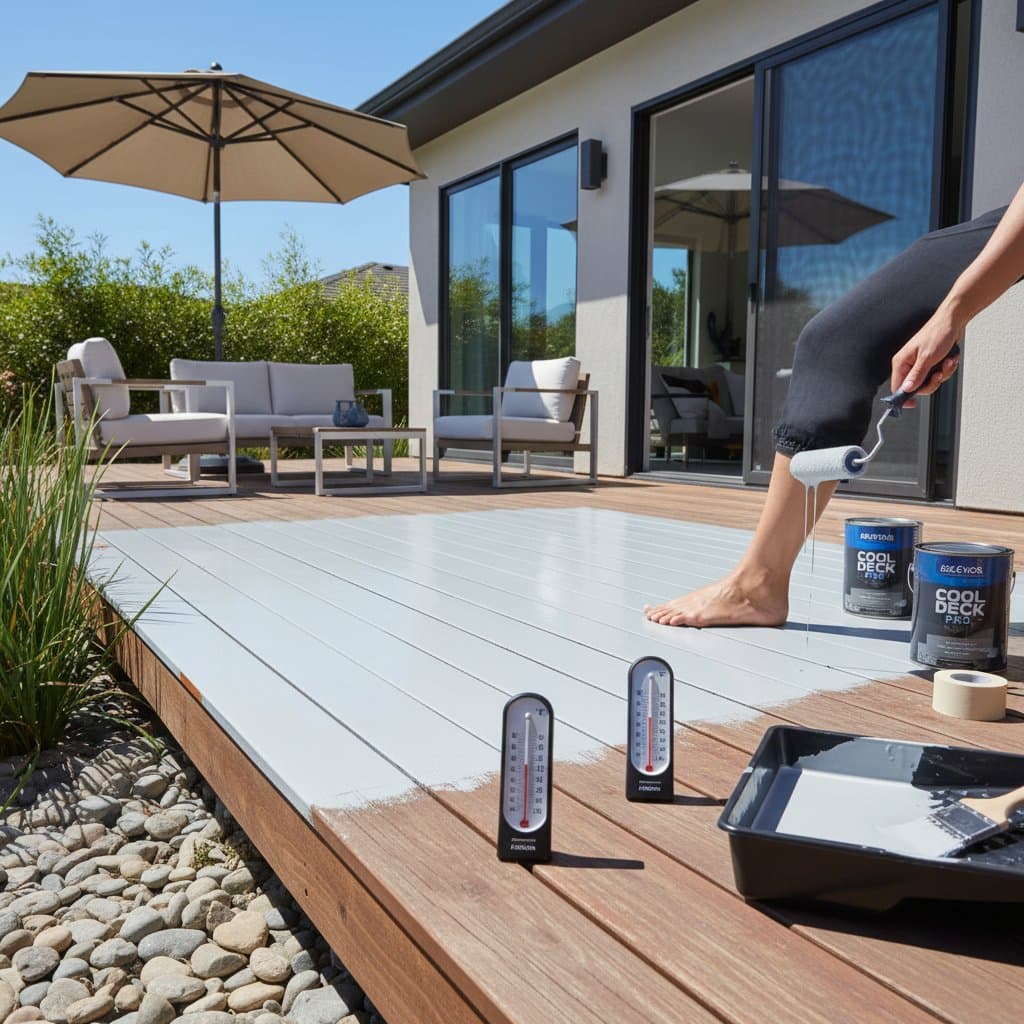
Initiate the project by testing the coating on a small, inconspicuous section to confirm compatibility and appearance. Monitor surface temperatures with a thermometer before and after application to quantify the improvement, often revealing reductions of 35 to 40 degrees. Integrate the treated deck with light-colored furnishings and supplementary shading elements, such as a simple sail, to amplify comfort and usability in your outdoor haven.

You Might Also Like

Solar Retractable Roofs Generate Power While You Relax

Why Shade Sails Drop Deck Temps 20 Degrees

Cut Urban Deck Noise with Acoustic Panels

Mushroom-Based Deck Tiles Cut Carbon and Maintenance

Living Pergolas Cool Decks Through Natural Shade

Tagged:

paint,deck,heat,cool,coating,reflective,cool-deck-coating

Recent by Sheila Spaulding

Image for Solar Retractable Roofs Generate Power While You Relax

Solar Retractable Roofs Generate Power While You Relax

Apr 13, 2026
Image for Shade Sails Drop Rooftop Temps 20 Degrees Fast

Shade Sails Drop Rooftop Temps 20 Degrees Fast

Mar 31, 2026
Image for Turn Balcony Railings into Solar Power Stations

Turn Balcony Railings into Solar Power Stations

Mar 29, 2026
Image for Turn Your Balcony into a Pollinator Refuge

Turn Your Balcony into a Pollinator Refuge

Mar 19, 2026
Image for Shape Deck Zones to Stay Comfortable All Year

Shape Deck Zones to Stay Comfortable All Year

Mar 18, 2026

Deck Construction & Remodeling

Mushroom Decks That Compost After Years of Use

Mycelium decking revolutionizes eco-conscious outdoor design with durable, compostable panels grown from fungal roots and agricultural waste. This guide details production, care, budgeting, and the profound environmental gains, paving the way for zero-waste living spaces.

Apr 13, 2026

Solar Retractable Roofs Generate Power While You Relax

Elevate your deck with a solar retractable roof that delivers on-demand shade, generates renewable energy, and reduces utility bills. This guide covers planning, key components, installation insights, and maintenance strategies for sustainable outdoor living.

Apr 13, 2026

Why Shade Sails Drop Deck Temps 20 Degrees

In 2026, shade sails emerge as a transformative solution for outdoor comfort. These tensioned fabric structures decrease deck surface temperatures by as much as 20 degrees Fahrenheit, safeguard materials from UV damage, and promote relaxation without relying on energy-intensive methods. This guide covers selection criteria, installation procedures, and upkeep practices to deliver elegant, eco-friendly shading that elevates urban decks into inviting havens.

Categories

Deck Construction & Remodeling(228)
Balcony Design(193)
Rooftop Decks(83)
Small-Space Gardens(83)
Backyard Design(22)
Apr 5, 2026

Cut Urban Deck Noise with Acoustic Panels

Convert your bustling urban deck into a tranquil haven using acoustic panels. This guide details the mechanics of sound absorption, essential tools for setup, precise installation procedures, ongoing care practices, expense breakdowns, and seasonal upkeep strategies to sustain a serene, inviting, and aesthetically pleasing environment throughout the year.

Apr 1, 2026

Mushroom-Based Deck Tiles Cut Carbon and Maintenance

Mycelium deck tiles, derived from fungal roots, redefine urban outdoor living. These lightweight, eco-degradable, and insulating options enable simple DIY setup and reduced upkeep. Delve into their green advantages, precise installation process, and care strategies for an earth-friendly deck that enhances comfort and sustainability.

Mar 22, 2026

Living Pergolas Cool Decks Through Natural Shade

Transform your deck into a shaded, verdant escape using a living pergola. This comprehensive guide details material selection, structural assembly, irrigation setup, and vine choices that flourish. Explore techniques to enhance shade, optimize airflow, and cultivate a sustainable oasis that enhances comfort and beauty with each passing season.

Mar 18, 2026

Shape Deck Zones to Stay Comfortable All Year

Elevate your deck into a versatile outdoor haven by implementing microclimate zones. This approach involves assessing light patterns, wind flow, and thermal areas, then applying targeted elements like portable heaters, shade structures, and strategic plantings to ensure comfort across all seasons.

Mar 18, 2026

Cool Decks Stay 20 Degrees Cooler in Summer Heat

Turn urban decks from hot hazards into cool havens with heat-reflective materials. This guide covers composites, thermally modified woods, and strategies to maintain surfaces up to 20 degrees cooler, plus practical advice on design, budget, and care for year-round enjoyment.

Mar 16, 2026

Micro-Misting Drops Deck Temperature 15 Degrees

Combat summer heat by installing a micro-misting system that reduces deck temperatures up to 15°F. This guide covers the cooling process, energy-efficient benefits, and adaptable designs for various outdoor areas. Find detailed installation instructions, troubleshooting advice, and seasonal maintenance to sustain a refreshing backyard environment.

Mar 16, 2026

Mycelium Decks Break Down Instead of Piling Up

Mycelium decks revolutionize urban outdoor areas with panels grown from fungal networks and agricultural byproducts. These lightweight, water-resistant, and fully biodegradable options provide a green alternative to traditional plastic composites. This guide covers installation, upkeep, budgeting, and strategies to maximize their lifespan while minimizing environmental impact.

Mar 15, 2026

Creating Deck Zones That Work in Every Season

Elevate your deck into a seasonal haven by developing microclimates that provide tailored comfort throughout the year. Explore strategies for zoning, shading, heating, and organizing with durable materials, strategic lighting, and efficient storage solutions. Achieve prolonged outdoor use while enhancing energy efficiency, visual appeal, and safety measures.

Mar 15, 2026

Glass Domes Keep Your Deck Open All Year

Elevate your deck into a versatile, all-season haven using glass domes or retractable pergolas. Gain insights into selecting materials, executing installations, and performing upkeep to maintain a bright, comfortable area for winter mornings or summer evenings alike.

Mar 14, 2026

Solar Pavers Store Sunlight and Charge Your Phone

Elevate your outdoor spaces with solar pavers that capture daylight to provide nighttime illumination and device charging capabilities. This comprehensive guide details their functionality, installation requirements, upkeep recommendations, expense considerations, and safety protocols to help you build an efficient, luminous environment that performs reliably throughout the year with little ongoing work.

Mar 14, 2026

Smart Apps Map Microclimates for Ideal Deck Builds

Smart apps uncover microclimate nuances in your yard, from sunlight exposure to wind flow and moisture levels. These tools guide material selection, layout planning, and design choices to create durable, comfortable decks. Transform local data into a strategic plan for your perfect outdoor area.

Mar 13, 2026

Pergola Pods Turn Decks Into Year-Round Retreats

Elevate your deck with a pergola pod, a versatile structure that provides shade, protection, and aesthetic appeal. This guide covers planning, construction, upkeep, and strategies to maximize seasonal use, ensuring comfort in any weather.

Mar 12, 2026

Solar Pergolas Cut Cooling Costs While Powering Your Deck

Elevate your deck with a solar pergola that offers shade and produces clean energy. This comprehensive guide details planning, material choices, installation steps, safety measures, troubleshooting, budgeting, and maintenance. Discover how to build a durable structure that cuts energy expenses and enhances outdoor comfort.

Mar 11, 2026

Micro-Misting Drops Deck Heat 15° Without Puddles

Micro-misting provides an effective solution to transform sweltering decks into comfortable retreats, reducing temperatures by up to 15 degrees through fine water droplets. This guide details the science behind the cooling, lists necessary tools and materials, outlines installation processes, addresses safety considerations, and offers maintenance advice for reliable performance throughout the season.

Mar 11, 2026

Mycelium Decks Grow Strength from Fungal Roots

Mycelium decks leverage fungal networks to create biodegradable, waste-derived outdoor flooring that enhances urban sustainability. This resource provides practical instructions for building resilient panels that integrate nature into city living, including material selection, assembly techniques, and long-term care strategies.

Mar 11, 2026

Micro-Clover Borders Cut Deck Upkeep in Half

Revitalize weary deck borders using resilient micro-clover, a self-sustaining ground cover that thrives with little intervention. This guide details installation, care essentials, and advantages like reduced mowing and enhanced aesthetics for compact urban spaces.

Mar 10, 2026

Set Up Drip Irrigation for Deck Containers

Elevate deck gardening with a micro-drip irrigation system that automates watering for consistent plant health. This guide covers planning, installation, and maintenance to save time, reduce water use, and ensure thriving containers in urban settings.

Mar 8, 2026