
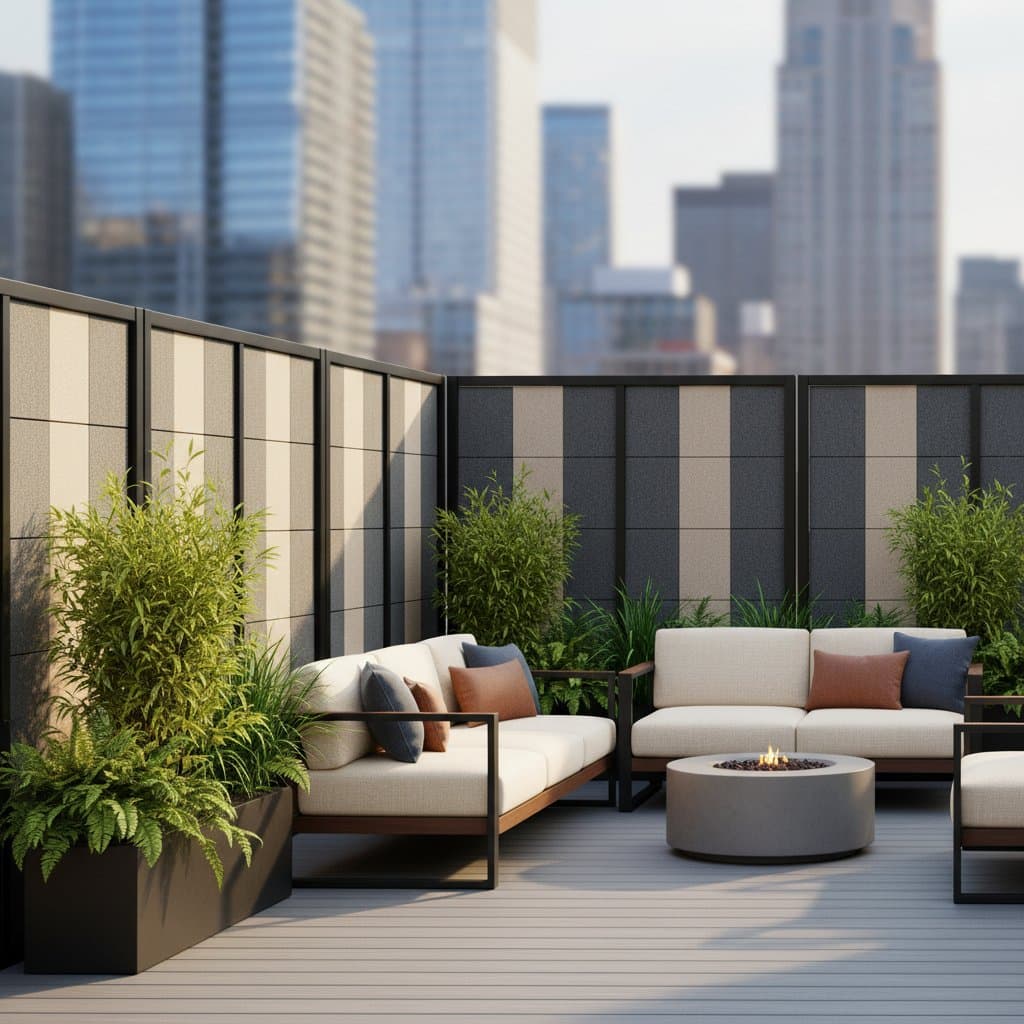
Installing Acoustic Panels on Your Deck
Seal the Edges
Run a thin bead of silicone along every seam. This seals out moisture and air gaps that can carry sound. Wipe extra sealant with a damp cloth before it sets.
Add Decorative Layers
Wrap panels with outdoor fabric or hang climbing plants in front for a softer appearance. Fabric covers should be breathable and UV stable. Avoid tightly sealed plastic covers because they trap moisture and shorten panel life.
Test the Results
Play music or talk at normal volume and then step outside the deck. Notice the drop in clarity and loudness. Inside the deck sound should feel more contained. Adjust any loose sections if rattling occurs.
Troubleshooting Common Issues
Even a careful install can leave small sound leaks or visual issues. The following problems and fixes address the most frequent concerns.
Echo persists after installation. Gaps between panels or sound reflecting off hard surfaces such as glass doors cause this issue. Add soft furnishings such as outdoor rugs or cushions to absorb mid range sound.
Panels rattle in wind. Loose screws or frame movement produce the noise. Tighten all fasteners and then apply rubber washers behind attachment points.
Water pooling at panel base. Panels mounted too close to the deck floor prevent drainage. Raise panels one inch above the surface to allow water to flow away.
Discoloration or mildew. Poor ventilation behind panels leads to these conditions. Clean with mild soap and water and then apply a breathable weatherproof coating.
Uneven color fade. Unequal sun exposure creates this effect. Apply UV protective sealant to all surfaces for consistent wear.
Maintenance Routine
Outdoor panels need seasonal care to stay effective. Perform a routine check every few months.
- Rinse panels with a garden hose or wipe with a soft sponge and mild soap. Avoid pressure washers that can force water inside.
- Look for cracks, mold, or loose screws. Replace damaged panels right away to keep sound insulation even.
- Reapply silicone or clear sealant once a year to block moisture.
- After heavy rain let panels air dry before covering with furniture or fabric.
- If you remove panels for winter stack them flat in a dry shed.
With regular attention panels can last five to ten seasons depending on material and exposure.
When Professional Help Is Needed
You can handle most installations yet certain situations require a licensed contractor. Contact one if your deck faces a major road or train line and you need structural sound walls. Call a pro when the deck railing is unstable or rotted. Seek expert installation if you plan to anchor panels into masonry or stucco or if you want custom cut panels fitted around lighting or built in seating.
Ask the contractor about STC ratings. Ratings above 25 block normal speech while ratings above 35 reduce loud street noise. For decks in dense areas a mix of reflective and absorptive panels often works best.
Creating Daily Calm Outdoors
Once panels are up the difference becomes clear immediately. The air feels still voices sound close and background noise softens. Use that calm to create new routines such as having breakfast outside taking calls in the shade or reading without distraction.