
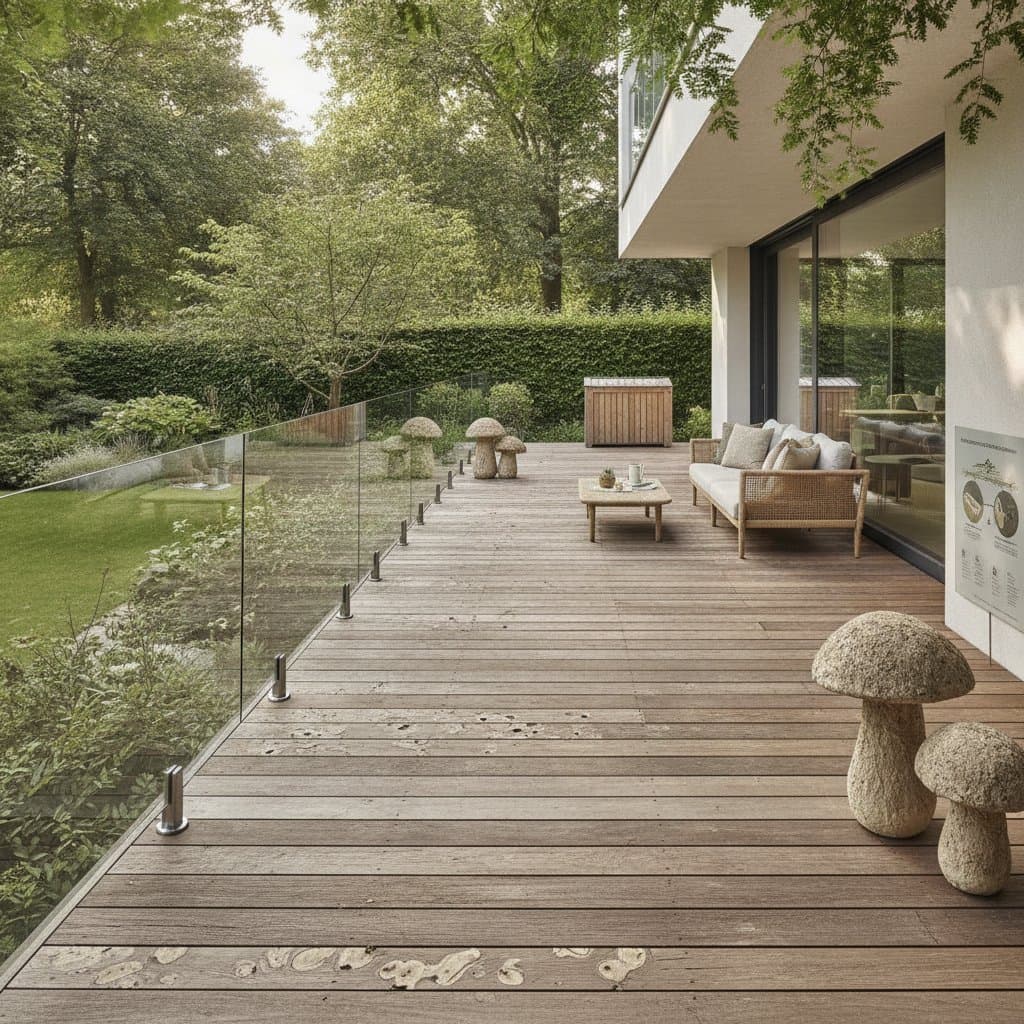
Mycelium Decking: The Natural Alternative to Wood and Plastic
Mycelium forms the root network of mushrooms and now serves as the basis for durable deck boards. These materials combine the appearance of wood with the longevity of composites. They store carbon during growth instead of releasing it during production.
Homeowners gain a surface that remains cooler underfoot and absorbs sound during gatherings. The boards accept fasteners cleanly and produce minimal waste during cutting.
Preparing the Site and Framing
Select a level area with good drainage before beginning work. Install joists at standard 16 inch spacing and cover them with joist tape to block moisture. Confirm that the framing sits at least 6 inches above soil to promote airflow.
Cutting Boards to Fit
Measure each run and mark cut lines with a pencil. Use a fine tooth saw to produce clean edges that fit tightly against neighboring boards. Support the material fully during cuts to avoid chipping.
Fastening the Boards
Drill pilot holes near each joist to prevent surface cracks. Drive stainless steel screws every 16 inches and stop when the head sits flush. Overdriving creates depressions that collect water.
Applying the First Finish Coat
Brush or roll a thin layer of natural oil or water based sealer across the entire surface. Allow full absorption before adding a second coat. The sealer fills initial porosity and forms a barrier against moisture and sunlight.
Final Inspection and Smoothing
Walk the deck in bare feet to locate any rough areas or raised edges. Sand these spots lightly with fine grit paper and sweep away dust. The surface is then ready for regular use.
Safety Practices
- Wear gloves when handling raw boards because residual fibers may irritate skin.
- Keep boards dry before sealing to avoid swelling.
- Clean only with mild soap and water.
- Compost scraps instead of burning them.
- Store spare boards flat in a dry location.
Common Issues and Solutions
Board swelling after rain usually results from incomplete sealing or blocked gaps. Dry the surface, sand edges lightly, and reapply sealer while clearing debris between boards.
Fungal growth appears when ventilation is poor or moisture remains trapped underneath. Add perimeter vents, clean with diluted vinegar, and allow complete drying before resealing.
Soft spots indicate problems with the framing below. Inspect joists for rot and replace damaged sections with treated lumber or composite material.
Surface fading occurs after prolonged sun exposure. Reapply a tinted oil finish every two to three seasons to restore depth and protection.
Cost and Schedule Expectations
A 120 square foot deck requires 960 to 1440 dollars in mycelium boards. Professional labor adds 400 to 800 dollars. Most homeowners complete the project in two to three days when working with one assistant.
Recycled framing lumber reduces expense without affecting performance. Never skip joist tape or the final sealer coats.
Routine Care Schedule
Sweep leaves and rinse with low pressure water each quarter. Check and tighten screws at the same time. Once a year inspect for wear, sand high traffic zones, and clean beneath the structure.
After several years a full reapplication of oil refreshes appearance. Boards that eventually wear out can be composted or ground for use in new panels.
Storage Guidelines
Leave packaging intact until installation day. Stack boards flat on raised supports with airflow beneath. Keep material out of direct sun before sealing and label offcuts for future repairs.
Situations That Require Professional Help
Uneven ground or multi level designs call for a licensed contractor. Complex railings and decks larger than 300 square feet also benefit from experienced crews familiar with bio based materials.
Performance Advantages
Mycelium bonds plant fibers into a matrix that distributes stress evenly. The absence of synthetic resins eliminates off gassing and microplastic release. Each board stores roughly 2 pounds of carbon dioxide from its growth phase.
Broader Environmental Impact
Replacing petroleum based or imported hardwood products saves about 15 pounds of production emissions per square foot. At end of life the boards return nutrients to soil rather than occupying landfill space.
Daily Enjoyment of the Finished Deck
The surface develops a warm patina similar to aged oak and stays comfortable for bare feet. Leftover pieces can be fashioned into matching planters or steps to keep the overall design consistent.