
Planning Integrated Planter Seating
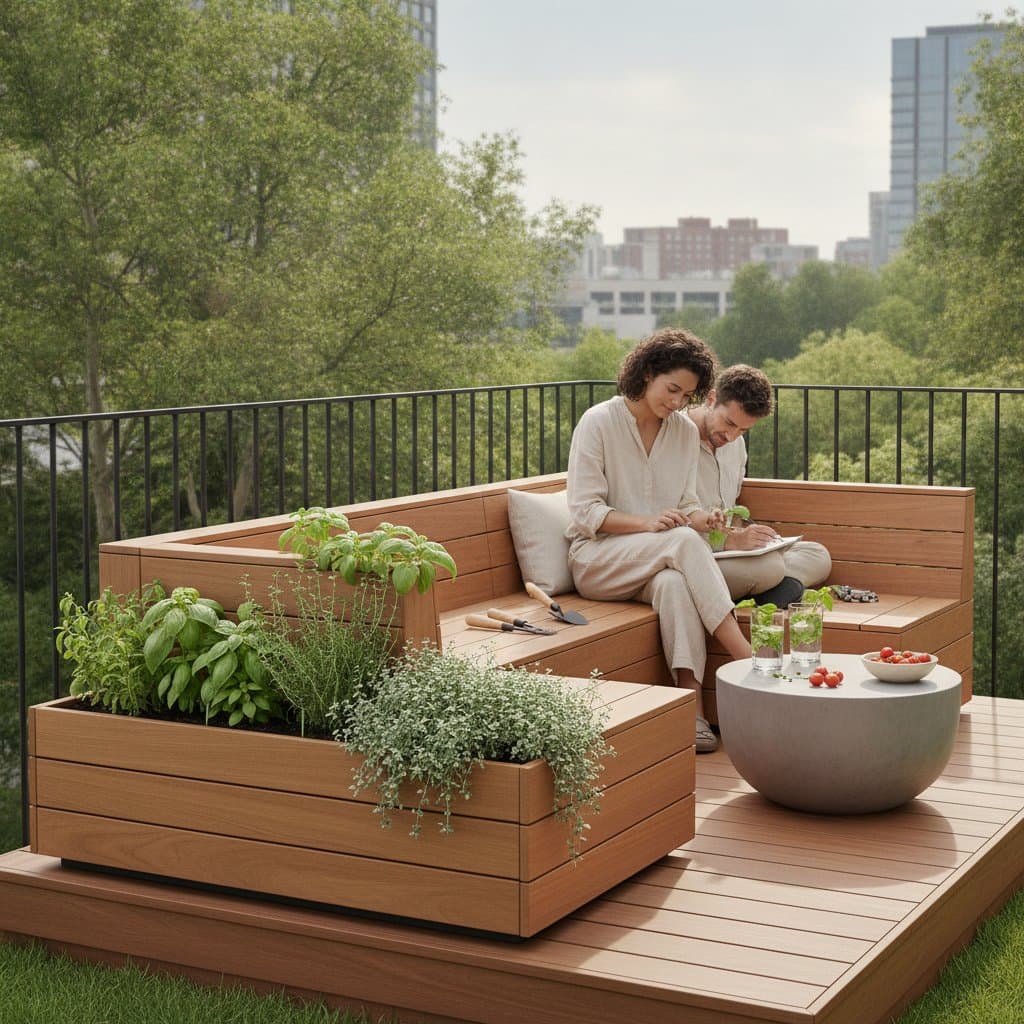
Deck furniture with built-in herb planters turns limited outdoor space into a productive and inviting area. Measure your available sunlight first. Note how many hours each section receives throughout the day. This information guides both furniture placement and herb selection.
Choose a bench or chair design that keeps soil contained yet accessible. Planters should sit at a comfortable height for watering and harvesting without requiring you to stand. Select rot-resistant wood or powder-coated metal rated for outdoor exposure.
Safety Considerations
- Never block drainage holes. Standing water promotes rot and mosquito breeding.
- Keep planters at least 6 inches away from electrical outlets or cords.
- Allow sealant to cure fully before sitting on any finished surface.
- Use only materials rated for outdoor loads to prevent warping or collapse.
- Fold or cap metal edges to reduce the risk of cuts.
Budget and Construction Options
A basic DIY bench with integrated planters requires 150 to 300 dollars in materials. Prefabricated units range from 250 to 800 dollars. Construction of a simple model takes one weekend. Weekly maintenance averages one hour during the growing season.
Reclaimed wood works well if it remains sound and smooth. Plastic liners cost less than metal and resist corrosion. Starting from seed lowers plant expenses. Never reduce spending on quality sealant or structural fasteners.
Daily and Weekly Maintenance
Check soil moisture every two days in hot weather. Herbs prefer consistently damp roots without saturation. Trim foliage weekly and remove flowers to encourage leaf growth. Refresh soil at the start of each growing season.
Clean surfaces with mild soap and water every few weeks. Rinse thoroughly and dry completely. Inspect screws and joints twice a year. Tighten any fasteners loosened by temperature changes.
Troubleshooting Common Problems
Plants drying quickly: Decks experience stronger wind and sun exposure than ground beds. Add mulch or install self-watering inserts. Water early in the morning to limit evaporation.
Wood fading or cracking: Lightly sand and apply a fresh UV-protective finish each season.
Herbs performing poorly: Confirm daily sunlight. Basil and thyme require at least six hours. Mint and parsley tolerate partial shade. In cooler corners, grow chervil or cilantro instead.
Damp cushions: Store cushions indoors or in a sealed deck box when not in use. Select quick-dry foam and water-resistant covers.
Soil escaping through drainage holes: Place fine mesh or a coffee filter at the bottom before adding soil.
Seasonal Tasks
Early spring calls for new soil, drainage checks, and resealing if needed. Start seedlings indoors and move them outside after nights remain mild.
During summer, water consistently and rotate planters for even light. Keep plants pruned to roughly 8 inches tall to promote bushy growth.
In autumn, harvest remaining herbs for drying or freezing. Empty dead roots and apply fresh sealant before winter storage.
Winter care includes moving smaller inserts indoors near bright windows. Water lightly every two weeks to maintain roots for the following year.
Storage and Organization Solutions
Install a narrow drawer beneath the bench to hold scissors, gloves, and fertilizer. Label small containers for each herb so dried harvests stay organized.
Add hooks under the seat for trowels and watering cans. When tools have designated spots, routine care becomes easier to maintain.
Nesting tables with built-in planters offer flexibility on very small decks. Slide units together when space is tight and pull them out for guests.
Professional Assistance
Contact a carpenter if joints feel loose or cracks exceed one-quarter inch. Professionals can reinforce frames and install marine-grade finishes. For built-in lighting or irrigation, hire a licensed contractor to ensure waterproof connections.
Practical Next Steps
Measure sunlight patterns on your deck today. Select herbs you cook with most often. Commit to resealing wood and clearing drainage holes on a regular schedule. These combined steps turn seating into a reliable source of fresh flavor while extending the life of your outdoor furniture.