
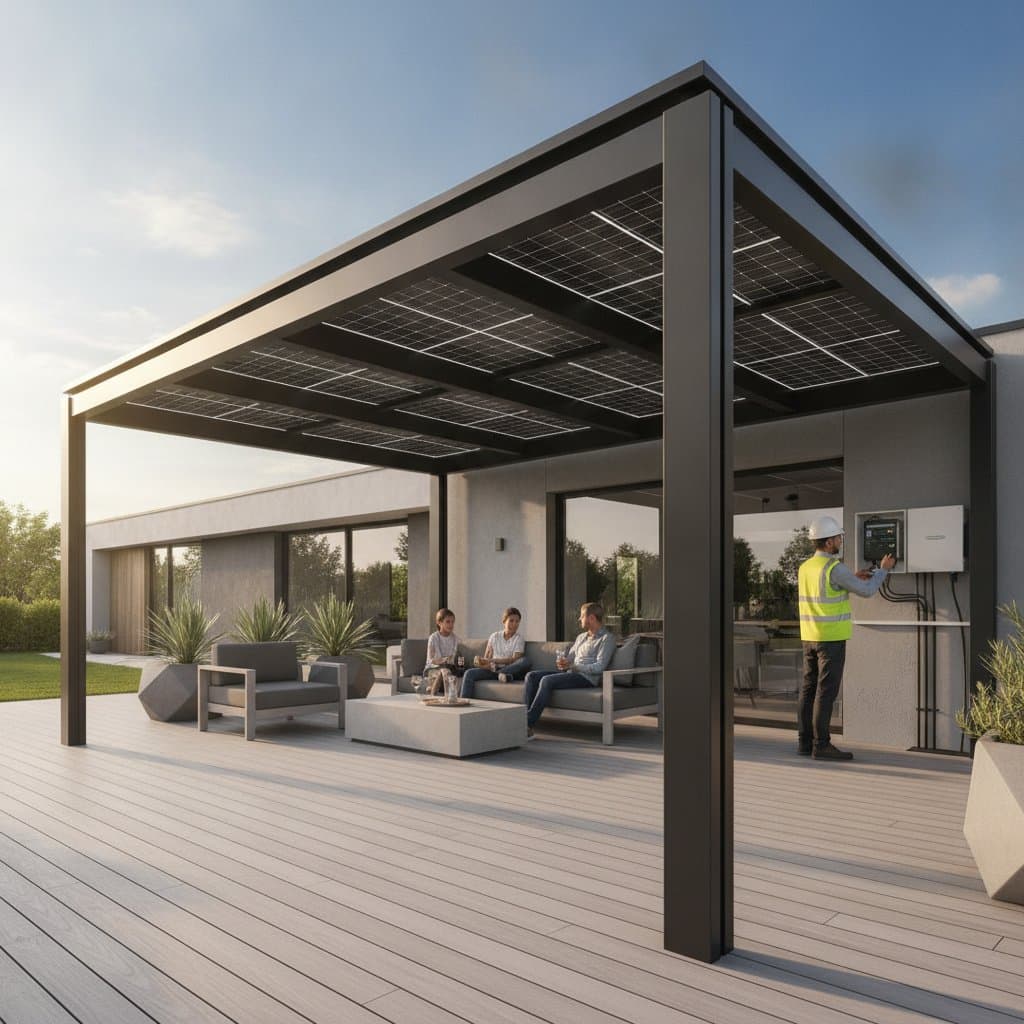
Safety First
Proper safety measures protect both the builder and the finished system. Wear gloves, goggles, and non slip shoes during all cutting, drilling, and wiring tasks. Schedule work on dry days to reduce the chance of slips and electrical shorts.
Check local building codes before starting. Some areas require permits for structural or solar additions. Mark the solar circuit clearly in the breaker box and ground the entire system to prevent shock or equipment damage.
Troubleshooting Common Issues
When the pergola stops generating power, begin with these checks. Inspect every wire connection and tighten any loose joints. Clear debris or trim branches that cast shade on the panels.
Examine the inverter for warning lights or error codes. Clean dusty panels with a soft cloth and mild soap solution. Persistent problems warrant a call to a qualified solar technician. Many inverters link to phone apps that display output trends and flag performance drops quickly.
Budget and Timeline
Project costs depend on size and materials. A basic wood frame with six panels typically ranges from 4000 to 7000 dollars. Aluminum construction paired with higher efficiency panels can reach 10000 to 14000 dollars. Professional labor adds roughly 2 to 3 dollars per watt.
Savings are possible by building the frame yourself and subcontracting only the electrical work. Polycrystalline panels cost less than monocrystalline models. An existing sturdy pergola can be reused if it faces the correct direction.
Frame construction takes one or two weekends for a capable do it yourself builder. Electrical connections require one day for a licensed electrician.
Maintenance Routine
A correctly built solar pergola needs minimal attention. Clean the panels twice each year with water and a soft sponge. Avoid abrasive chemicals. After strong winds, check bolts and brackets and tighten any that have loosened.
Reseal wood surfaces every few years to block moisture. Inspect wiring for cracks or sun damage and replace brittle conduit. Track output through the inverter display or app to confirm steady performance.
With regular care the structure can deliver reliable power for twenty years or more.
Storage Solutions Under the Pergola
The shaded area also serves as organized storage. Add a bench with a lift up seat to hold cushions and hoses. Mount a weatherproof cabinet on one post for grill tools and cords. Install hooks for bikes and folding chairs. Place labeled bins for lighting, games, and plant supplies.
Keep all electrical parts above ground level and protected from moisture. A small shelf beside the inverter shields it from dirt and water.
When Professional Help Is Required
Certain tasks call for licensed experts. Only a qualified electrician should tie the system into the main service panel. If the span exceeds twelve feet or supports heavy panels, have a contractor review load capacity. Local inspectors can clarify setback distances and grounding rules.
Ask installers about panel and inverter warranties, which often cover ten to twenty five years. Verify that homeowner insurance extends to the new structure.
Seasonal Care
Spring cleaning includes panel washing and a check for winter damage, followed by fresh sealant on wood. In summer, maintain airflow gaps to prevent overheating. Fall tasks focus on leaf removal from the roof and gutters. Winter care involves gentle snow removal with a soft broom.
Starting Your Project
Measure the available space and record daily sun exposure. Obtain quotes from at least two solar contractors to compare options. Gather framing materials if you plan to build the structure yourself.
Once complete, the pergola supplies shade and renewable power in one installation. Sit beneath the cooled area and watch energy costs decline.