
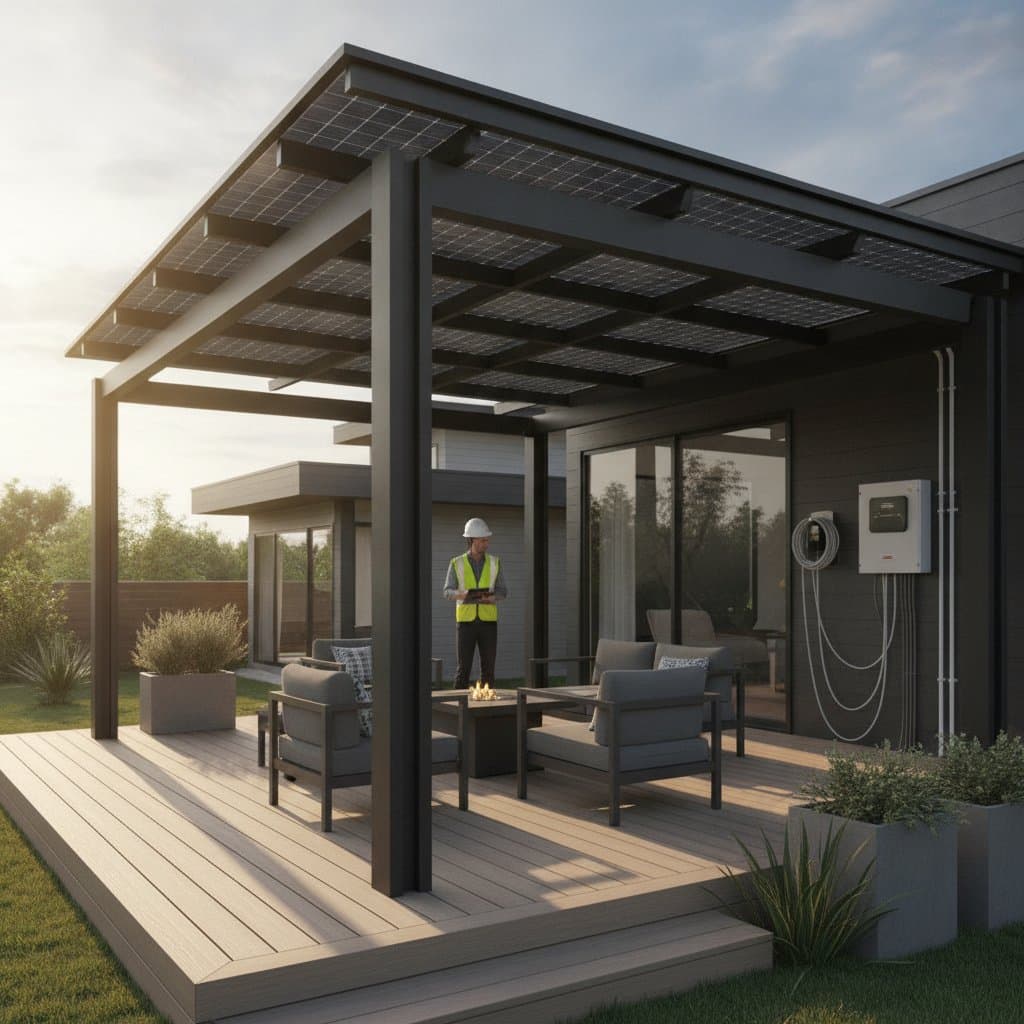
Solar Pergolas Combine Shade and Power Generation
A deck often receives intense sunlight that makes outdoor time uncomfortable. A solar pergola addresses this issue by creating shade while converting sunlight into usable electricity. The structure supports panels on its roof to capture energy without sacrificing the benefits of an open outdoor area.
This approach balances comfort and utility. Homeowners gain a cooler seating space and a source of clean power that can connect to household systems or operate independently with batteries.
Core Components and Requirements
A solar pergola consists of a frame topped with solar panels mounted on rails. The frame may use wood for a natural appearance or aluminum for longer resistance to weather. Panels typically number four to six for a standard residential deck and add about 40 pounds each to the roof load.
Essential tools include a tape measure, level, cordless drill, and a ladder rated for at least 250 pounds. Safety equipment such as gloves and glasses protects during cutting and installation. Materials also encompass mounting brackets, weatherproof wiring, a charge controller, an inverter, and optional batteries for storage.
Construction Sequence
- Measure the deck area and track sunlight patterns throughout the day. A space measuring 10 by 12 feet suits many decks and requires at least six hours of direct exposure.
- Select a frame material that supports panel weight and matches the site conditions. Pressure-treated lumber or coated metal provides durability.
- Set posts in concrete footings or on anchored plates and verify they remain level.
- Attach crossbeams to carry the mounting rails while allowing ventilation gaps.
- Secure panels at a 20- to 30-degree tilt using stainless steel hardware to limit corrosion.
- Route wiring through conduit to the charge controller and inverter. Engage a licensed electrician for any grid connection.
- Activate the system and confirm voltage and current readings increase with sunlight.
Safety and Performance Checks
Ladders must stay stable during use. Power should remain off during electrical adjustments. All roof penetrations require outdoor caulk to block moisture. Wind-prone locations benefit from added diagonal bracing.
Low output often results from shading or surface debris. Clean panels with water and a soft cloth every few weeks. Loose or corroded wiring calls for professional inspection before reuse.
Cost, Timeline, and Upkeep
A basic four-panel setup costs several thousand dollars when including panels, hardware, and tools. Retrofitting an existing pergola reduces expense. Two people can complete construction over two weekends.
Inspect the frame twice yearly for damage or loose fasteners. Reapply sealant as needed and trim nearby vegetation to preserve sunlight access. Review inverter output monthly. Remove snow promptly in winter and clear gutters year-round to maintain drainage.
Practical Storage and Professional Support
Keep spare parts and manuals in a labeled weatherproof container near the deck. Contact a licensed electrician for any interior wiring. Structural concerns such as leaning or excessive movement require a contractor evaluation.
Benefits of Steady Implementation
A solar pergola creates a functional outdoor area that produces renewable power. Begin with a modest panel count and expand as needed while following consistent maintenance practices.