
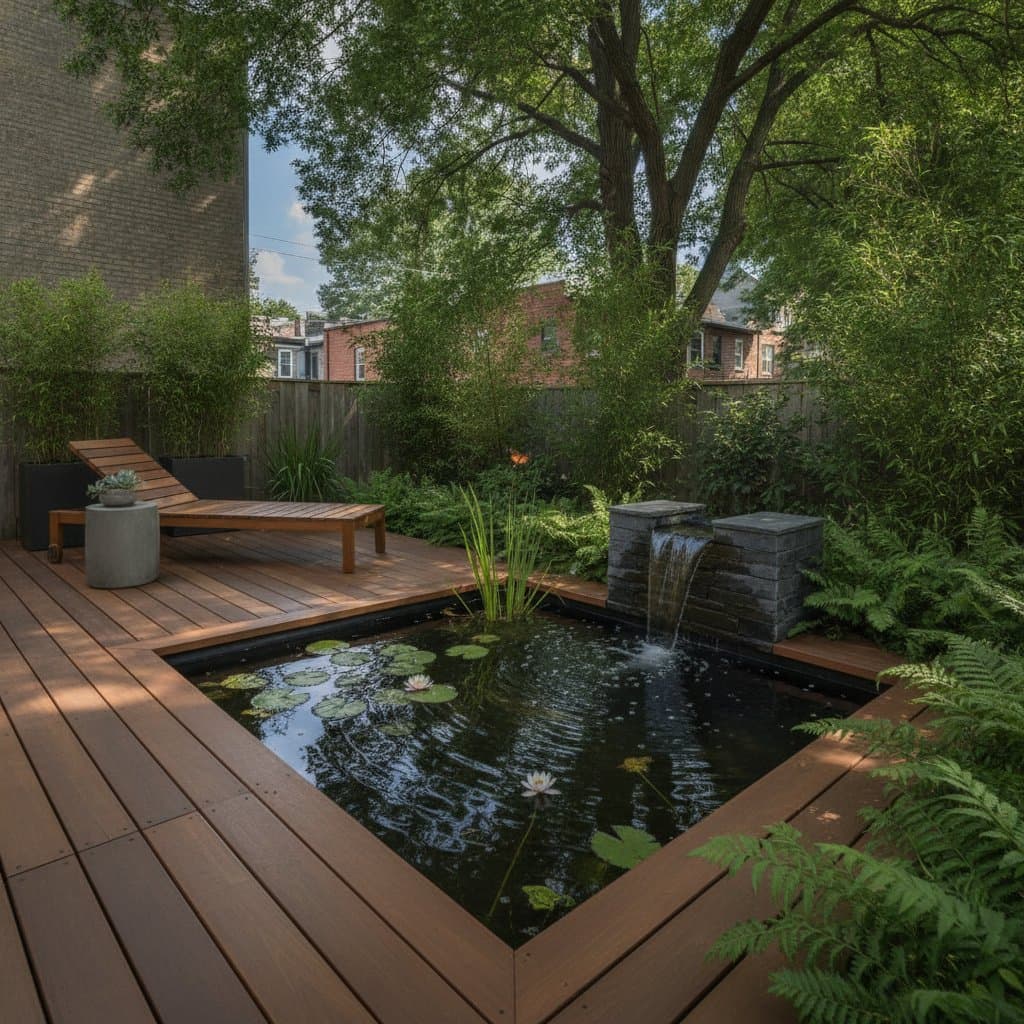
Micro Pond Decks Lower Yard Temperatures
A compact pond integrated into a small deck creates a noticeable cooling effect in urban yards. Water evaporation combined with gentle circulation reduces air temperature near the feature by several degrees. This setup also dampens ambient noise and supports a balanced microclimate.
Site Selection and Planning
Choose a location that receives partial sun for four to six hours daily. Position the feature against an existing wall or fence to simplify construction and enhance visual depth. Measure a three foot square area to confirm adequate space for both the pond basin and surrounding decking.
Confirm local regulations regarding small water features before proceeding. Sketch the layout to include pump placement and electrical access. This preparation prevents later adjustments that could disrupt the liner or deck structure.
Required Materials
Select a durable EPDM pond liner sized to your basin dimensions. Acquire a low voltage or solar pump rated for continuous operation. Gather pressure treated or composite deck boards, river stones, pea gravel, and shallow water plants suited to your climate.
Include a basic filter sponge and optional UV clarifier for water clarity. These components support reliable circulation and reduce maintenance frequency.
Construction Steps
Prepare the Basin
Excavate a shallow depression no deeper than twelve inches. Line the hole with sand to cushion the liner and remove sharp objects. Position the liner evenly and fold excess material at the edges.
Install the Pump and Circulation
Place the pump on a flat stone inside the basin. Route tubing discreetly along the deck edge. Test the flow rate before securing any boards to ensure quiet operation.
Frame the Deck
Build a simple frame around the basin using joists spaced sixteen inches apart. Secure deck boards with stainless screws to resist corrosion. Maintain a one quarter inch gap between boards for airflow and drainage.
Add Stones and Plants
Cover the liner edges with river stones. This hides the plastic and keeps the liner stable. Add pea gravel around plant bases to hold them in place.
Choose plants that thrive in shallow water, such as dwarf water lilies for surface shade, pickerel rush for vertical contrast, creeping jenny for trailing edges, and anacharis for oxygenation. Leave open water space for reflections. About half the surface should stay clear for airflow and easy cleaning.
Fill and Test
Fill the pond completely. Plug in the pump and check for steady flow. Adjust stones or tubing until the sound of water feels balanced, not too splashy or too quiet.
Sit on the deck for a few minutes. You will notice a drop in air temperature near your ankles and a softer sound in the yard. This is the cooling effect in action.
Troubleshooting Common Issues
Water turns green when algae growth accelerates. Add a few floating plants to block sunlight and run the pump longer each day. You can also use a small UV clarifier if the water stays cloudy.
Pump stops circulating when debris blocks the intake. Remove and rinse the filter sponge weekly during warm months. Deck boards warp if moisture becomes trapped underneath. Make sure air can flow below the deck and reseal boards once a year.
Mosquitoes appear when water remains still. Running water deters most mosquitoes. If they persist, add a tablet of mosquito dunks made for ponds. These remain safe for fish and plants.
Maintenance Schedule
A small pond deck stays healthy with light weekly care. Skim leaves and debris from the surface. Check water level and add fresh water if it drops more than one inch. Rinse the pump filter in clean water.
Inspect wood joints and retighten screws each month. Trim overgrown plants to keep sunlight balanced. Add a small dose of beneficial bacteria if water looks dull.
In colder seasons, unplug the pump and drain half the water to prevent freezing stress. Store delicate plants indoors in a bucket of water until spring. Reseal deck boards before the wet season to protect against rot. A well kept pond deck can last eight to ten years before needing major repair.
Professional Assistance
Call a professional if you see persistent leaks after liner resealing. Electrical faults or pump failure connected to wiring also require expert attention. Structural deck movement or sinking corners indicate the need for immediate evaluation.
When hiring help, ask about experience with small water features. Request a site inspection and written quote before any repair. Most minor fixes cost between one hundred and three hundred dollars.
Beginning Your Project
Measure your space to identify a suitable three by three foot area near an existing wall or fence that receives partial sun. Visit a garden center and select a durable pond liner that fits your space. Preformed options simplify first builds. Choose wood or composite boards in a tone that complements your home exterior. Light shades remain cooler underfoot.
Once your pond deck is in place, air moves more slowly, water reflects surrounding greenery, and ambient sound softens. The feature serves as a natural gathering point throughout the day.