
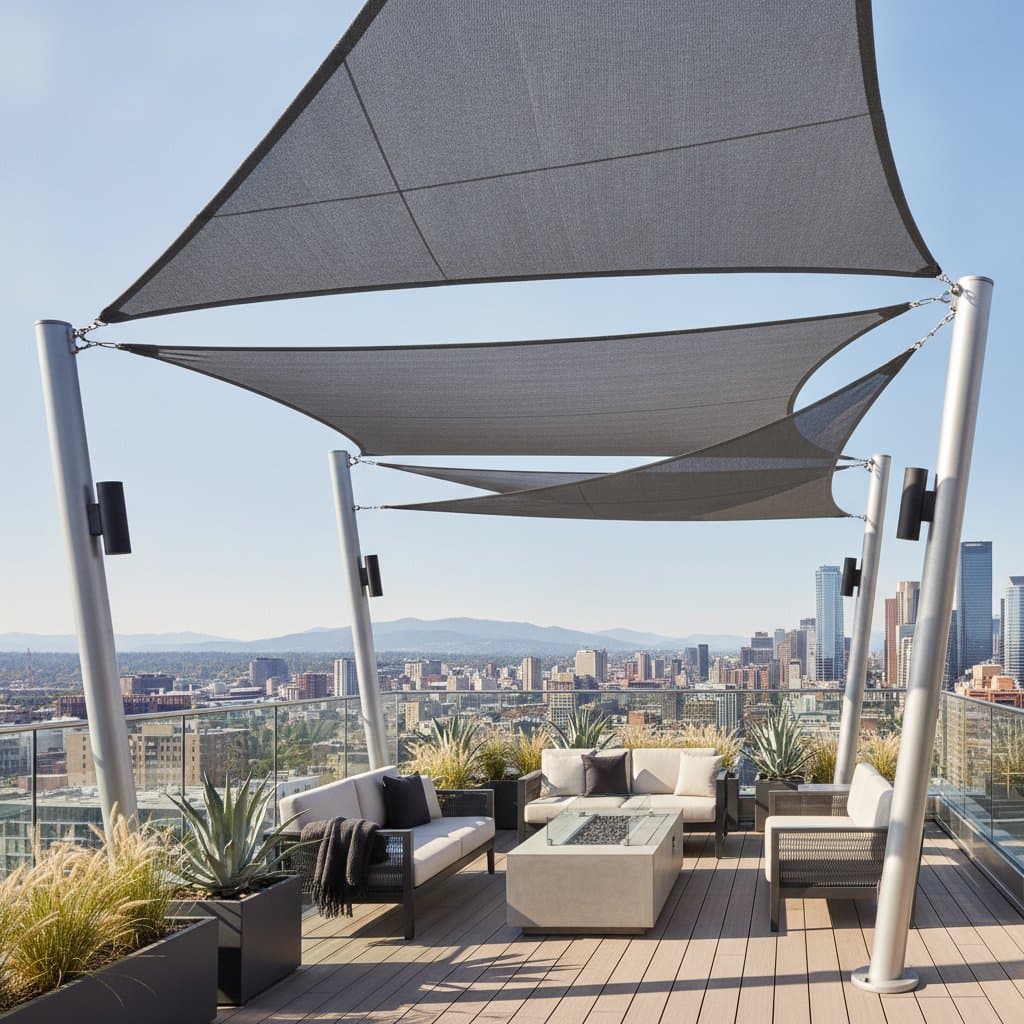
Solar Shade Sails Reduce Rooftop Heat While Preserving Views
City rooftops absorb intense sunlight and can exceed 150 degrees Fahrenheit on clear days. This heat transfers into spaces below and increases cooling demands. Solar shade sails address the issue by blocking direct rays, lowering surface temperatures, and allowing filtered light to pass through. They maintain open views of the sky and surrounding skyline.
The following sections explain how these sails function, the required components, and the process for secure installation.
How Solar Shade Sails Work
A solar shade sail consists of tensioned fabric stretched between fixed anchor points. The material blocks ultraviolet radiation while permitting airflow and partial daylight. Certain models incorporate thin solar film that converts sunlight into usable electricity. This combination delivers shade, modest power generation, and an open structural profile that solid roofs or pergolas cannot match.
Install a single sail over a seating area or multiple units for broader coverage. The lightweight design avoids heavy framing and preserves rooftop usability.
Required Tools and Materials
Gather these items before starting:
- Three or more mounting points such as parapet corners or steel posts
- Stainless steel turnbuckles and tension clips
- UV rated solar shade sail sized 10 by 10 feet or larger
- Drill with masonry bits
- Measuring tape, level, and layout rope
- Ladder or access platform
- Gloves, eye protection, and non slip footwear
Basic installations require only hand tools. New anchors call for masonry sealant and a compatible drill bit.
Installation Process
- Mark the desired shaded zone, typically 8 to 12 feet across.
- Select anchor points capable of sustaining at least 100 pounds of tension each.
- Drill holes, insert anchors with sealant, and secure eye bolts. Allow full cure time before loading.
- Connect sail corners to turnbuckles and attach to anchors. Tighten until the fabric lies smooth and taut.
- Slope the sail 10 to 12 inches lower on one side to promote drainage.
- Verify that the fabric flexes slightly under wind pressure without flapping.
- Route solar wiring through UV rated conduit for models that generate electricity.
Safety Considerations
Work only on dry surfaces. Use a second person when positioning ladders or large fabric panels. Place anchors away from unprotected roof edges. Keep electrical lines above potential water accumulation and seal all connections.
Common Adjustments
Tighten turnbuckles one or two turns if the sail sags. Lower one corner further when water collects. Add rubber washers between metal fittings to reduce vibration noise.
Cost and Time Estimates
A standard 10 by 10 foot sail ranges from 120 to 250 dollars. Hardware adds 40 to 80 dollars. Solar integrated versions begin near 400 dollars. Most users complete installation in four hours. Professional labor costs 300 to 600 dollars depending on roof conditions.
Ongoing Care
Clean fabric monthly with mild soap and water. Inspect anchors each season for corrosion or sealant wear. Replace frayed lines or damaged clips promptly. Remove and store the sail before major storms or heavy snow.
Preparation for Storage and Reuse
Keep extra clips and rope sections in a sealed rooftop container. Mark sail corners for quick reinstallation. Store hardware in moisture proof bins to prevent rust.
Plan Your Installation
Survey the roof and identify priority shade zones. Sketch anchor locations and record measurements. Select fabric rated for at least 95 percent ultraviolet blockage. Match solar models to existing inverter capacity. Complete tensioning, test stability, and enjoy reduced rooftop temperatures with uninterrupted views.