
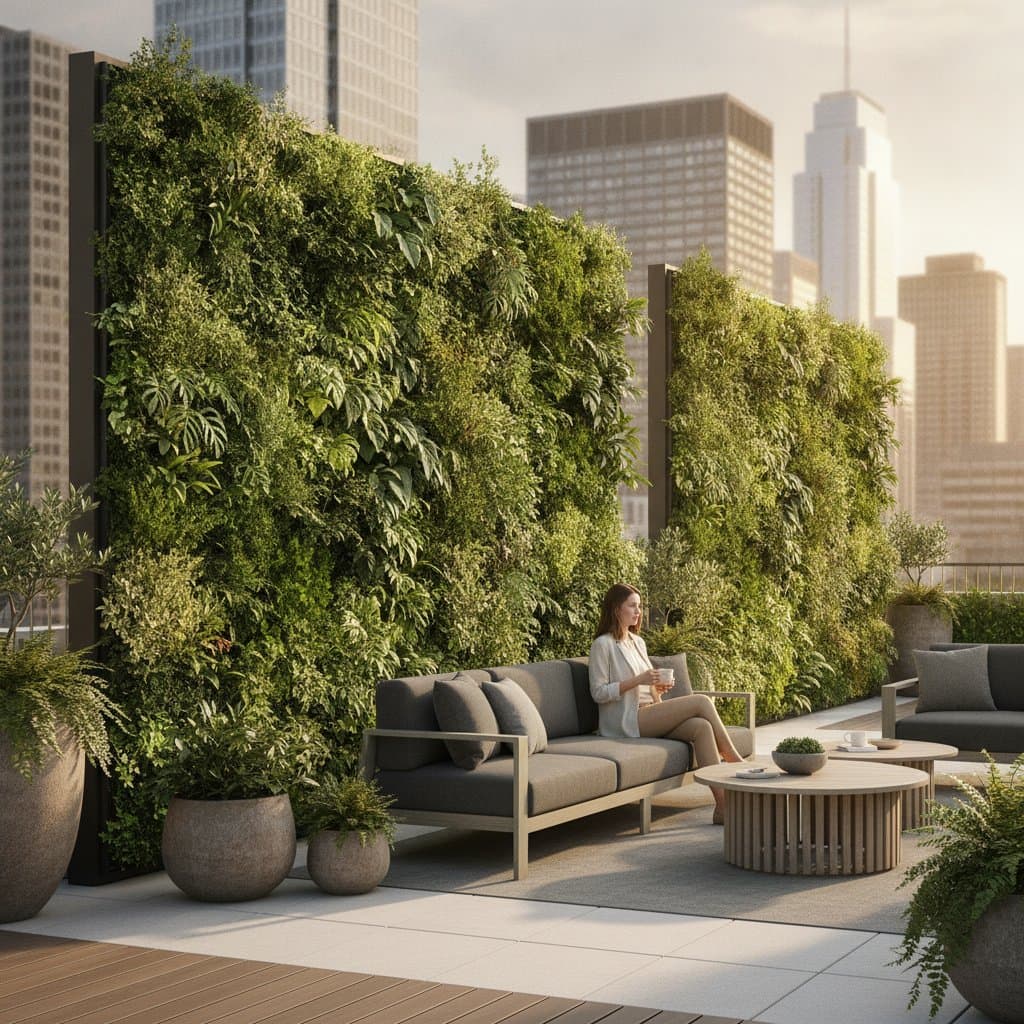
Quiet Noisy City Rooftops with Acoustic Green Walls
City rooftops often suffer from traffic hum, HVAC noise, sirens, and voices that reflect off hard surfaces. These sounds create an echo chamber that disrupts relaxation. Acoustic green walls offer a living solution that reduces noise while preserving views, airflow, and natural light.
This guide covers the function of acoustic green walls, suitable materials, installation steps, and ongoing care. Readers will find specific guidance on panel selection, plant choices, and maintenance routines that deliver measurable sound reduction.
How Acoustic Green Walls Work
An acoustic green wall combines plants, growing substrate, and sound-absorbing backings such as mineral wool or recycled rubber. The plants scatter high-frequency sound, while the dense backing absorbs lower frequencies. A properly built wall can lower rooftop noise by 10 decibels, which the ear perceives as roughly half the original volume.
Key Benefits
- Reduced transmission of traffic, generator, and street sounds.
- Lower surface temperatures through plant shading and evapotranspiration.
- Better air filtration from foliage and soil microbes.
- Added privacy and visual interest without solid barriers.
- Support for pollinators in urban settings.
These advantages improve comfort for meals, reading, or gatherings on the roof.
Required Materials and Tools
Plan for 40 to 60 square feet of coverage on a typical small rooftop to achieve noticeable sound control. The finished assembly weighs 8 to 12 pounds per square foot when saturated.
Materials
- Outdoor-rated wall frame or trellis sized for wind loads.
- One- to two-inch acoustic panels of mineral wool or recycled rubber.
- Waterproof membrane to protect the building wall.
- Lightweight planting substrate or felt pockets.
- Drip irrigation tubing with timer and pressure regulator.
- Wind- and sun-tolerant plants with shallow root systems.
- Stainless-steel fasteners and anchors.
Tools
- Tape measure, level, and masonry drill bits.
- Utility knife and pruning shears.
- Irrigation flow tester.
- Gloves and safety glasses.
Installation Steps
Follow the sequence below for either modular panels or a custom frame.
- Select a parapet or wall that faces the primary noise source and can support the added load.
- Clean the surface, repair cracks, and apply the waterproof membrane.
- Secure acoustic panels with corrosion-resistant fasteners, leaving a drainage gap at the base.
- Mount the planting frame or felt system over the acoustic layer and confirm it is level.
- Run drip lines across each row, connect to the timer, and test even moisture delivery.
- Fill pockets with substrate, group plants by similar water needs, and firm the medium around roots.
- Water thoroughly, inspect for leaks, and add extra anchors where panels shift.
Always wear fall protection near roof edges and keep irrigation wiring away from metal surfaces.
Common Issues and Fixes
Uneven watering often appears when top rows dry faster than lower ones. Adjust drip-line placement or reduce flow to lower tiers. Plant stress from wind or sun responds to replacement with sedum, ivy, or ornamental grasses suited to shallow soil.
Persistent noise usually indicates flanking paths around the sides or top. Add short side returns or a dense screen four to six feet tall behind the green wall to close those gaps.
Routine Care
Inspect drip lines weekly during warm months and keep substrate moist but not saturated. Prune excess growth twice a season, apply slow-release fertilizer in spring and midsummer, and check anchors for corrosion each fall. Rinse dust from leaves to maintain foliage density, which improves sound scattering.
In cold climates, reduce irrigation volume, remove dead foliage, and insulate valves before frost. Removable panels store flat in a dry location on wood blocks.
Budget Considerations
An eight-by-eight-foot section costs between 800 and 2000 dollars depending on material choices. A do-it-yourself build requires 10 to 15 hours, while professional installation finishes in four to six hours. Annual upkeep averages 100 dollars for fertilizer, replacement plants, and irrigation checks. Recycled felt and reclaimed framing lower expenses without sacrificing performance.
Seasonal Tasks
Spring calls for irrigation inspection, soil refresh, and replanting bare areas. Summer requires monthly pruning and filter cleaning. Fall involves reduced watering, leaf removal, and anchor checks. Winter focuses on valve protection and vine tying.
When Professional Help Is Advised
Walls larger than 100 square feet or those attached to structural elements require review by a licensed contractor or structural engineer. A landscape acoustics specialist can measure actual decibel reduction and design hybrid systems that combine living panels with solid barriers.
Planning Your Installation
Measure the noisiest wall section and note daily sun and wind exposure. Source modular kits from garden centers or online suppliers, then select plants matched to those conditions. After the first panels are in place, test the space during peak noise hours to confirm the improvement in comfort and quiet.