
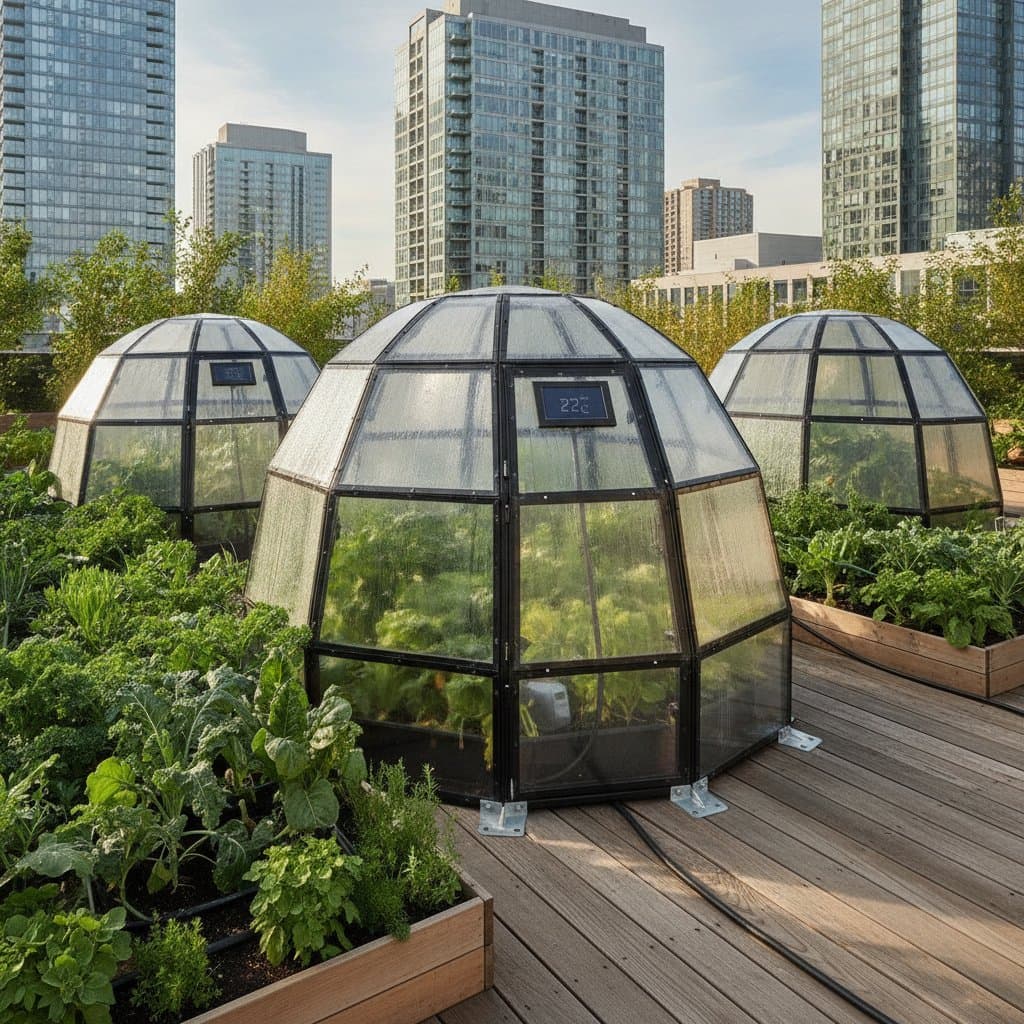
Anchoring the Pod for Stability
Place one concrete block or weighted bag at each corner. Secure the frame to the weights with rope or straps. On windy rooftops add extra tie downs to railings or heavy planters. The goal remains stability even when gusts reach 30 miles per hour or higher.
Monitoring and Adjusting Conditions
Check the interior temperature with a basic thermometer after installation. Open vents on sunny days once readings rise above 85 degrees Fahrenheit. Close the vents at night to hold warmth. In cold weather a water jug serves as thermal mass to store daytime heat.
Safety Measures
- Confirm that total added load stays under 40 pounds per square foot to protect roof integrity.
- Never place heaters or open flames inside any pod. Rely only on solar or battery sensors.
- Keep pathways dry and clear because condensation can create slip hazards on smooth surfaces.
- Wear gloves when handling plastic that has sat in direct sun.
Common Troubleshooting Steps
Temperature swings occur quickly in small enclosures. Create additional vent openings or add a small solar fan when heat builds. A modest fan can reduce interior temperature by 5 to 10 degrees Fahrenheit. On cold nights an extra layer of floating row cover provides further insulation.
Excess condensation encourages fungal growth. Wipe interior walls weekly with a clean towel and leave one vent slightly open for air exchange. If the frame bends under wind load insert a cross brace of 1 by 2 inch wood strips secured with screws and washers. Check all joints monthly.
Tiny insects may still enter. Cover vents with fine mesh panels and inspect the base for gaps. Sticky traps allow monitoring without chemicals.
Ongoing Maintenance Practices
Clean the cover every few weeks with mild soap and water to preserve light transmission. Inspect anchors after heavy storms and replace worn zip ties. Lubricate zippers and vents with silicone spray for reliable operation. Rotate crops inside the pod to limit soil fatigue and disease. Replace the plastic sheet every two or three seasons once it becomes brittle or cloudy.
A well maintained pod lasts through multiple growing cycles and reduces long term costs.
Storage Between Seasons
Remove the plastic sheet and fold it loosely when protection is no longer required. Label each pipe section with tape for fast reassembly later. Store components in a cool shaded area and keep the sheet in a sealed bin away from rodents. Wash and dry metal parts to prevent rust. When space is limited hang the rolled plastic along a wall with clips.
Budget and Time Requirements
A basic 4 by 4 foot pod costs between 45 and 120 dollars depending on material choices. Pre made kits reach 200 dollars or more yet reduce assembly time. One person completes building and setup in roughly 2 to 3 hours. Weekly maintenance requires about 15 minutes for cleaning and adjustments. Each pod supplies 16 square feet of protected space sufficient for four to six large vegetable plants or ten herb pots.
Seasonal Use Guidelines
In early spring position the pod over empty beds two weeks before planting. Trapped heat raises soil temperature by 5 to 10 degrees Fahrenheit and speeds seed germination. During mid summer heat waves remove or vent the cover and substitute shade cloth panels. In fall reinstall full covers and add insulation panels at the base to block drafts. Keep vents closed overnight yet open them briefly each day. In winter the pod protects hardy greens in mild climates or shelters dormant perennials and bulbs in colder zones.
When Professional Advice Is Needed
Consult a licensed contractor or building engineer before installation on shared older or visibly damaged rooftops. A professional can verify load limits and review waterproofing details. Hire a certified electrician for any automated fans or sensors. Request guidance on drainage paths and anchor methods suited to flat membrane gravel or green roof surfaces.
Practical Next Steps
Step outside and observe how wind and sun cross the roof at different times of day. Select one calm sunny location for a trial pod. Gather PVC pipes clear plastic and anchors from a nearby store while keeping total weight easy to lift by hand. Assemble the first unit plant a few greens and record temperature differences with a simple digital thermometer. Each success reveals which crops perform best under local rooftop conditions.