
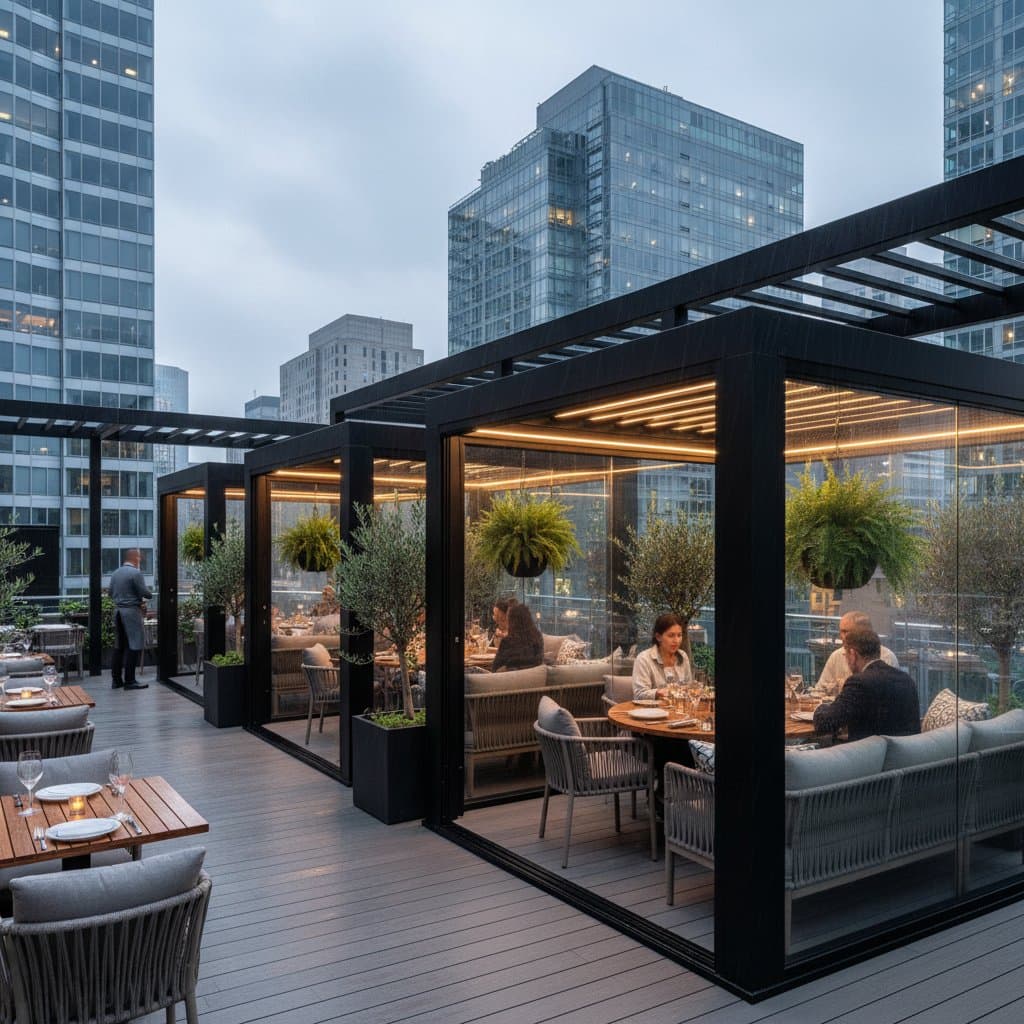
Pergola Pods: Rainproof Rooftop Dining Revolution
Urban rooftops once faced seasonal limitations due to unpredictable weather. Pergola pods change that dynamic entirely. Restaurants and residential owners now convert open decks into protected sanctuaries that support dining year-round.
These structures deliver reliable outdoor access regardless of conditions. The following sections explain pergola pod fundamentals, their rooftop applications, and practical guidance for design, installation, and upkeep. Readers gain tools to implement solutions that are both secure and economical.
Overview
A pergola pod represents a semi-enclosed outdoor framework equipped with an adjustable roof system. This setup allows precise management of sunlight and precipitation through louvers or retractable elements. Unlike standard pergolas with fixed open lattices, pods incorporate side barriers such as curtains, screens, or glass for enhanced versatility.
Rooftop environments benefit significantly from this adaptability. The design safeguards occupants and furnishings from elements while preserving the expansive feel of elevated spaces. Commercial venues and high-rise residences increasingly adopt pods to prolong operational hours and minimize disruptions from inclement weather.
Tools and Materials
Assembling a pergola pod requires a blend of foundational construction tools and durable components suited to elevated installations. Select items that withstand urban exposure and structural demands.
Structure and Frame
- Aluminum or powder-coated steel beams, typically four to six units scaled to the intended footprint
- Heavy-duty anchors and mounting brackets engineered for rooftop concrete or masonry
- Precision level, power drill, and carbide-tipped masonry bits for secure fastening
Roofing and Enclosure
- Motorized or manual aluminum louvers, or UV-resistant polycarbonate sheets for coverage
- Electric actuator kit or manual crank mechanism to operate the roof assembly
- Retractable side screens, tempered glass panels, or vinyl weatherproof curtains for perimeter protection
Finishes and Accessories
- Silicone-based waterproof sealant, applied at one tube per 40 square feet of surface area
- IP65-rated LED strip lights or hanging pendants designed for exterior durability
- Interlocking rubber or composite flooring mats to enhance traction on damp surfaces
Safety Gear
- Leather work gloves, safety goggles, and full-body harness systems for elevated tasks
- Steel-toed, non-slip boots to navigate slick rooftop conditions
Steps
1. Measure and Plan
Conduct a thorough assessment of the rooftop area. Identify critical features like drainage outlets, mechanical vents, and boundary walls. Maintain a minimum 18-inch clearance between the pod's roofline and adjacent fixtures to facilitate ventilation and avoid thermal issues.
Determine pod quantity based on usage needs; a standard 10-by-10-foot unit accommodates four to six seats. Sketch elevations and cross-sections to visualize integration with existing architecture.
2. Anchor the Frame
Employ anchors specifically certified for rooftop substrates such as concrete slabs. Fasten post bases using galvanized, corrosion-proof bolts that penetrate at least four inches. Conduct all drilling operations with protective equipment to mitigate dust and debris hazards.
Verify frame alignment with a bubble level prior to final torquing. An uneven base risks uneven water shedding and structural stress over time.
3. Install Roof Panels
Secure louvers or panels to the frame via provided hardware kits. Protect operational components from moisture during assembly. For automated systems, perform initial functionality checks using a portable power supply before integrating permanent electrical lines.
Schedule installations during calm, dry periods to reduce accident risks from gusts or slick surfaces.
4. Add Side Enclosures
Position perimeter elements once the overhead system is operational. Ensure curtains or screens extend no lower than one inch from the deck to prevent moisture accumulation. Apply elastomeric sealant to glass bases, accommodating subtle shifts from building settlement or thermal expansion.
Verify that all enclosure materials carry certifications for prolonged outdoor exposure, including resistance to fading and cracking.
5. Seal Joints and Test Drainage
Distribute sealant evenly across seams and connections. Simulate rainfall with a garden hose to evaluate flow paths. Water must channel efficiently toward designated drains without ponding or overflow.
Fine-tune louver angles or panel inclines as needed to optimize runoff direction.
6. Add Lighting and Furniture
Incorporate low-voltage illumination to promote safe navigation and enhance evening appeal. Prioritize fixtures with robust weather seals. Select seating and tables from materials like teak composites, pressure-treated lumber, or epoxy-coated metals.
Opt for upholstery that dries rapidly and resists mold growth in humid settings.
Safety Tips
Secure all access equipment, including ladders, with tie-off points near edges. Consult structural professionals before penetrating any waterproofing layers. Evaluate the rooftop's load-bearing capacity to support the pod, occupants, and added features.
Incorporate non-combustible elements around heat sources like infrared heaters. Perform electrical testing solely on thoroughly dried assemblies to prevent shocks.
Troubleshooting
Water pooling on roof panels:
Inspect for adequate pitch; aim for at least five degrees to promote natural flow. Clear any obstructions from gutters or channels.
Leaking at seams:
Refresh sealant applications and inspect bolt integrity. Account for material expansion in varying temperatures by using flexible compounds.
Motor not responding:
Validate power delivery and wiring continuity. If audible but immobile, dislodge potential blockages from gears or tracks.
Condensation forming inside panels:
Add discreet vents at upper edges to allow moisture-laden air to dissipate. This maintains interior clarity during temperature fluctuations.
Budget and Time
Expenses fluctuate with dimensions and features, yet typical ranges provide planning benchmarks:
- Entry-level aluminum setup with manual adjustments: $2,000 to $3,500
- Advanced motorized variant including enclosures: $4,500 to $7,000
- Expert assembly services: $1,000 to $2,000
Two skilled individuals can complete a 10-by-10-foot installation in approximately two days post-delivery. Self-directed efforts reduce expenses, though specialized tasks like wiring demand certified expertise.
Consider economical alternatives such as crank-operated roofs over automated ones, or durable fabric barriers in place of rigid glass. Invest reliably in foundational elements like fixings and seals to safeguard long-term integrity.
Maintenance
Wipe down roof surfaces quarterly using gentle detergent and a non-abrasive brush. Steer clear of abrasive cleaners that might etch transparent panels. Apply lubricant to hinges and sliders biannually to ensure smooth function.
Re-secure fasteners following severe weather events. For textile components, launder seasonally and store in arid conditions to avert fungal issues. Schedule annual reviews of wiring to preempt failures.
When to Call a Pro
Engage specialists when rooftop integrity appears compromised post-drilling, or for integrating with main electrical grids. Seek intervention if the assembly exhibits instability after setup. Adhere to municipal regulations mandating reviews for overhead additions.
Inquire about engineering assessments, hydrological strategies, and coverage details during consultations. Established providers furnish load analyses and regulatory guidance upfront.
Implementing Your Rooftop Vision
Pergola pods reframe weather challenges as enhancement prospects. Begin modestly with a single unit, basic seating, and energy-efficient illumination. Observe usage patterns to inform future additions like climate controls or greenery integrations.
Proceed by mapping your space, securing expert input on capacities, and sourcing climate-appropriate supplies. Such investments yield sustained returns in usability and enjoyment, ensuring rooftops remain vibrant hubs for meals and gatherings amid cityscapes.