
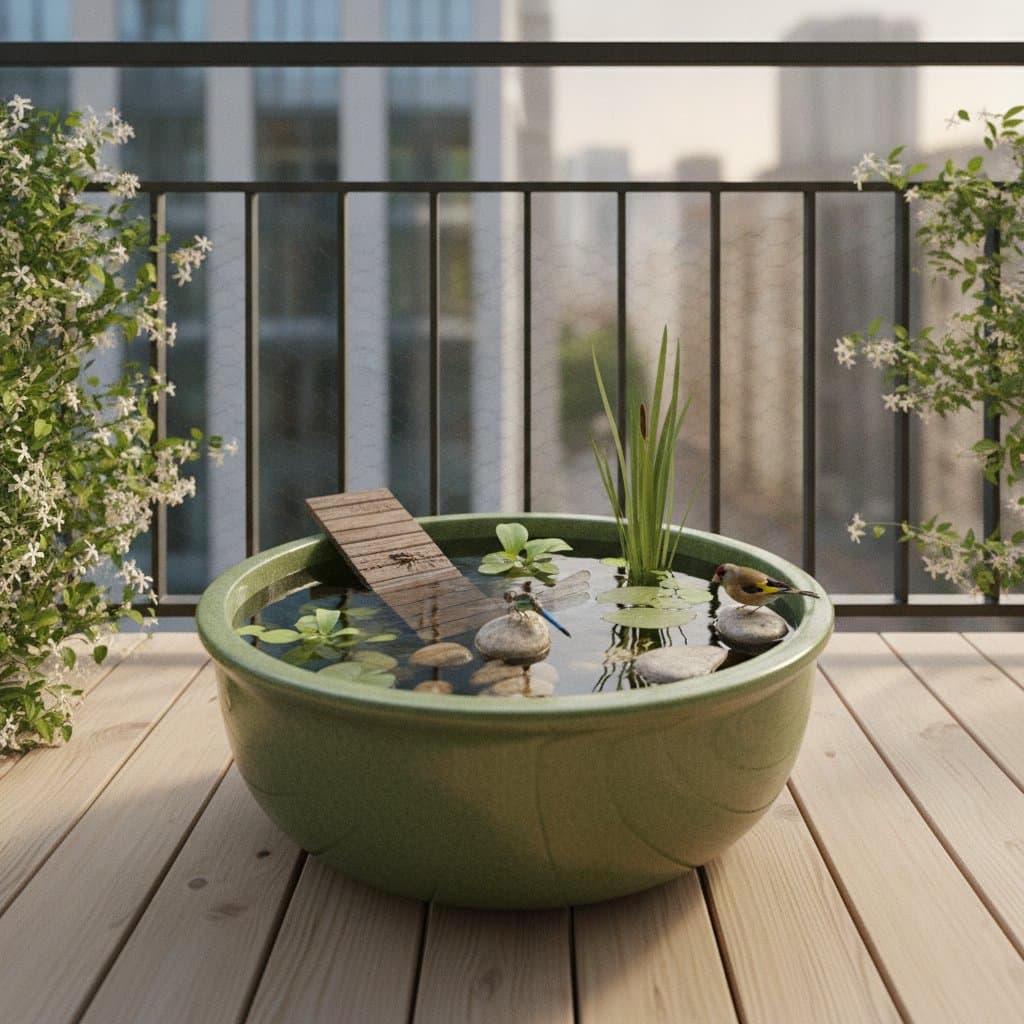
Mini Balcony Ponds That Attract Urban Wildlife
A small balcony can support birds, insects, and other city wildlife with one shallow container of clean water. A mini balcony pond gives thirsty visitors a safe drink, offers bees and butterflies a landing place, and brings movement to a space that may otherwise feel hard and paved.
The goal is simple: create a stable water garden that stays clean, supports wildlife, and does not overload your balcony. You will choose a safe container, add plants and landing surfaces, manage standing water, and build a maintenance habit that takes only a few minutes.
Overview
A mini balcony pond is a watertight container filled with water, aquatic or moisture-loving plants, stones, and other features that support small wildlife. A suitable example is a 15-gallon tub placed on a level surface, with a few rocks rising above the water.
Wildlife needs access, shelter, and safe footing. Deep, bare containers can trap insects and small animals. A better design includes water depths from 1 inch to 8 inches, depending on the container, plus stones, sticks, or a sloped ramp.
Keep the pond small and sturdy. A balcony pond should not become a breeding site for mosquitoes or a hazard for children and pets. Moving water is not required. Clean water, shade, and regular care matter more.
Tools and Materials
Gather these supplies before you shop for plants:
- One watertight container holding 10 to 20 gallons, such as a glazed ceramic pot, stock tank, or heavy plastic tub
- One waterproof liner if the container is not sealed
- Five to eight clean stones, with several stones rising above the water
- One small branch, cork piece, or untreated wood ramp
- Two or three aquatic plants suited to container water gardens
- One shallow planting basket, optional
- One bag of rinsed gravel, about 5 pounds
- One watering can or clean bucket
- One small hand brush
- One mesh cover, optional for homes with cats or young children
Avoid containers that held chemicals, paint, or treated wood. Do not use copper ornaments, fertilizer, chlorine, or pesticides. These materials can harm insects and aquatic life.
Choosing a Safe Location
Weight deserves careful planning. Water weighs about 8.3 pounds per gallon, so a 15-gallon pond holds about 125 pounds before you add the container, stones, and plants. Place it near a load-bearing wall or column when possible, and ask your building manager or a qualified professional about balcony limits if you have any doubt.
Choose a location with morning sun and afternoon shade. Four to six hours of light supports many water plants, while partial shade slows algae growth and reduces evaporation. Leave at least 18 inches of clear walking space around the container.
Set the pond on a level, stable surface. Do not place it on a railing, narrow ledge, movable shelf, or stand that can tip. Keep the water container away from outlets and arrange the location so spilled water cannot drip onto people below.
Steps
1. Prepare the Container
Wash the container with hot water and a clean brush. Rinse it several times. Skip soap if the container is porous, since residue can enter the pond.
Add the liner if needed, smoothing folds against the sides. Keep the liner edge below the rim so rainwater cannot wash soil or debris into the pond. Check for leaks before moving the container to its final position.
2. Build Safe Entry and Exit Points
Place stones inside the container before adding water. Create at least two shallow landing areas, one near the rim and one closer to the center. Add a branch or cork ramp that touches the water and extends above it.
This arrangement gives bees, butterflies, and other insects a dry place to rest. It also gives small creatures a way out if they fall in. Press stones firmly together so they cannot shift when a bird lands.
3. Add Water Slowly
Fill the container with tap water and let it sit uncovered until the chlorine smell fades. Rainwater from a clean collection barrel can also work, but never collect runoff from a roof treated with chemicals.
Pour the water over a stone or a small plate to protect the gravel and prevent cloudy water. Leave 2 inches of space below the rim for rain and splashing. Replace lost water with small amounts instead of emptying the whole pond.
4. Plant the Water Garden
Choose plants that match the container depth and your light. Good options include dwarf water iris, sweet flag, water mint, marsh marigold, and small native sedges. Ask a local nursery for noninvasive plants suited to your region.
Place rooted plants in baskets filled with heavy clay soil, then cover the soil with 1 inch of gravel. Keep soil out of the open water. Limit plant coverage to about half the surface so wildlife can reach the water and air can circulate.
Avoid floating plants that spread rapidly or escape into local waterways. Never release pond plants or animals into parks, streams, or natural ponds.
5. Add Wildlife Features
Add one flat stone above the waterline for birds. A rough surface gives insects better grip than smooth glass or polished ceramic. You can also place a short stick across the container as a perch.
Do not add fish. Small balcony ponds lack the volume and filtration fish need, and fish eat mosquito larvae and other helpful organisms. Do not add frogs or other animals from the wild. Let local wildlife find the pond naturally.
Safety Tips
Keep the pond inaccessible to young children who cannot swim. A shallow container can still create a drowning risk. Use a secure mesh cover when needed, while leaving gaps wide enough for bees and birds to access a shallow drinking area.
Protect pets from contaminated water by keeping the pond out of reach or using a separate pet bowl. Cats can disturb plants and wildlife, so a barrier may help.
Inspect the container after heavy rain, strong wind, or freezing conditions. Move loose objects indoors when wind could blow them from the balcony. Never lean over a railing to clean or refill the pond.
Maintenance
Spend 5 minutes every few days removing fallen leaves, litter, and dead plant material. Skim the surface with a small net or your hand while wearing waterproof gloves.
Top up water when the level drops more than 2 inches. If the water smells foul, looks oily, or contains thick green growth, remove about one third of the water and replace it with fresh water. Never empty the entire pond unless you need to repair a leak.
Thin plants when they cover more than half the surface. Remove yellow leaves at the base. Scrub slippery stones with a brush and rinse them with plain water.
Mosquito control starts with movement and care. Keep the surface open, remove debris, and refresh stagnant sections. A small battery-powered bubbler can help, but choose a quiet model with protected wiring and keep all electrical parts away from standing water.
Troubleshooting
The water turns green. Move the pond into more afternoon shade, remove extra plant material, and change one third of the water. Avoid chemical algae treatments.
The pond smells bad. Remove rotting leaves, reduce crowded plants, and check that water is not blocked by dense roots. A healthy mini pond should smell fresh or have little smell.
Birds ignore it. Add a visible perch, place the pond where birds can see open space, and keep cats away. Birds often need several visits before they trust a new feature.
Bees fall into the water. Add more flat stones, cork, or a sloped branch. Keep at least two dry landing zones above the surface.
The container leaks. Transfer plants and stones to a clean bucket, then test the container. Replace a damaged liner or use a sealed container. Do not patch a major leak with household tape.
Budget and Time
A basic balcony pond can cost about 45 to 120 dollars. A container may cost 20 to 60 dollars, plants may cost 15 to 40 dollars, and stones, gravel, and a liner may add 10 to 20 dollars.
Plan for about 60 minutes to build the pond, plus another 15 minutes to position it safely. Weekly care often takes 5 to 10 minutes. Save money by using clean stones from a garden center and a sturdy food-safe tub, but do not cut corners on structural safety or waterproofing.
Smart Storage Moves
Store the net, brush, gloves, and plant scissors in a small lidded bin beside the pond. Keep a spare liner, clean bucket, and several stones available for quick repairs.
Label plants with their mature size and light needs. Keep extra water in a covered container only if your building rules permit it. Never store heavy supplies on the balcony edge.
Seasonal Reminders
Remove dead growth before it breaks down in the water. Check the container for cracks after cold weather. If freezing conditions are common, move a small pond indoors or drain it after transferring plants to a suitable temporary container.
Watch for dropped litter, pet waste, and runoff from nearby balconies. These pollutants can enter the water quickly. Rinse the container with plain water when contamination occurs.
When to Call a Pro
Ask a qualified building professional about balcony load limits when the pond will hold more than 15 gallons, or when you plan to place several containers together. A waterproofing specialist should assess leaks that reach the structure below.
Call a pest professional if mosquitoes remain despite clean water, open surface space, and regular maintenance. Ask for wildlife-safe methods that don't use broad pesticides.
Getting Started
Choose a sturdy 10 to 20 gallon container today. Place it on a level surface with afternoon shade, then build two safe landing areas with stones or cork. Add clean water, one or two suitable plants, and a short maintenance reminder.
Your mini pond does not need to look formal. A stable container, fresh water, safe access, and steady care can give urban wildlife a useful place to drink, rest, and return.