
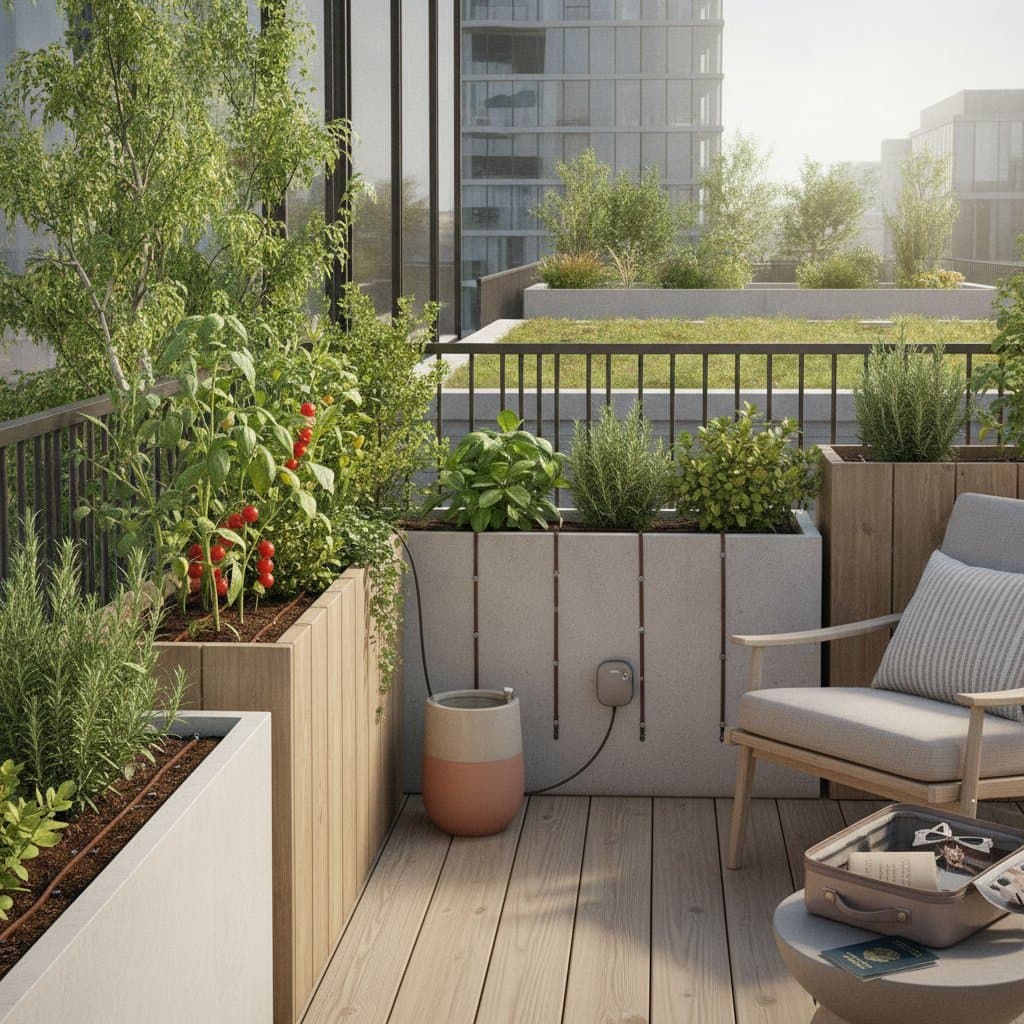
Setting Up a Reliable Watering System
A micro-drip tape system delivers consistent moisture to balcony plants through small emitters placed along flexible tubing. This approach reduces water waste and maintains even soil hydration without daily attention. The setup relies on a few core components that connect directly to an outdoor faucet.
Key parts include pressure-reducing valves, inline filters, polyethylene tubing, drip tape with pre-spaced emitters, and a programmable timer. These elements work together to control flow rate and prevent clogs from sediment or mineral deposits.
Installation Steps
Begin by attaching the backflow preventer and pressure reducer to the faucet. Connect the filter next, then run the main supply line along the base of planters. Cut branch lines to reach each container and secure emitters at the root zone of individual plants.
Program the timer
Set the timer to water early in the morning for 5 to 10 minutes. Shorter cycles more often are better than one long soak. Adjust based on how quickly your pots dry out. Before leaving for vacation, let it run through a full cycle and check that every planter gets moisture.
Clean up and secure
Coil any excess tubing neatly behind planters. Use cable ties to keep the main line out of footpaths. If you share a building, make sure the faucet area drains well and does not drip onto neighbors below.
Safety Tips
Secure fittings before leaving town. Loose parts can leak and damage balcony floors. Use a backflow preventer at the faucet. It stops garden water from returning to your apartment plumbing. Avoid tripping hazards by keeping lines flat and close to walls.
Check electrical safety if using a solar timer. Mount the panel where it gets light but stays dry. Test water flow with your phone recording a short video. Review it after a test cycle to confirm steady dripping.
Troubleshooting
Uneven flow occurs when one pot floods while another stays dry. Check for clogs or tight bends. Flush the tape by removing the end plug and running water through for a minute.
Clogged emitters result from mineral buildup or fine soil. Soak the tape in a mix of one part vinegar to ten parts water for an hour, then rinse. Low pressure usually means the filter is dirty or the timer battery is low. Clean or replace these parts.
Leaks at joints require pushing connectors fully into the tubing until they click. Wrap a short piece of plumber tape around the fitting before reattaching if leaks continue. Timer failure calls for manual testing with fresh batteries before departure. Mechanical models prove more reliable than app-connected ones in wet areas.
Budget and Time
A small balcony system costs between 40 and 80 dollars depending on quality and number of parts. The timer represents the largest expense at about 25 to 40 dollars. Tape and tubing cost roughly 10 cents per foot. Installation takes two to three hours.
Reuse old garden hoses as the main supply line by cutting and fitting barbed connectors. Do not cut corners on the pressure reducer or filter, since these protect the system from failure.
Maintenance
Check the filter monthly during the growing season. Unscrew it and rinse out sediment. Every few months, flush the entire system by removing end plugs and running clean water until it flows clear. Replace the tape every two or three seasons if it starts to stiffen or crack.
Store extra fittings and clips in a small labeled box. Keep spare batteries for the timer. Disconnect and drain the lines before cold weather if the balcony freezes in winter. Coil them indoors to prevent cracking.
Organizing Components
Tidy hose management keeps the balcony usable. Use adhesive hooks or small wall brackets to lift the main line off the floor. Label each branch line with a small tag that names the plant it serves. This helps when adjusting flow later.
Bundle spare tape neatly and store it in a dry bin. Avoid leaving it in direct sun, which shortens its life. Keep a short coil near the faucet for quick repairs. Mount the timer and filter on a short wooden board fixed to the wall when space is limited.
Professional Assistance
Call a plumber or irrigation specialist if the building has shared water lines or complex valves. A professional can install a dedicated balcony faucet with a backflow preventer and pressure control. Expect to pay about 150 to 250 dollars for this upgrade.
A pro can also route tubing safely and seal joints against leaks when drainage is poor or electrical outlets sit nearby. Request a quick lesson on cleaning filters and adjusting flow before the installer leaves.
Preparing for Departure
Run a full test cycle and check for leaks or dry spots. Clean the filter and replace timer batteries. Add a layer of mulch or damp newspaper over soil to hold moisture. These steps ensure plants receive steady hydration throughout the absence.