
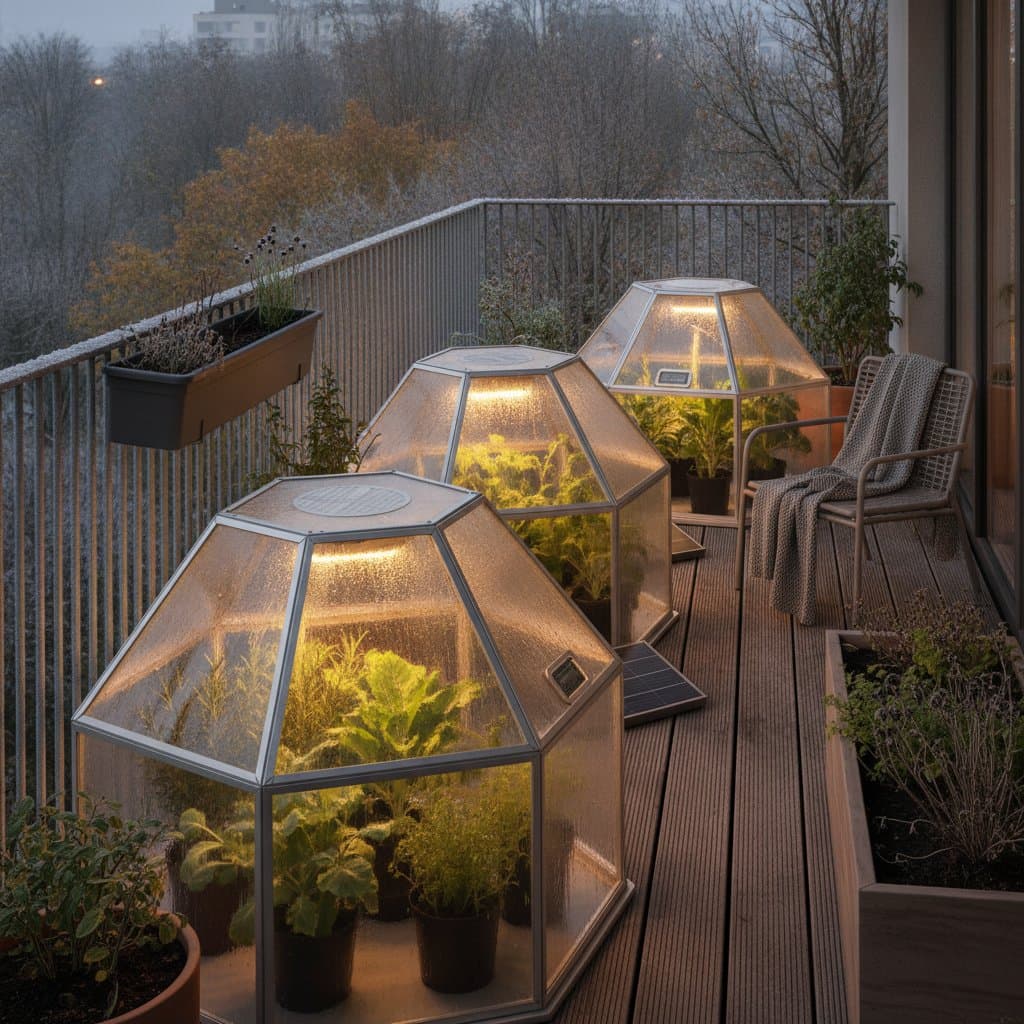
Safety First
Position the dome at least 12 inches from any heat source or light fixture. Wipe condensation from clear panels each week to block mold growth. Place non-slip mats beneath heavy pots to prevent movement in wind. Store tools in a covered bin to avoid rust in the humid interior. Review building regulations before attaching any permanent fixtures to the railing.
Troubleshooting Common Issues
Condensation dripping on leaves
Lack of airflow causes this problem. Add a small mesh vent near the top or prop open a flap during daylight hours. Wipe interior surfaces with a dry cloth each evening.
Dome lifting in strong wind
Insufficient anchoring leads to movement. Add extra sandbags or tie-down cords. Position heavier planters along the base edges for stability.
Mold on soil or stems
Overwatering in a humid environment promotes mold. Reduce watering frequency and increase airflow. Remove affected leaves promptly.
Temperature swings
Thin or loose plastic covering allows heat loss. Switch to thicker sheeting or add an inner layer of bubble wrap for insulation.
Budget and Time Considerations
A small DIY dome requires materials costing between $40 and $90. Prefabricated models range from $100 to $300 based on size and construction. Most builders complete the project in two to three hours, including measuring and sealing steps. Replacement plastic rolls cost around $15, while individual PVC fittings average $2 each.
Low-cost alternatives include reclaimed clear shower curtains in place of new poly sheeting. Buckets filled with soil or water jugs provide weight instead of commercial sandbags. Clothespins serve as substitutes for specialized clips. Avoid reducing quality on sealing tape or thick plastic, because thin covers tear quickly and fail to retain heat overnight.
Maintenance Routine
Clean the dome every few weeks with mild soap and water on the plastic panels. Rinse surfaces and dry them completely before closing the structure. Clear panels transmit more sunlight and limit algae formation. Inspect joints and zip ties regularly, because prolonged sun exposure makes plastic brittle. Replace cracked components before wind causes failure.
Remove the dome during warmer months and store it flat. Roll the sheeting rather than folding it to prevent creases that weaken over time. Examine plants weekly for pests such as aphids and mites, which multiply rapidly in enclosed warmth. A quick rinse or neem oil application controls populations effectively.
Storage Solutions for Small Spaces
Hang lightweight tools on wall hooks inside the dome frame. Slide shallow bins under planters to hold potting mix or gloves. Install vertical racks to position herbs nearer to light while freeing floor area. Keep seed packets and labels in a waterproof box to prevent softening or mold.
When Professional Help Makes Sense
Balconies that face high wind or feature complex railings benefit from a professional installer experienced in small-space greenhouse setups. Ask about recommended materials for the specific exposure and size. Inquire how the structure will be anchored without surface damage. Confirm whether removal or folding is possible for summer storage. Request the estimated weight after installation.
Labor and materials together typically cost between $200 and $500 depending on design complexity. A qualified installer provides a system that the owner can maintain independently.
Seasonal Adjustments
Early cold season
Install the dome before the first cold nights to capture residual warmth. Move tender herbs such as basil or mint to the center for maximum protection.
Mid-season
Vent the structure daily and monitor edges for frost buildup. Place a small water container inside to moderate humidity levels.
Late season
Harvest and trim plants steadily to maintain airflow. Reduce watering gradually to prepare soil for rest. Remove the dome once consistent warm nights return.
Core Principles
A micro-climate dome extends the balcony growing season by several weeks through heat and moisture retention. The basic construction relies on PVC pipes, clear plastic, and sandbags for weight. Daily ventilation prevents mold and overheating. Consistent cleaning and timely repairs maintain clarity and strength. Begin with a modest version, then expand once local conditions become familiar.
Start Your Project
Select the plants that need protection most. Herbs and greens respond well because they favor steady temperatures. Measure the available space, collect materials, and schedule one weekend for assembly. Track morning temperatures inside the dome with a basic thermometer and notebook. The system becomes easier to deploy each subsequent year. A protected balcony garden continues producing fresh herbs and greens long after unprotected pots have been cleared.