
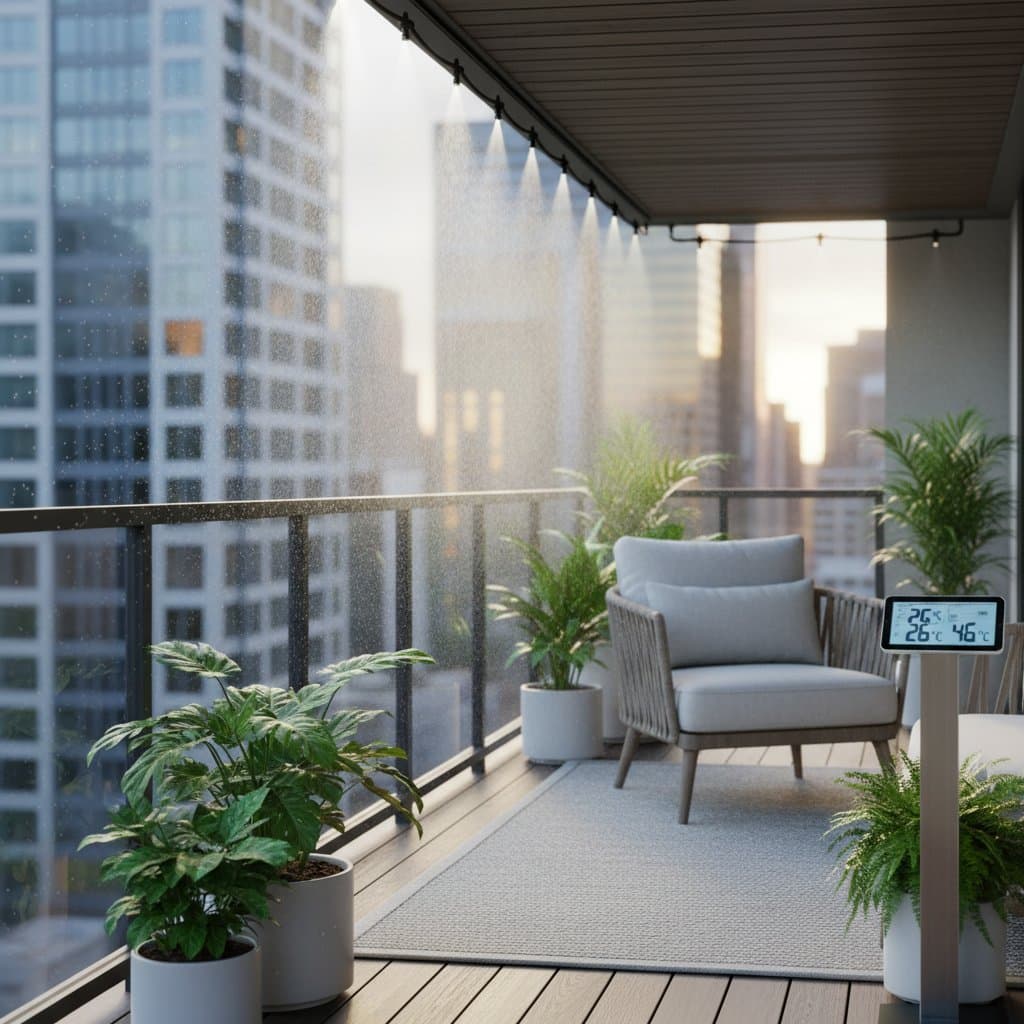
Introduction to Micro-Misting for Balconies
Micro-misting systems offer an effective solution for cooling outdoor spaces like balconies during hot weather. These setups release a fine spray of water droplets that evaporate quickly, absorbing heat from the air and surfaces. The result is a noticeable drop in temperature, often by 20 degrees Fahrenheit, within seconds of activation.
This technology draws from principles used in commercial cooling applications but adapts them for residential use. Balconies benefit particularly because the systems require minimal space and integrate easily with existing water sources. Homeowners appreciate the immediate relief they provide without the need for expensive air conditioning units.
How Micro-Misting Works
The core of a micro-misting system involves high-pressure pumps or natural water line pressure that forces water through small nozzles. These nozzles, typically 0.008 to 0.012 inches in diameter, produce ultra-fine mist particles smaller than 10 microns. As the mist evaporates, it cools the surrounding air through evaporative cooling, similar to perspiration on human skin.
For balconies, the system mounts along railings or overhead structures. Water connects from a nearby faucet or hose bibb, often with a pressure regulator to maintain optimal flow. Timers or manual valves control operation, ensuring the mist activates only when needed.
Essential Equipment
Gather these items before starting installation:
- Micro-misting kit with 20 to 30 feet of tubing, 6 to 10 nozzles, and clips.
- Pressure regulator set to 40-60 psi.
- Inline filter to prevent clogs from debris.
- Timer or solenoid valve for automated control.
- Teflon tape and connectors for secure fittings.
- Cleaning tools, including a pin for nozzles and vinegar solution.
Select stainless steel or brass components for durability against corrosion. Kits from reputable brands ensure consistent mist quality and longevity.
Installation Steps
1. Plan the Layout
Measure your balcony's perimeter and identify mounting points. Position nozzles every 2 to 3 feet along railings or eaves to ensure even coverage. Sketch a simple diagram to map tubing routes and avoid obstacles like plants or furniture.
2. Prepare the Water Source
Locate the nearest outdoor faucet. Attach an adapter if the connection is not standard. Install the inline filter directly after the faucet to capture sediments that could block the system.
3. Cut and Connect Tubing
Measure tubing lengths based on your layout. Use sharp scissors for clean cuts. Connect the tubing to the filter outlet with a barbed fitting, securing it with a hose clamp for a watertight seal.
4. Mount the Nozzles
Screw nozzles into the tubing at predetermined intervals. Use zip ties or mounting clips to affix the tubing to railings. Ensure nozzles point downward at a 45-degree angle to direct mist away from walls and into open air.
5. Install the Regulator and Timer
Place the pressure regulator inline after the filter. Connect the timer to control water flow, setting it for short bursts of 30 seconds to 2 minutes. Test connections for leaks by running water briefly.
6. Secure the Line
Once satisfied, tighten the clips and tuck away extra tubing. Keep everything neat and out of reach of pets or children.
Safety Considerations
Prevent accidents by addressing common risks associated with water systems. Avoid slippery surfaces by wiping down tile or concrete areas after use if mist accumulates.
Employ filtered water to minimize mineral buildup that clogs nozzles and deposits residue. Deactivate the system during strong winds, as mist may drift toward entryways or glass surfaces.
Monitor pressure levels, which should remain between 40 and 60 psi for balcony applications. Excessive pressure risks damaging components. Always disconnect power sources, such as timers or pumps, before performing maintenance to eliminate electrical hazards.
Troubleshooting Common Issues
Problem: Water drips rather than forming mist.
Cause: Insufficient pressure or obstructed nozzle.
**Fix: Verify water pressure and clear the nozzle using a fine pin.
Problem: Uneven mist distribution, with some areas remaining dry.
Cause: Twisted tubing or dirty filter.
**Fix: Untangle the lines and flush the filter with running water.
Problem: Leaks appear at connection points.
Cause: Insecure fittings or degraded seals.
**Fix: Hand-tighten joints and replace O-rings as necessary. Maintain a supply of spares.
Problem: White residue forms on plants or furniture.
Cause: Deposits from hard water.
**Fix: Switch to distilled water or add a calcium-removal filter.
Cost and Installation Time
Assemble a basic balcony system in approximately one hour. Expect total expenses between $60 and $120, covering the full kit. Individual replacement nozzles range from $2 to $4.
Account for additional $10 if extending tubing to a distant water source. Operational costs stay minimal; one hour of use consumes about one gallon of water, costing mere cents.
Invest in quality filters and nozzles to avoid frequent replacements. Inferior materials degrade rapidly, compromising performance. Opt for stainless-steel options that withstand mineral accumulation effectively.
Ongoing Maintenance Practices
During peak season, inspect and clean the filter and nozzles monthly. Detach each nozzle and immerse it in a solution of one part vinegar to three parts water for ten minutes. Rinse well prior to reattachment to dissolve calcium buildup and preserve mist fineness.
In advance of winter, detach all tubing, drain residual water completely, and store components indoors. This step guards against freeze damage. Annually examine O-rings and clips, substituting any that show wear.
For timer-equipped systems, verify functionality biweekly. Humidity accelerates battery drain, so replace them proactively.
Efficient Storage Strategies
Organize parts in a dedicated, labeled container. Group spare nozzles, O-rings, and a cleaning brush for easy access. Coil tubing into two-foot loops to prevent kinks. Position the filter in a moisture-free area to inhibit mold growth.
Prior to seasonal setup, run clean water through the system for 30 seconds to remove accumulated dust.
Professional Installation Options
For advanced setups incorporating dedicated pumps, consult a licensed plumber or outdoor specialist. Professionals secure the pump, calibrate pressure, and integrate safeguards like backflow preventers to protect your home's plumbing.
Request durable stainless-steel components. Labor fees typically fall between $150 and $250, varying by site complexity and selected materials.
Enhancing Your Outdoor Experience
Implementing a micro-misting system transforms sweltering balconies into comfortable retreats, extending usable time outdoors. Regular upkeep ensures reliable performance season after season. Enjoy cooler temperatures and fresher air, making every summer gathering more pleasant.