
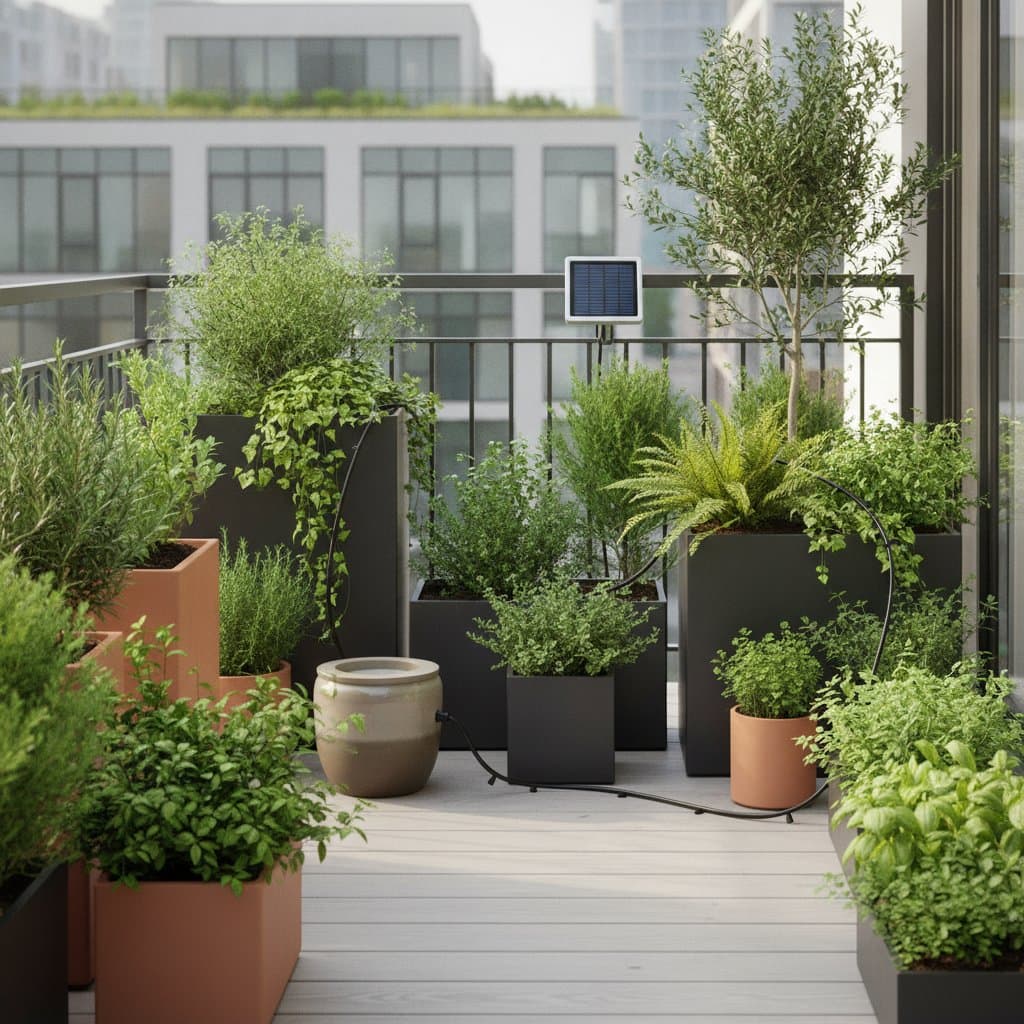
Solar Drip Systems Keep Balcony Plants Watered Daily
Your balcony plants dry out quickly in urban heat, and daily watering adds another task to busy schedules. A micro drip solar system delivers steady moisture through narrow tubing and adjustable emitters without requiring constant attention. Sunlight powers a small pump that activates during peak daylight hours, aligning water delivery with plant needs.
This approach conserves water, reduces runoff, and operates quietly in tight spaces. The following sections cover planning, installation, and upkeep for a reliable setup.
System Basics
A micro drip arrangement channels water through small diameter tubing straight to root zones. Emitters typically release between 0.3 and 0.5 gallons per hour, which limits evaporation and prevents soil saturation. A solar pump draws from a reservoir and runs only while sunlight reaches the panel, matching the warmest periods when plants lose moisture fastest.
The primary aims remain consistent soil moisture, fewer manual interventions, and reliance on renewable power rather than grid electricity or disposable batteries.
Required Components
Assemble these items before beginning:
- Solar pump kit that includes a panel, pump, and flow controller
- Thirty feet of flexible plastic tubing suitable for outdoor use
- One dripper per container or two for larger planters
- Three to five gallon reservoir such as a food grade bucket
- Stakes or clips to secure lines along railings or shelves
- Scissors, pliers, and a measuring tape
Confirm that the pump lift rating reaches at least six feet to accommodate raised planters or railing mounts.
Installation Sequence
- Position the reservoir in partial shade near the panel yet clear of foot traffic.
- Secure the solar panel facing south or southwest and wipe the surface clean before wiring.
- Connect the main tubing to the pump outlet with a firm push to create a watertight seal.
- Route individual lines to each pot, cutting lengths as needed and fastening with clips while avoiding sharp bends.
- Place one emitter two inches from the stem base in every container.
- Fill the reservoir, activate the pump, and observe output at each dripper, adjusting flow where the model permits.
- Program the controller for an initial ten minute cycle and assess soil moisture after forty eight hours.
Operational Precautions
Mount the controller beneath a small overhang to shield it from rain. Use only filtered or settled water to reduce clogging risk. Lift the pump by its housing rather than the wires during any handling. Inspect tubing weekly for sediment or algae growth.
Common Issues and Fixes
When flow ceases at one emitter, detach and rinse the component under running water. Weak pump performance usually improves after cleaning the intake screen. Uneven drying across containers indicates mismatched line lengths; shorten longer runs to equalize pressure.
Cost and Duration
Total expense ranges from forty to ninety dollars depending on pump capacity and reservoir size. Assembly for ten containers requires roughly two hours. Weekly checks add about ten minutes.
Ongoing Care
Wipe the solar panel monthly to maintain output. Drain and rinse the reservoir before freezing temperatures arrive. Store the pump indoors during winter and redeploy once spring returns. Replace any tubing that shows cracking after extended sun exposure.
Expanding the Setup
Begin with a single kit and monitor moisture patterns for two weeks. Add lines gradually once the initial configuration proves stable. Mark each tube at the reservoir end for quick identification and keep extra emitters available for replacements.